
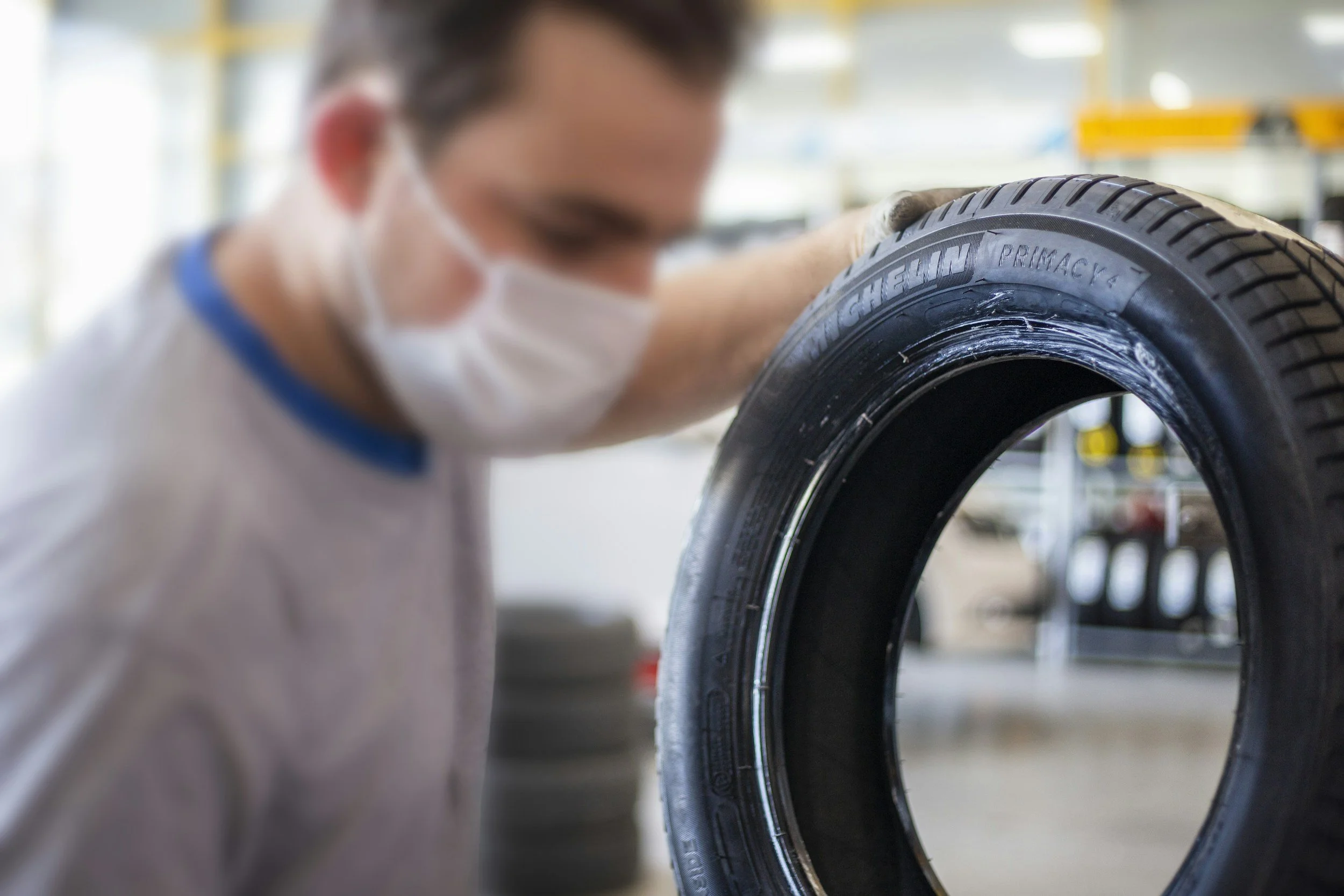
Who provides tyre emissions testing?
Tyre emissions testing has moved rapidly from a niche research activity to a mainstream industry and regulatory priority. As awareness of non-exhaust emissions grows and regulators begin to address tyre wear particles more formally, a growing number of organisations now offer some form of tyre emissions measurement or analysis.
Understanding who provides these services, and what distinguishes them, helps clarify what type of data is being generated and what it can reliably tell you.
What is tyre emissions testing?
Tyre emissions testing involves measuring the particles and chemical compounds released as tyres wear during normal driving. It typically covers two areas:
Wear rate and particle size: how much mass a tyre loses under defined conditions, and the physical characteristics of the particles released
Chemical composition: the organic and inorganic compounds present in tyre material and tyre wear particles, including additives such as antidegradants and their transformation products
Together, these measurements provide insight into both the quantity and the nature of tyre-derived pollution entering the environment.
Types of tyre emissions testing providers
Tyre emissions testing is currently provided by several distinct types of organisations,each with a different emphasis and purpose.
Tyre industry technical centres and manufacturer laboratories
Many major tyre manufacturers operate internal technical centres that conduct emissions and wear testing as part of product development.
Testing in this context is typically used to support compound formulation, durability assessment, and product performance claims. The focus is on how a tyre performs under specified conditions relevant to the manufacturer's own development objectives.
Data generated in this way may not always be published or independently verified, and methodology can vary between organisations, making direct comparison across brands difficult.
Certification and regulatory laboratories
As tyre wear regulation develops, particularly around non-exhaust emissions and the environmental fate of tyre wear particles, certification laboratories are beginning to develop formal testing capabilities.
These organisations focus on compliance. Their role is to assess whether products meet defined regulatory standards, using prescribed test methods that ensure repeatability and consistency.
The emphasis is on standardised procedures rather than detailed compositional insight, and testing is typically conducted within the framework of a specific regulatory requirement.
Academic and research institutions
Academic institutions have contributed significantly to the understanding of tyre wear particles, particularly in relation to environmental fate, ecotoxicology, and the identification of compounds of concern such as 6PPD and its transformation products.
Research-led testing tends to focus on specific scientific questions rather than commercial product comparison or regulatory compliance. Methodologies are often experimental and not always reproducible at scale.
This type of work is important for advancing scientific understanding of tyre emissions, but it operates in a different context from routine industry or regulatory testing.
Independent analytical testing organisations
Independent testing organisations focus on objective measurement and analysis of tyre emissions across a wide range of products, brands, and conditions.
Their role is not to certify compliance or support a specific manufacturer's development programme, but to generate reliable, comparable data that can be used to understand how tyres actually perform in the real world.
This includes wear rate measurement, particle size distribution, and detailed chemical analysis using advanced techniques. The emphasis is on consistency of method, independence from commercial incentives, and the ability to compare across a broad dataset.
Where Emissions Analytics fits
Emissions Analytics is an independent testing organisation specialising in real-world tyre emissions measurement and chemical analysis.
Using our Brake and Tyre Analysis System (BTAS), we combine on-road driving with laboratory analysis to measure tyre wear rates, real-time particle size distribution, and chemical composition across a wide range of tyre brands, sizes, and categories.
Chemical analysis is conducted using two-dimensional gas chromatography coupled with time-of-flight mass spectrometry (GC×GC-TOF-MS), providing detailed identification and quantification of compounds present in tyre material. This includes antidegradants such as 6PPD, their transformation products such as 6PPD-Q, and a broad range of other organic compounds.
We have conducted more than 500 tyre tests across Europe and the United States, building a substantial comparative dataset that enables meaningful benchmarking across the industry.
Our work is used by tyre manufacturers, vehicle manufacturers, regulators, environmental researchers, and policy organisations seeking objective insight into the environmental impact of tyre wear.
Why the distinction matters
While many organisations now have some capability in tyre emissions measurement, their roles and outputs differ significantly.
Manufacturer testing supports product development and internal benchmarking, but may not be directly comparable across competitors. Regulatory laboratories focus on compliance within defined frameworks. Academic research advances scientific understanding, but may not be scalable for routine commercial use. Independent testing provides objective, comparable data across a wide range of products and conditions, free from development or compliance objectives.
These differences shape the type of insight that each approach can provide. As non-exhaust emissions move into the regulatory spotlight and organisations across the industry seek to understand and reduce the environmental impact of tyre wear, the ability to compare products reliably and independently becomes increasingly important.
Independent tyre emissions testing helps bridge the gap between internal product data, regulatory requirements, and the broader scientific understanding of how tyre wear affects air quality and the environment.
Speak to our team
If you would like to learn more about tyre emissions testing or discuss a specific project, get in touch with our team.
We can support everything from targeted fuel analysis to broader research and benchmarking programmes.

Euro-meltdown: How Europe spent tens of billions not reducing emissions
European policy makers are panicking, and with good reason. Not only does their decarbonisation policy look both ineffective and irrelevant to today’s challenges, the somewhat uncouth policy from across the Atlantic is looking better adapted every day. Of course, reducing carbon dioxide (CO2) emissions cannot be addressed in a vacuum, as it is intrinsically entwined with population trends, economic activity and power generation – as discussed in our recent newsletter – The identity crisis for net zero.
European policy makers are panicking, and with good reason. Not only does their decarbonisation policy look both ineffective and irrelevant to today’s challenges, the somewhat uncouth policy from across the Atlantic is looking better adapted every day. Of course, reducing carbon dioxide (CO2) emissions cannot be addressed in a vacuum, as it is intrinsically entwined with population trends, economic activity and power generation – as discussed in our recent newsletter – The identity crisis for net zero. Europe made hard work of reducing particulate, nitrogen oxide and other tailpipe pollutant emissions, by being slower and less diligent than the US. Even now the standards, though effective, are often still laxer in Europe. Today, Europe stands on a grave precipice, and must decide whether it changes course before too much more long-term damage is done.
Even though most developed European countries profess to want growth, they act to achieve anything but growth. High energy costs, extensive regulation, complex, distorting and burdensome tax regimes, inflexible labour laws, and so on. They prefer to redistribute a given economic cake rather than expand the cake. This behaviour is not new, but the consequences of this approach are becoming more critical with rapidly changing technology, geopolitical competition and accumulating environmental damage. Europe takes the basic approach that we generate a fixed “lump” of emissions that we need to tackle each type one by one, starting with power generation and transportation, and then moving on to home heating and other sources. The approach is to electrify everything, as power generation is easier to decarbonise. All this takes significant investment. As most European governments run significant deficits and national debts, much of the investment must come from private sources, domestic and foreign, lured by the promise of future “green growth” (which has so far been largely illusory at the macroeconomic level, even though some areas such as offshore wind have seen significant growth).
Now that we can see the lack of investment, growth and progress, European policy makers can only continue their mission by relying on three following more destructive ideas. First, we are exporting emissions: close domestic production and import the goods instead. For example, the UK’s territorial emissions in 2024 were 373 million tonnes, while its full consumption emissions were almost exactly double – 740 million tonnes. Second, the concept of “demand destruction” is being increasingly aired. It is usually deployed to mean reducing use of fossil fuel (good for decarbonisation) or energy efficiency (good for emissions, costs and productivity), but increasingly means economic recession. We can see that in factories closing and rising unemployment. Third, this is all wrapped up in the sanctimonious idea that we need to “set an example” to the world. Some would argue that is to fend off colonial guilt, but the rest of the world is clearly not interested in our moralising, just as European populations are increasingly revolting at the ballot box at the price of this unwanted example-setting.
In stark contrast, the US appears to be following the path of growing its cake. This was starkly clear at Emissions Analytics’ recent Off-Highway & Power Generation USA 2026 conference in Indianapolis. Energy demand projections have taken a sharp upwards turn primarily due to the needs of artificial intelligence (AI). This is not just any new industry, but one that potentially has long-term geopolitical and economic growth implications. The US reaction is that energy sources need to serve economic growth and, to that end, any and all sources need to be maximised now. It is not just a growth thing, but for national security. The cake must be grown, energy costs must be kept down, regulations must be accommodating. This will undoubtedly come, in the short term, with increased carbon emissions. However, increased national income will – subject to the right policies – provide the investment ultimately to decarbonise. Contrast real economic growth with illusory “green growth.”
How censorious should those committed to emissions reduction be of the US approach? At a high level, we should always remember that the US first pushed vehicle emissions control in the 1950s and continues to have generally stricter policies and limits than Europe does. Furthermore, some of the most radical environmental policies in the US were pioneered under Ronald Reagan and Richard Nixon, so Europe should be careful not to be too didactic. If we then look at how vehicle decarbonisation is progressing between Europe and the US, we might rethink the former’s cake-shrinking strategy.
Let us take the UK market as a reasonable median case for Europe. There are now around 2 million full battery electric vehicles (BEVs) on the road, with an average age of 2.5 years, reflecting the recent acceleration in sales. In round numbers, considering all factors, each of those BEVs will have incurred 5 tonnes of extra CO2 in their manufacturing and delivery, compared to an equivalent standard gasoline vehicle. So, this means 10 million tonnes of extra CO2 has already been emitted cumulatively due to the switch. This is equivalent to 2.6% of the UK’s total territorial emissions and 1.4% of its consumption emissions (the latter which includes extra-territorial production emissions). Compared to the benchmark gasoline car, the reduction in in-use emissions is around 140 g/km (215 g/km for gasoline minus 75% for BEV, taking into account the emissions in creating the respective fuels - data based on a combination of Emissions Analytics’ independent testing and data from academic literature). With each car saving 1.4 tonnes of CO2 per year based on average mileage, the mean deficit on the manufacturing emissions is still 1.5 tonnes. In total, therefore, the UK’s BEV strategy has so far led to an increase of 3 million tonnes in its actual CO2 emissions. With about 85% of BEVs sold in the UK being manufactured outside of the UK, we can see that the BEV strategy significantly reduces the country’s official emissions, while significantly increasing its actual emissions! No wonder the government sticks doggedly to the policy.
With BEV penetration of around 10% of the new car market in the US, the main way vehicles have been decarbonised so far has been through hybridisation, which accounts for about 15% market share. What would have happened if the UK had switched those 2 million vehicles to full (non-plug-in) hybrids instead of to BEVs? The increased manufacturing emissions would have been around 1 tonne per car, while the in-use saving would have been 0.7 tonnes per year (145 g/km for hybrid versus 215 g/km for gasoline). So, the total CO2 reduction would have been 3.5 million tonnes so far, comfortably paying back the 2 million tonnes of increased manufacturing emissions. Further, this would have been 4.5 million tonnes better than the BEV scenario.
To achieve this, the average effective discount from the list price of a new BEV has been around 50% in the UK, when you take into account discounts, subsidies and tax breaks. Therefore, in summary, the UK has spent around £40 billion in support for BEVs to increase CO2 emissions compared to the best alternative strategy. And the story gets worse, in two ways.
First, due to accelerating demand for grid electricity, driven in part by AI, the marginal electricity used to charge BEVs is likely to stay dirtier for longer than predicted. In fact, in 2025 in the UK, the average carbon intensity of the grid increased by 4%, according to the National Energy System Operator (NESO). In many European countries, fossil fuel power stations are being kept open longer than planned, or even re-opened. In some cases, coal plants are being fired up again. Consequently, the forecasts that BEVs will get ever-cleaner through their lives may be insecure.
Second, look closely at a Chinese-made BEV. It is extraordinary how much the quality has improved over a short space of time, but these vehicles have differentiated themselves by being software- and entertainment-led. With this comes a new concern: obsolescence. Empirical data shows that the batteries should last plenty long enough, but, as early Teslas are already demonstrating, the hardware and software may become so outdated that cars are scrapped early due to the second-hand market valuing them so lowly. If, for example, BEVs were only to last the length of their typical seven-year warranties, the lifecycle CO2 emissions would be only 50% less than a standard gasoline car and – crucially – the same as a full hybrid. While the evidence is only just emerging as most BEVs are still very young, projections for carbon emissions reduction fall apart if this accelerated obsolescence comes to pass.
You can now see why European policy makers are panicking. At the same time, in both regions, consumers are increasingly demonstrating through real, unsubsidised purchases, that hybrids strike the best balance of efficiency, cost and environmental responsibility. Emissions Analytics has long predicted full hybrids to be the best way to decarbonise transport for now, based on its independent real-world test data and economic realities. Whether the better path thereafter will be an evolution to full electric vehicles or the widespread use of low-carbon fuels is now the subject of lively debate in Europe. Emerging data suggests the optimal outcome will be a mix, depending on location and use case.
It is important to recognise that there are downsides to the US approach. Emissions may be lower in the short term by avoiding the up-front manufacturing emissions from BEVs, but the potential for long-term reductions are reduced. By excluding Chinese BEVs from the US market, local consumers have less choice and are likely to pay more on average for private motor cars than they otherwise would.
Where does that leave the choice for European policy makers? They could, of course, ape the US approach, although this would be a profound change of direction and humiliating for so many groups currently in positions of power – and so highly unlikely. The current approach is to double down on decarbonising the grid and be prepared for extensive demand destruction and curtailment of consumer freedoms as green growth does not materialise and recession becomes the only policy tool left. While substantial expansion of wind and solar energy has some merits, the investment required in dispatchable power or grid-scale storage is unaffordable, and therefore will not be afforded.
Which leaves only one serious alternative; one that has an unmistakably European flavour. A policy à la française. Large-scale nuclearisation using a standard design of fission reactors – both full size and small modular – could deliver the significant expansion of a stable, clean grid and a manageable cost. Uranium is a raw material that can be sourced without creating vexatious geopolitical dependencies. The marginal cost of electricity would be very low, aiding industrial competitiveness. To make this happen, planning regulations would have to be radically simplified, which should also have wider economic benefits in terms of much sought-after economic growth. Raising the capital to make this happen remains a challenge, just like all the other options. Without other spending cuts, most of the finance will have to come privately.

Bottom line, as the Kaya identity explained in the last newsletter sets out, it is impossible for Europe to reduce the combination of the carbon intensity of its energy and the energy efficiency of its national income anything like fast enough to meet its decarbonisation goals without exterminating large sections of its population (unlikely) or a major, persistent recession. Sadly, most policy makers are digging in for now, which will only make the price higher once a re-evaluation is forced upon them. Shame.
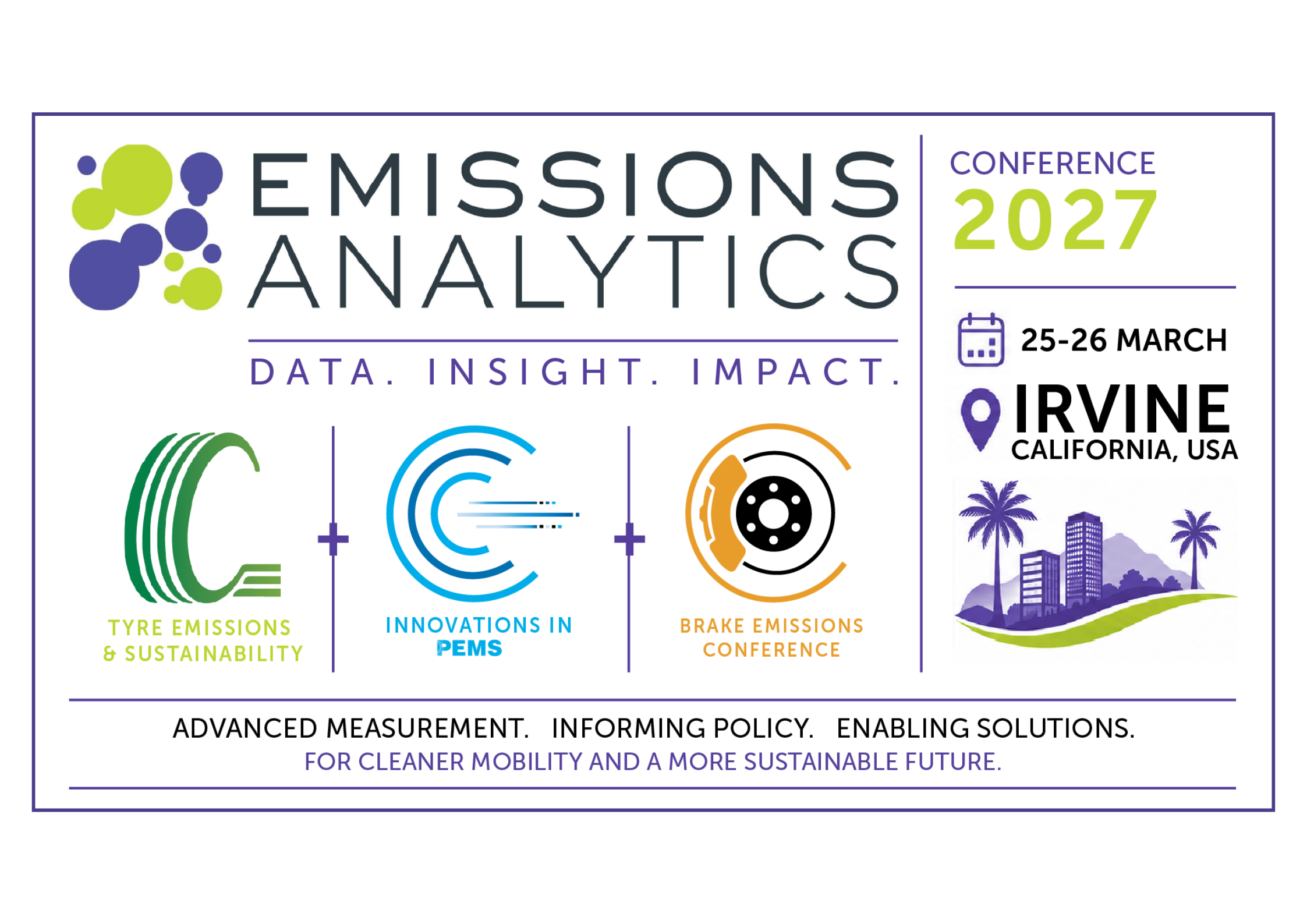
Emissions Analytics expands 2027 US conference to include brake and tailpipe emissions
Expanded California-based event to unite leading experts in tailpipe and non-exhaust emissions.
Following the success of Tyre Emissions & Sustainability USA 2026, Emissions Analytics has announced an expanded 2027 event that will broaden the discussion beyond tyre emissions to include brake emissions and real-world tailpipe emissions measurement technologies, including Portable Emissions Measurement Systems (PEMS).
The event will take place on 25-26 March 2027 at the Beckman Center at the University of California Irvine, immediately following the long-established Coordinating Research Council (CRC) Real World Emissions Workshop in Long Beach, California.
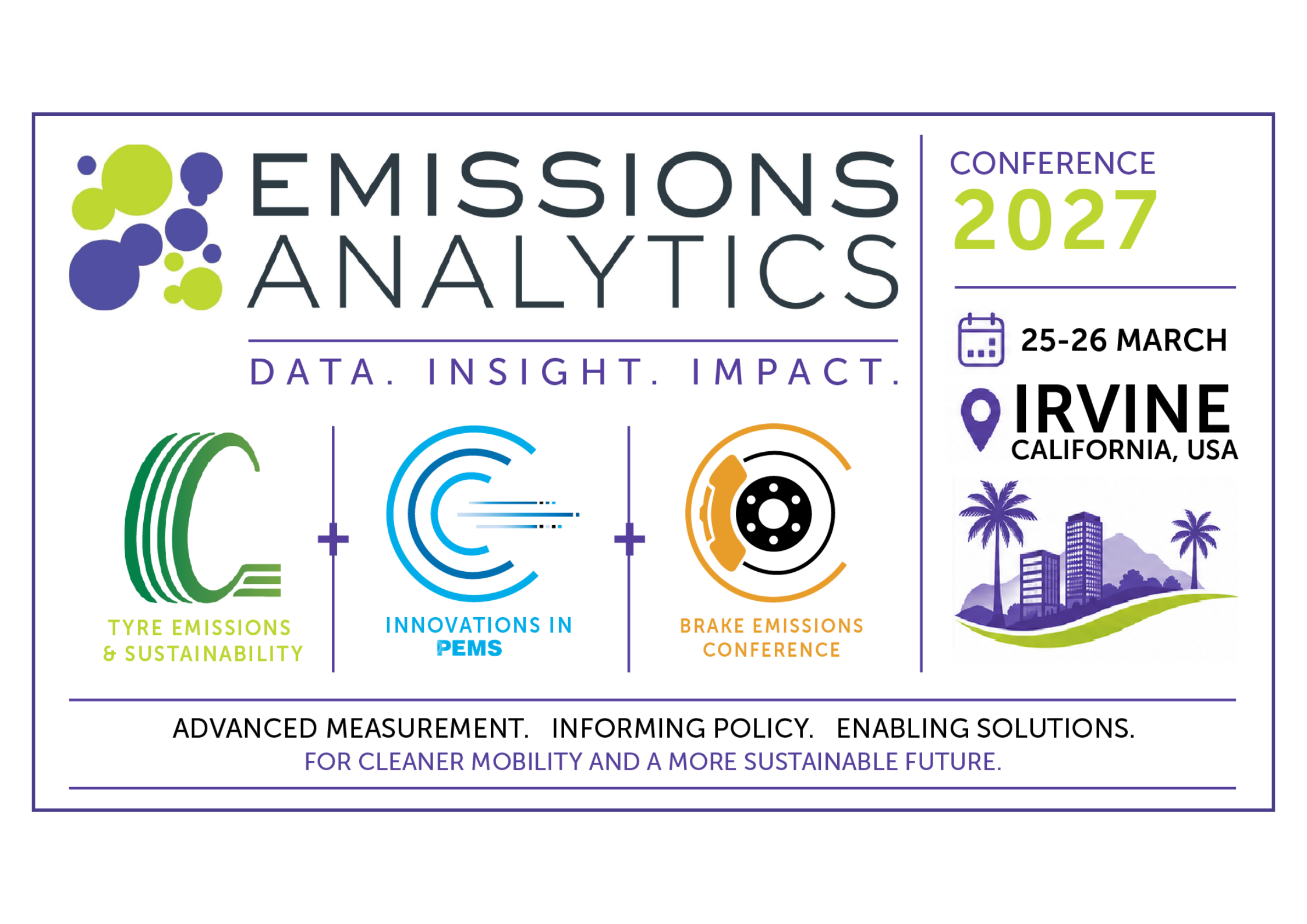
Expanded California-based event to unite leading experts in tailpipe and non-exhaust emissions.
Following the success of Tyre Emissions & Sustainability USA 2026, Emissions Analytics has announced an expanded 2027 event that will broaden the discussion beyond tyre emissions to include brake emissions and real-world tailpipe emissions measurement technologies, including Portable Emissions Measurement Systems (PEMS).
The event will take place on 25-26 March 2027 at the Beckman Center at the University of California Irvine, immediately following the long-established Coordinating Research Council (CRC) Real World Emissions Workshop in Long Beach, California.
The conference is being organised by Emissions Analytics with the support of Kent Johnson of the University of California Riverside (UCR), and marks the return of the highly regarded PEMS and On-board Sensing, Analysis and Reporting (OSAR) conference track, which he had previously run alongside the CRC event for fifteen years.
Following a pause in 2026, the conference will now return in an expanded format, combining the established PEMS/OSAR topics with Emissions Analytics’ growing Tyre Emissions & Sustainability conference co-located at the Beckman.
SCHEDULE
Tyre Emissions & Sustainability USA 2027, 25-26 March
Innovations in PEMS 2027, 25 March
Brake Emissions Conference USA 2027, 26 March
The result will be a two-day event bringing together specialists from across the emissions, air quality, fuels, regulatory and vehicle technology sectors to discuss both tailpipe and non-exhaust emissions in one integrated forum.
THE PROGRAMME WILL FEATURE:
Two full days focused on tyre emissions research and sustainability
A dedicated one-day parallel track covering the latest innovations in PEMS testing
A full day of specialist sessions focused on brake emissions
Technical presentations, industry discussion and networking opportunities across the full emissions landscape.
By aligning the conference directly after the CRC Real World Emissions Workshop, attendees can access five consecutive days of technical content and networking in a single trip to Southern California.
Nick Molden, Founder and CEO of Emissions Analytics, said:
“For many of us working in emissions, air quality and fuel testing, March in Southern California has become an important annual meeting point for the industry. We are pleased to help provide a platform for these important PEMS discussions in 2027, while also creating a broader platform that reflects how quickly the conversation around emissions is evolving. Bringing together tailpipe, tyre and brake emissions in one event creates a unique opportunity to examine the future of real-world emissions measurement from multiple perspectives.”
Emissions Analytics recognises the support of Kent Johnson and colleagues at UC Riverside, alongside early sponsors and industry contributors helping to support the conference launch. Special thanks should also go to Dave Miller of 3DATX for his instrumental support in helping facilitate the return of the PEMS sessions.
Further programme details, speaker announcements and registration information will be released in the coming months.
For more information, visit:
For media enquiries or to join the mailing list, contact: conferences@emissionsanalytics.com
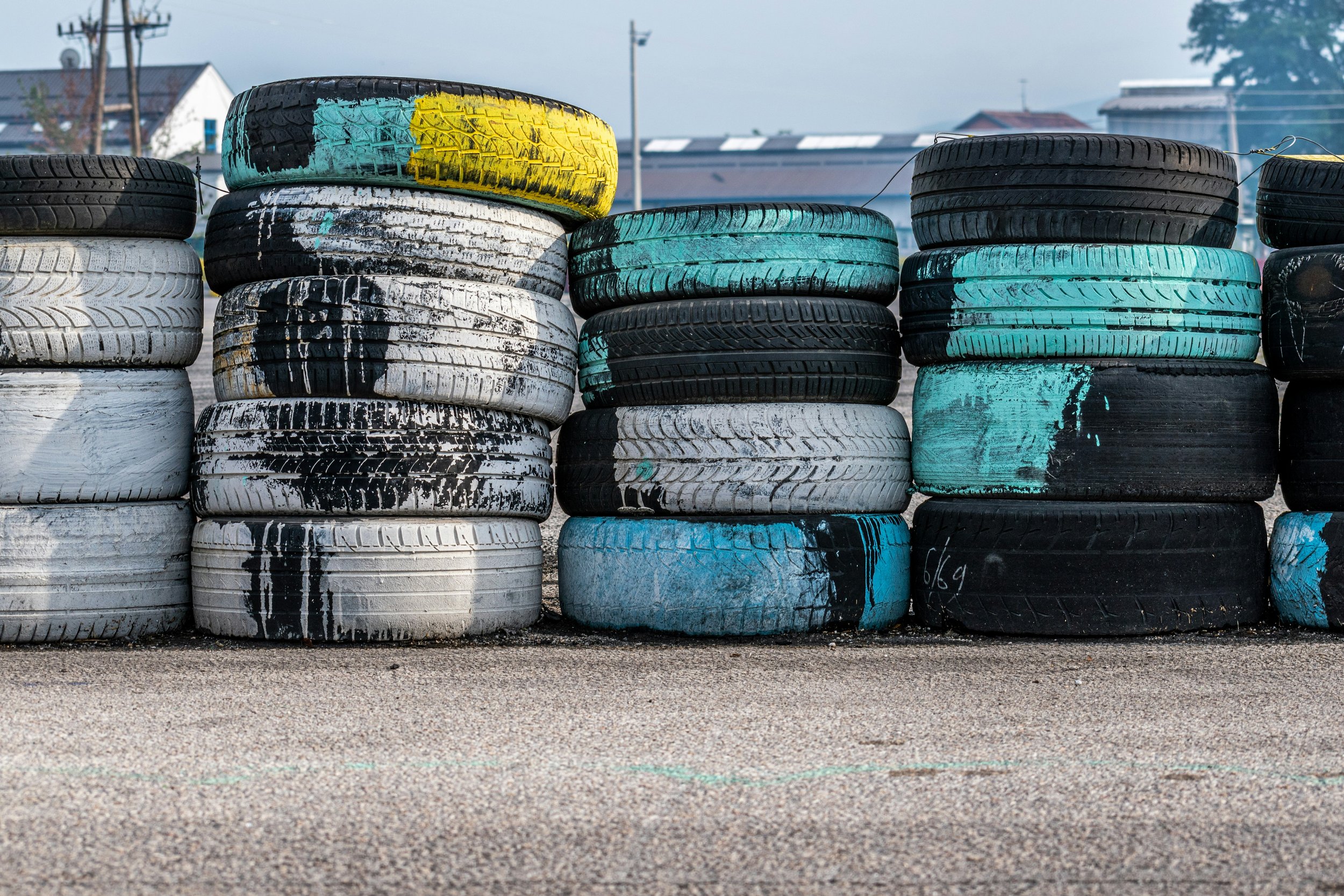
Tyres Are Becoming an Emissions Issue. Measuring Them Is the Hard Part.
For decades, vehicle emissions were largely understood through the exhaust pipe. Regulation, engineering priorities and public attention focused overwhelmingly on tailpipe pollutants, shaping the direction of vehicle development across the industry. But the picture is changing.
For decades, vehicle emissions were largely understood through the exhaust pipe. Regulation, engineering priorities and public attention focused overwhelmingly on tailpipe pollutants, shaping the direction of vehicle development across the industry. But the picture is changing.
As exhaust emissions continue to reduce, attention is increasingly shifting towards non-exhaust sources of pollution, particularly tyre wear. What was once considered difficult to quantify is now being measured with growing confidence, bringing tyres firmly into the wider emissions conversation. This change matters.
Once something can be measured consistently, it can be compared. Once it can be compared, it can be regulated. So, tyres now sit directly at the centre of this transition.
The complexity behind tyre wear measurement
At first glance, tyre wear might appear relatively straightforward to assess. In reality, it is one of the most technically complex areas within vehicle emissions measurement.
Unlike exhaust emissions, tyre wear does not originate from a single controlled system. It emerges from the interaction between multiple variables operating simultaneously and continuously changing in real-world conditions.
Vehicle mass, torque delivery, tyre compound, road surface texture, ambient temperature, inflation pressure, driving style, regenerative braking behaviour, speed profile and cornering dynamics all influence wear behaviour in different ways.
Even relatively small changes in operating conditions can alter the rate, composition and distribution of emitted particles. This creates a significant measurement challenge.
Measuring tyre wear in tightly controlled laboratory conditions can provide valuable insight, but it can also reduce the complexity of the environment being studied. Real-world operation introduces transient events, unpredictable surface interactions and behavioural variability that are difficult to fully replicate in simulation alone.
The result is that tyre wear is not a single fixed value. It is a dynamic outcome shaped by context.
Why methodology matters
As regulatory attention grows, the industry is facing an increasingly important question: How should tyre wear actually be measured?
Different methodologies often reveal different parts of the picture. Some approaches focus on gravimetric mass loss. Others examine airborne particulate matter. Some systems analyse particle number and size distribution in real time, while others focus on deposited material or laboratory abrasion rates. Each methodology has strengths and limitations depending on the question being asked.
This is one of the reasons why standardisation and repeatability have become such important industry priorities. Without robust and transparent methodologies, comparisons between tyres, vehicles or operating conditions become difficult to interpret with confidence.
The challenge is generating data that is meaningful, comparable and representative of real-world behaviour. Manufacturers, suppliers and regulators are attempting to establish a clearer understanding of non-exhaust emissions performance.
Regulation is accelerating this change
The regulatory landscape is now moving quickly.
Euro 7 is expected to introduce tyre abrasion limits for the first time, formally bringing tyre wear into vehicle emissions compliance frameworks. At the same time, research into particulate matter, microplastics and urban air quality continues to expand the focus on non-exhaust emissions globally.
This changes the role tyres play within vehicle development.
Tyres are no longer solely evaluated through the lenses of durability, rolling resistance, grip or efficiency. Increasingly, they are also being assessed as contributors to a vehicle’s environmental impact. That creates a far more complex engineering challenge.
Reducing wear cannot happen in isolation. Improvements in one area may introduce trade-offs elsewhere, whether in braking performance, wet grip, longevity, efficiency or overall vehicle dynamics. The objective is no longer optimisation of a single parameter - it is optimisation within a highly interconnected system.
Why real-world testing matters
This is where real-world testing becomes increasingly valuable.
Controlled environments remain essential for repeatability and development work, but real-world testing provides an additional layer of understanding that laboratory conditions alone cannot always capture.
Transient acceleration events, road surface variation, weather conditions, vehicle loading and route characteristics all influence wear behaviour in ways that can materially affect outcomes.
Understanding how tyres behave across different vehicles, applications and operating environments is becoming critical for both engineering development and regulatory preparedness.
It is also becoming increasingly important for manufacturers seeking independent benchmarking data that reflects how products perform outside idealised conditions.
Measuring tyre wear outside the lab
At Emissions Analytics, this challenge has driven the development of our BTAS (Brake and Tyre Assessment System) testing capability.
BTAS has been designed to measure tyre wear and non-exhaust emissions in real driving conditions, helping translate a highly dynamic system into measurable, comparable and actionable data.
Our testing supports:
Comparative tyre benchmarking
Real-world wear assessment
Vehicle-to-vehicle comparison
Operating condition analysis
Independent emissions evaluation
Development and R&D programmes
Regulatory preparedness work
By combining vehicle testing expertise with advanced emissions measurement methodologies, BTAS allows tyre behaviour to be assessed within the environments where vehicles actually operate. That matters because tyre wear is no longer a niche research topic, it’s becoming a central part of how vehicle emissions are understood.
The industry is entering a new phase
The conversation around tyre emissions is evolving rapidly. The industry is moving from asking whether tyre wear matters to asking how it should be measured, compared and ultimately reduced.
The organisations that develop robust measurement capability earliest will be best positioned to navigate the next phase of non-exhaust emissions regulation, engineering development and environmental scrutiny.
The challenge ahead is not simply generating cleaner vehicles, it’s understanding every source of emissions those vehicles produce.

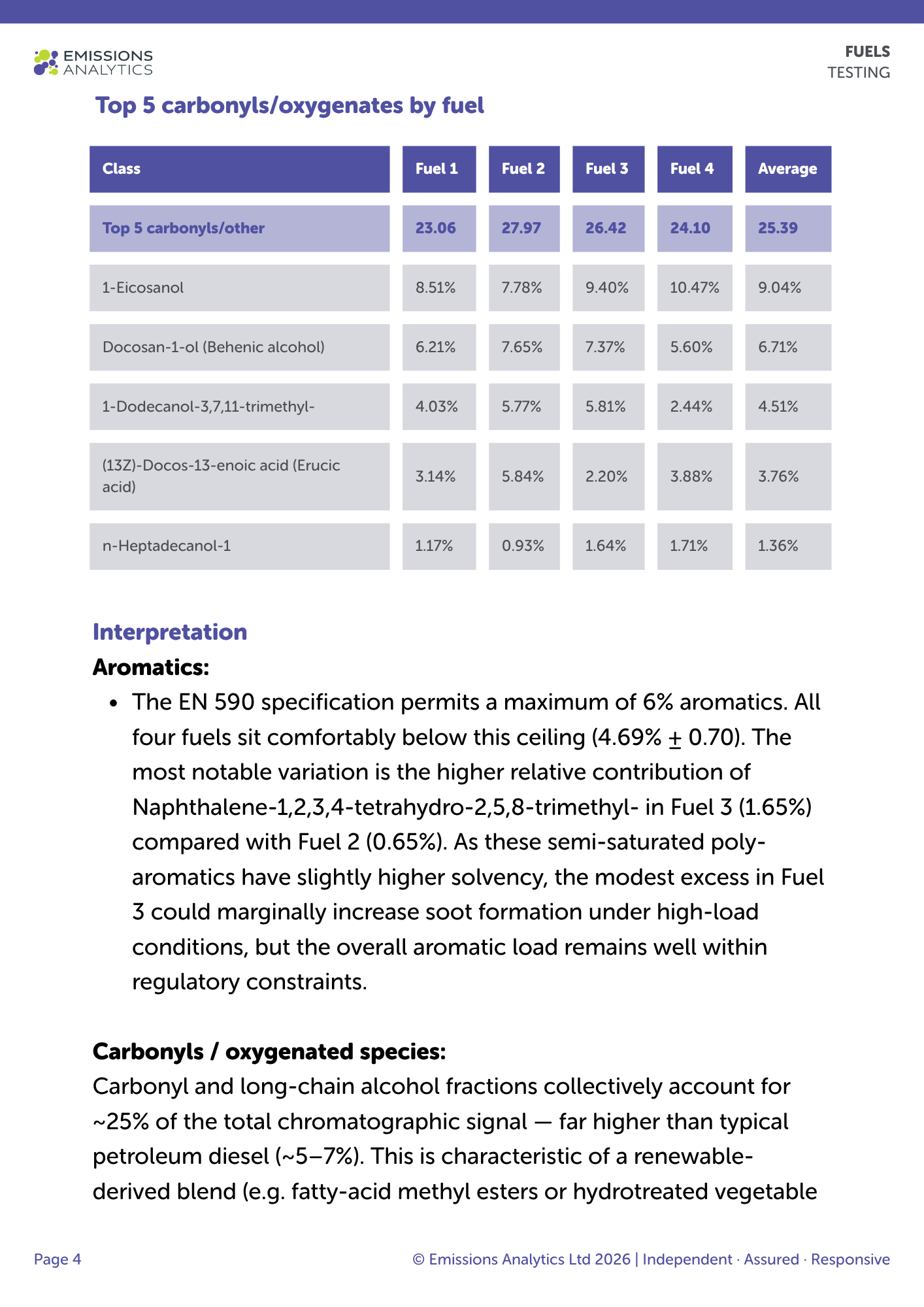
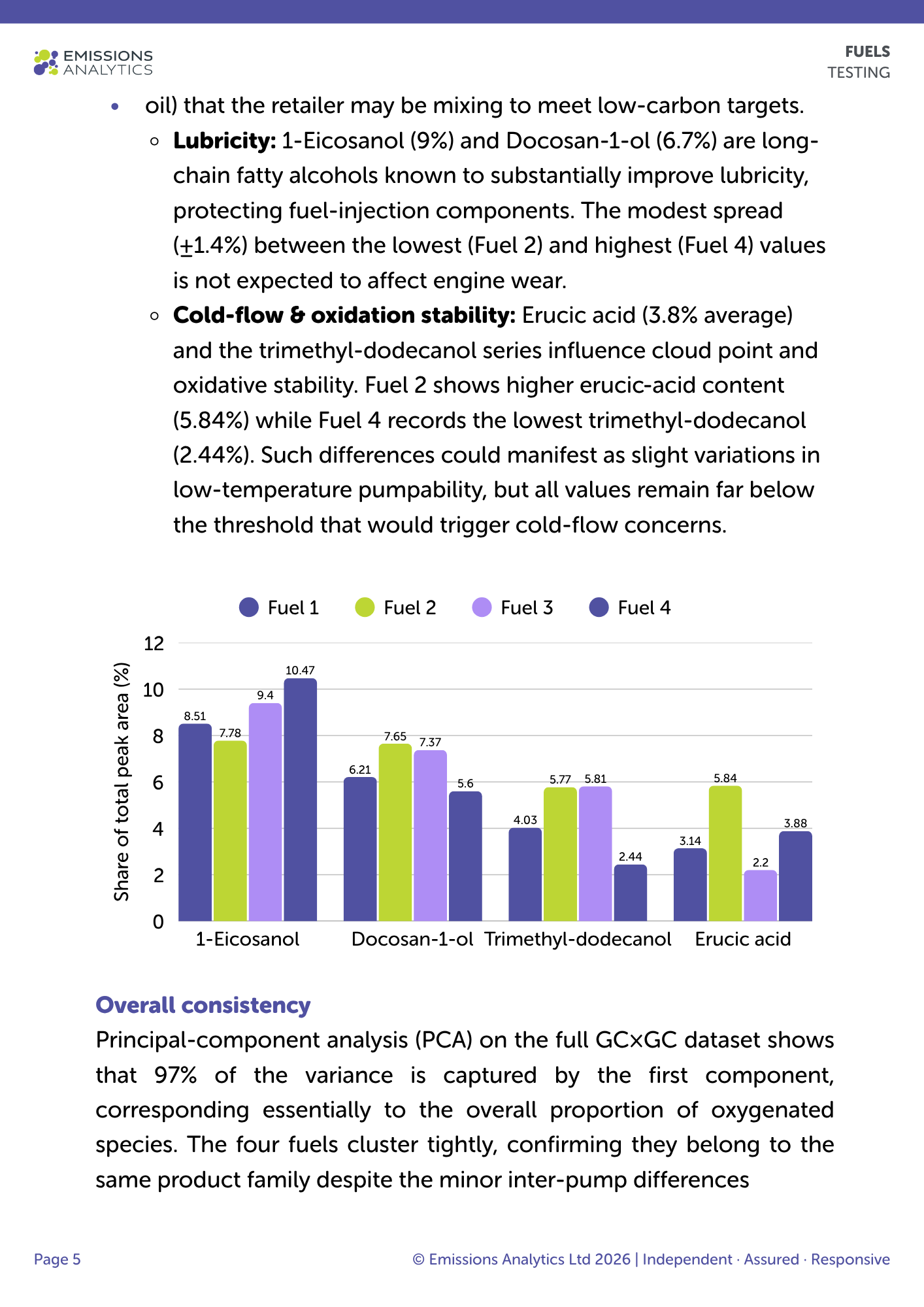
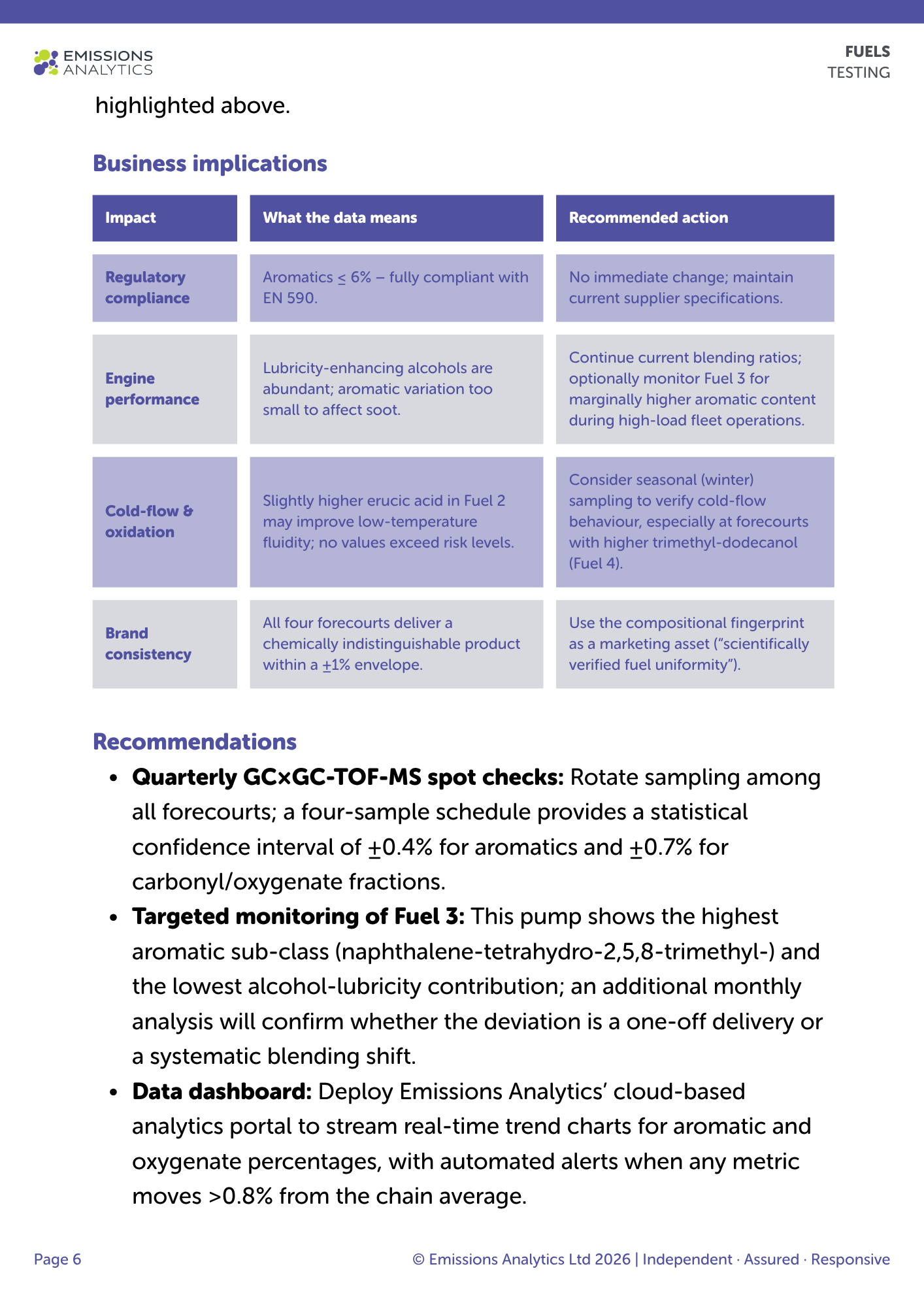
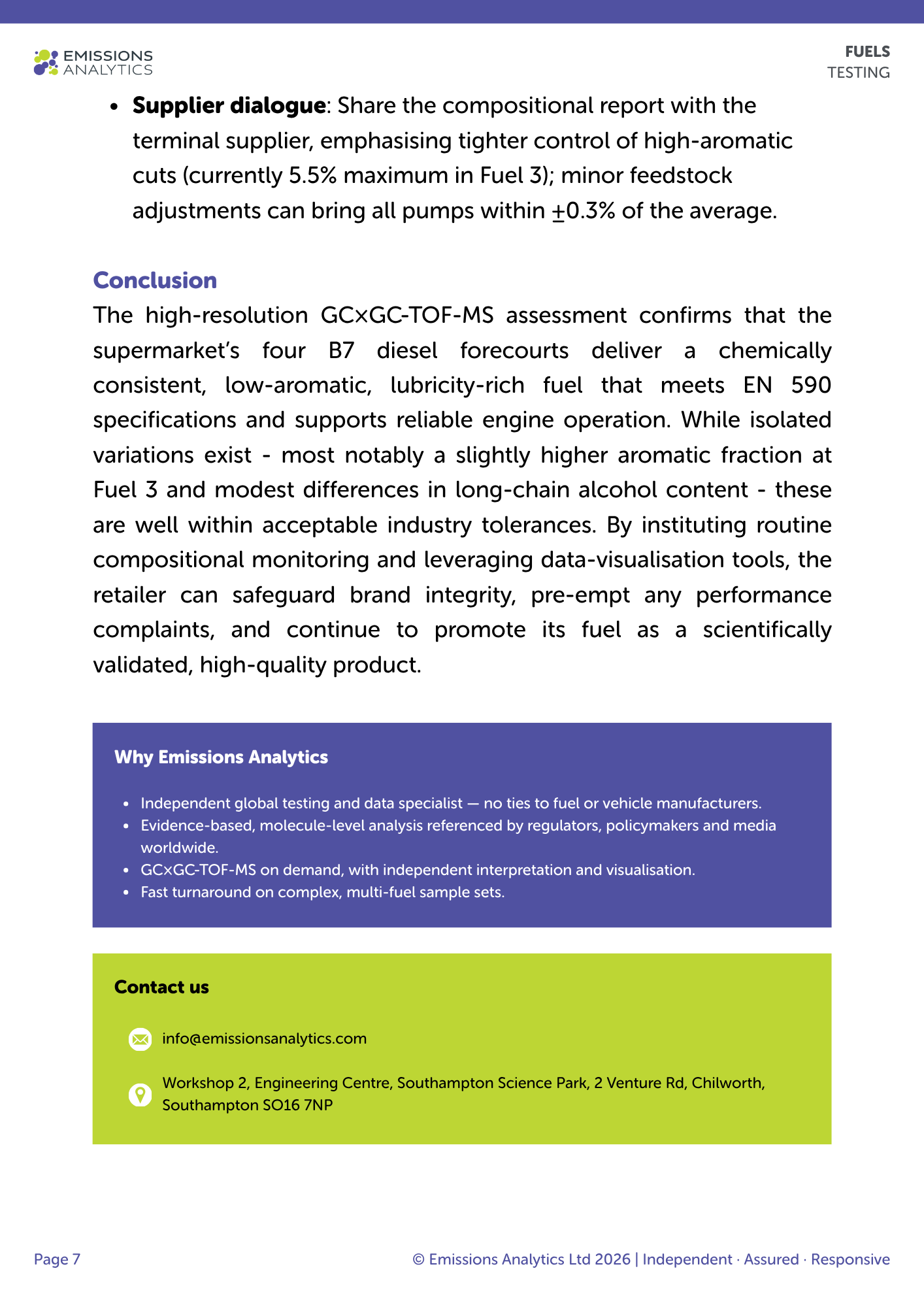
Who Provides Fuels Testing Services?
Fuels testing is used across multiple industries to understand fuel composition and environmental impact. As fuel types become more complex, particularly with the growth of renewable and blended fuels, the need for accurate and detailed analysis has increased.
A range of organisations provide fuels testing services, each with a different focus depending on whether the goal is routine compliance, product development, or deeper analytical insight.
Understanding these differences helps clarify what type of testing is being carried out, and what kind of insight it can provide.
What is fuels testing?
Fuels testing involves analysing the chemical composition and properties of fuels to understand fuel composition and properties, and provide insight that can be used alongside real-world testing.
This includes identifying individual compounds, measuring their concentration, and assessing how fuel characteristics may be relevant to emissions in real-world conditions.
Testing is typically carried out in laboratory environments using analytical techniques such as gas chromatography. While these methods are effective for standard fuels, more advanced techniques may be required to fully understand complex or emerging fuel types.
As fuels evolve, so does the need for more detailed and flexible analysis.
Types of fuels testing providers
Fuels testing is typically carried out by three main types of organisations, each with a distinct role.
Standard testing laboratories
Standard laboratories focus on routine fuel testing, often aligned with regulatory or industry specifications.
This includes verifying that fuels meet defined standards for composition and quality. Testing methods are typically standardised, ensuring consistency and repeatability.
Their primary role is compliance. They confirm whether a fuel meets required specifications, rather than exploring its full chemical complexity.
Engineering consultancies and technical service providers
Engineering consultancies use fuels testing as part of product development and optimisation.
This testing is often used to understand how fuels interact with engines or systems, supporting calibration improvement.
The focus is on application. Testing is designed to answer specific technical questions, often linked to emissions outcomes rather than full compositional analysis.
Independent analytical testing organisations
Independent analytical organisations focus on detailed measurement and interpretation of fuel composition.
This includes using advanced techniques to analyse complex fuels, identify trace compounds, and understand variability across samples.
There is an emphasis on generating objective, data-led insight, often beyond what is captured in routine testing. This may include comparative studies, research programmes, or investigations into unexpected fuel behaviour.
By operating independently, these organisations provide an additional perspective on how fuels differ in practice.
Where Emissions Analytics fits
Emissions Analytics is an independent testing organisation specialising in high-resolution fuels analysis. Many organisations have either internal laboratories or external providers that provide single gas chromatography, GC-MS.
Using advanced techniques such as comprehensive two-dimensional gas chromatography (GC×GC-TOF-MS), Emissions Analytics analyses fuels in detail, including complex mixtures and trace components that may not be visible using standard methods to require a disproportionate amount of time to achieve the results we can deliver immediately.
Its work focuses on understanding how fuels differ beyond standard specifications, including variability between batches, differences between fuel types, and the presence of compounds that may influence emissions.
This includes testing across conventional fuels, renewable fuels such as HVO and SAF, and emerging fuel technologies.
By combining measurement with interpretation, Emissions Analytics provides insight into fuel composition that supports research, development, and decision-making.
Why the distinction matters
While all three types of organisations provide fuels testing, their roles and outputs are different.
Standard laboratories focus on whether a fuel meets specification
Engineering consultancies focus on how a fuel performs in a system
Independent analytical organisations focus on what the fuel actually contains
These differences shape the type of insight produced.
Routine testing provides consistency and compliance. Development testing supports optimisation. Independent analysis provides a deeper understanding of composition and variability.
For modern fuels, particularly renewable and blended types, this distinction becomes more important.
Standard methods may capture most of the composition, but not all of it. The remaining detail can be where key differences exist, influencing emissions or long-term behaviour.
Independent fuels testing helps bridge this gap by analysing fuels at a higher level of resolution, providing a more complete picture of what is present and how it may behave.
Understanding fuels in practice
Fuels do not behave in isolation. Their impact depends on composition, use, and operating conditions.
Testing that focuses only on specification may not fully capture this complexity.
By combining detailed compositional analysis with real-world context, it becomes possible to better understand how fuels differ, how they evolve, and what that means for their use.
Speak to our team
If you would like to learn more about fuels testing or discuss a specific project, get in touch with our team.
We can support everything from targeted fuel analysis to broader research and benchmarking programmes.

The identity crisis for net zero: Why you can bend politics but not truth
Regular readers will expect predominantly empirical data from Emissions Analytics, but this newsletter takes a detour into pure logic. More Karl Popper than David Hume. At the time of writing, vehicle decarbonisation targets across Europe are coming under serious strain, yet proponents are doubling down. The fear of invalidating the fundamental decarbonisation policy of electric vehicles powered by renewables is too great. But rather than argue over the latest facts and figures – are battery electric vehicle (BEVs) sales soaring or crashing – we can assess the situation in an alternative way. We can ask ourselves what the logical conditions would need to be to meet the various mandates. Is it logically possible?
Regular readers will expect predominantly empirical data from Emissions Analytics, but this newsletter takes a detour into pure logic. More Karl Popper than David Hume. At the time of writing, vehicle decarbonisation targets across Europe are coming under serious strain, yet proponents are doubling down. The fear of invalidating the fundamental decarbonisation policy of electric vehicles powered by renewables is too great. But rather than argue over the latest facts and figures – are battery electric vehicle (BEVs) sales soaring or crashing – we can assess the situation in an alternative way. We can ask ourselves what the logical conditions would need to be to meet the various mandates. Is it logically possible?

To assess this, we should consider the Kaya identity, developed by Japanese energy economist, Yoichi Kaya, in 1997. It describes the relationship between several economic, energy and population metrics and total carbon dioxide (CO2) emissions. The crucial element is that is not an equation, but an identity. A mathematical equation describes the relationship between variables such that at least one permutation is true. An identity, in contrast, is always true. Simplistically, “a = 2” tells you the correct single value for “a”, whereas “a × 2 ≡ 2a” is true for all values. In other words, the identity describes something that is logically true, as the Kaya identity describes total global CO2 emissions as the product of the following factors:
CO2 ≡
Population × GDP per capita
× Energy intensity of GDP × Emission intensity of energy
To achieve global net zero, therefore, we must reduce at least one of these elements to zero. Moreover, there is no other way to achieve the goal. It’s just maths and logic. It is not that we can come up with some new, creative engineering or policy ideas to find another way. Any initiatives to reduce CO2 must lower one or more of these factors.
And so, we can look at each of these factors to assess the prospects and possibilities for reaching net zero in much the way Europe and some other countries plan. We can immediately rule out population as the lever, as killing large swathes of the human population would not be acceptable. In fact, the human population is still on a growing trend, although is likely to peak around 25% higher than today around the end of the century. In the longer term, declining global population may ease the emissions burden, but only on a timeframe way beyond current policy objectives.
Reducing energy intensity of GDP means becoming more efficient: producing more with less energy. LED light bulbs. Lower fuel consumption cars. Arc furnace steel plants. Recent decades have seen many successful initiatives in energy efficiency, not least the move with cars that used to only deliver 20 miles per gallon of fuel and how, with hybridisation, can easily achieve 50. Most of these initiatives come at the cost of upfront investment, but have the advantage that the reduced energy consumption delivers on-going financial savings to offset this investment. Therefore, naturally, people and businesses will invest in energy efficiency until their margin gain is zero. In most cases, this will be well short of zero energy consumption, and so there is likely to be a natural lower limit on how low energy intensity of GDP will go without technological breakthroughs or government incentives.

The next lever is the emissions intensity of energy. Once we have exhausted ways to produce the same economic activity with less energy, we must make that remaining energy cleaner. Solar heated hot water. Nuclear powered submarines. Flour ground by windmill. The ultimate, perhaps, will be nuclear fusion, which offers the prospect of unlimited carbon-free energy. Currently this remains prospect rather than reality. It is a further interesting feature of the Kaya identity that – if we get to scalable, commercial nuclear fusion with near-zero emissions intensity of its energy, we would be able to achieve net zero CO2 emissions while having near-infinite economic activity and catastrophically inefficient products and processes. In other words, if one variable in the identity tends to zero, zero CO2 will be achieved however bad the other factors are. Such an outcome would unlikely be the best for human society if that energy would also almost cost-free, as we would bump up against other planetary constraints such as space and physical resources in an orgy of consumption. In other words, decarbonising human activity is a policy priority but should never represent some exclusive or even abiding objective of the world.
We can put some rough numbers of how these various factors have changed over time. Symbolically, let us take the 1997 as the benchmark year, not just as it is when the Kaya identity was first published, but also as the date of the Kyoto protocol, which framed some much of subsequent decarbonisation policy. A reasonable estimate would be that, since 1997, global population has increased by 37%, energy intensity of GDP has fallen by 33%, and emissions intensity of energy has come down by just 4%. Combined, this would imply a 12% reduction in global CO2 emissions, which is in stark contrast to the approximately 50% increase in actual global emissions. How can this be?
The likely explanation for the difference is the final factor that we have yet to consider: GDP per capita. Economic activity per head of population, in other words. While not a perfect measure of financial welfare, it is the least bad global metric we have. We get richer on this measure as we become more productive, squeezing more activity out of our finite resources of land, labour, capital and enterprise. Since 1997, global GDP per head has risen strongly, by 80%, which accounts almost exactly for the gap.
Why come to GDP last in this discussion? Energy and emissions intensity are both factors that most people would agree are good things to reduce. There are challenges in doing some, and effort and investment is required, but becoming more efficient must help our CO2 goals. Population is more ambiguous as a target, with arguments on both sides as to whether a greater or smaller population is desirable. Whatever, governments’ ability to influence fecundity is almost always shown to be futile, whether you are Mussolini or Macron. GDP per capita, on the other hand, is a variable we can strongly influence by policy, and by and large we want GDP to be as high as possible, to deliver us a good standard of living. There is, therefore, a direct conflict: we want GDP to go up, but we want CO2 to go down. Governments aim to reconcile these two objectives by reducing energy and emissions intensity. Energy efficiency schemes continue, and are often worthwhile, but it is clear than infinite efficiency is impossible. That leaves the main lever of government being to reduce emissions intensity of energy to zero. That is our “net zero.
How realistic is this? Let us be practical and accept that zero emissions intensity of energy is unachievable, but that a 90% reduction would be close enough to put net zero within reach. To reach that goal, a compound annual reduction of around 7% would be needed in emissions intensity from 2020 to 2050. This might not sound too daunting, but over the last twenty years – despite all the efforts and investment – Europe has only achieved around 2% per year reduction. Globally, the rate of improvement has been even lower.
There is only one case in the history of the modern world in which such reductions in emissions intensity were achieved. This was France’s policy of nuclear expansion in the 1970s and 1980s in responsible to the oil crisis of 1973 and 1979. They build almost 60 nuclear reactors in less than a generation, and as a result achieved emission intensity reduction of electricity of 11% per year in the 15 years afterwards. Even that only translated to 3% at the whole energy system level. Then, Chernobyl happened almost 40 years ago to this day, which gave ample (although largely misplaced) ammunition to anti-nuclear groups to pressurise European and US governments to limit further nuclear investment (although. Only now, in the face of logical consequences of the Kaya identity, is that beginning to change.
Therefore, it is only reasonable to conclude that the 2050 date for reaching net zero as interpreted by the International Panel on Climate Change, following the Paris Agreement of 2015, is not going to happen, and in all likelihood we will not even get close. Where does that leave a government – such as the UK or many in Europe – that is so strongly wedded to this global emissions objective? Only one lever is left: allow GDP per person to fall, such that a combination of reduced economic activity, higher efficiency and lower emissions intensity can together get close. There is no other way.
But we must be clear what this means logically: a long and severe economic recession. Poorer citizens. Worse quality of life. There is no other way, logically, if you want to hold doggedly to the objective.

Populations in Europe are becoming increasingly restive about their financial welfare slipping progressively behind other countries and in real terms. There is a high chance that a limit will be reached that will be expressed electorally. Stagnating living standards have now persisted for twenty years. While the banking crises of 2007/8 is often blamed for this, persistent recession today may be in no small part the deflationary policy of decarbonisation endorsed by governments in the same period, as for example by the 2008 Climate Change Act in the UK.
What might this on-going, severe recession look like. Energy rationing for a start. This may sound fanciful, but we are already seeing the structure of rationing appearing. “Vehicle-to-grid” charging of BEVs may sound like a great policy for efficient allocation of electricity to transportation demand – which it is – but it is also a mechanism which governments could abuse to extract energy from car batteries and prevent recharging by certain people at certain times. The new vehicle fleet CO2 target regime is, in practice, becoming a mechanism for rationing the number of internal combustion engine vehicles that can be sold. In the UK, within a few years you will not be able to rent a house that does not achieve a certain level of energy efficiency.
At the point that voters rebel, the current orthodoxy must be replaced by an approach that does not put emissions reduction above the financial welfare of citizens. And the profound frustration is that there is a one way out of this problem, as shown above all by France, by rolling out nuclear fission at scale. This could take the centrally-directed form pursued by France, but small modular reactors offer the possibility of greater speed, flexibility and competition in an area currently overburdened by regulatory constraints.
Maybe it is not too late, logically.
Who Provides PEMS Testing in Europe?
Portable Emissions Measurement Systems (PEMS) testing is used across Europe to measure vehicle emissions under real-world conditions. It plays an important role in understanding how emissions performance varies outside the laboratory, particularly in relation to regulatory frameworks such as Real Driving Emissions (RDE) and In-Service Conformity (ISC).
A range of organisations provide PEMS testing in Europe, each with a different role depending on whether the focus is regulatory compliance, engineering development, or independent measurement and research.
What is PEMS testing?
PEMS testing involves installing measurement equipment directly onto a vehicle or machine to record emissions while it is operating in real-world conditions.
Unlike laboratory testing, which follows fixed cycles in controlled environments, PEMS testing captures emissions across real driving scenarios. This includes variation in speed, load, terrain, temperature, and driving behaviour.
Because of this, PEMS testing is widely used to better understand how emissions perform in practice, rather than under idealised conditions.
Types of PEMS testing providers in Europe
Across Europe, PEMS testing is typically carried out by three main types of organisations.
Certification and regulatory laboratories
Certification laboratories conduct emissions testing as part of formal regulatory approval processes, which when reviewed in the context of PEMS, this often relates to RDE testing. Vehicles are assessed against defined regulatory boundaries under real-world driving conditions. These organisations operate within established compliance frameworks and follow prescribed testing procedures.
Their primary role is to determine whether vehicles meet regulatory requirements at the point of approval.
Engineering consultancies and technical service providers
Engineering consultancies use PEMS testing as part of vehicle development and optimisation. This testing is typically used to support manufacturers in understanding emissions performance during the design and calibration process. This can include identifying how emissions vary across different operating conditions and refining system performance accordingly.
The focus is often on development, diagnostics, and supporting technical decision-making during the product lifecycle.
Independent emissions testing organisations
Independent testing organisations use PEMS to measure real-world emissions outside of formal regulatory or development programmes.
There is an emphasis on objective measurement and analysis, often across a wide range of vehicles, technologies, and operating conditions. This can include comparative testing, research studies, and investigations into how emissions performance varies in practice.
By operating independently, these organisations provide an additional perspective on real-world emissions behaviour, complementing both regulatory testing and manufacturer-led development work.
Where Emissions Analytics fits
Emissions Analytics is an independent emissions testing organisation specialising in real-world measurement.
Using Portable Emissions Measurement Systems (PEMS), Emissions Analytics measures emissions directly from vehicles and machinery under real operating conditions. Its work focuses on understanding how emissions behave outside the laboratory, across different environments, duty cycles, and use cases.
This includes testing across passenger vehicles, commercial vehicles, and non-road mobile machinery, with a focus on producing comparable, data-led insights into real-world emissions performance.
By concentrating on independent measurement and analysis, Emissions Analytics contributes to a broader understanding of emissions behaviour, alongside regulatory testing and engineering development activities.
Why the distinction matters
While all three types of organisations use PEMS technology, their roles and incentives are different.
Certification laboratories focus on compliance within defined regulatory frameworks. Testing is conducted against prescribed conditions to determine whether requirements are met.
Engineering consultancies focus on development and optimisation, using PEMS to support calibration and improve system performance during the design process.
Independent testing organisations focus on measurement and analysis of real-world emissions behaviour, outside of both regulatory approval and product development cycles.
These differences shape not only how testing is carried out, but also the type of insight that is produced.
Regulatory testing is necessarily structured and bounded.
Development testing is often targeted toward improving specific outcomes.
Independent testing, by contrast, is designed to observe how emissions perform in practice, without being constrained by compliance objectives or optimisation goals.
This distinction becomes important when interpreting emissions data. Results generated under controlled or purpose-specific conditions do not always reflect the full range of real-world operation.
Independent PEMS testing helps bridge that gap by measuring emissions across a wider set of conditions, including variations in usage, environment, and behaviour. This provides a clearer view of how vehicles and machinery perform outside the laboratory.
For organisations seeking to understand real-world emissions performance, this type of measurement offers an additional layer of insight, complementing both regulatory testing and engineering development.
If you want to learn more about how Emissions Analytics operates and works to provide unbiased testing, get in touch with our team today.
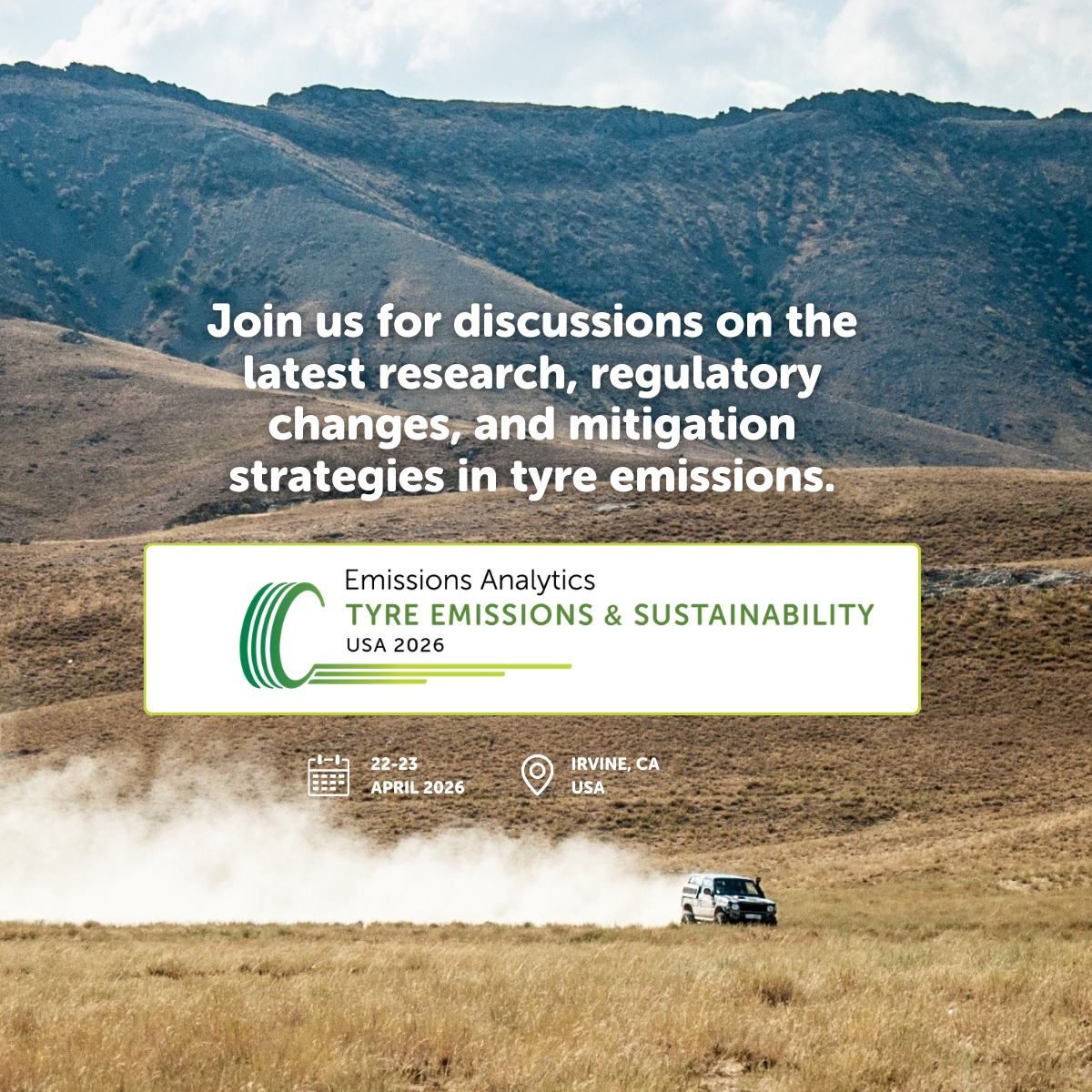
Tyre Emissions & Sustainability USA 2026 Program Now Live as Industry Prepares to Meet in Irvine This April
The full program for Tyre Emissions & Sustainability USA 2026 is now live, confirming a two-day agenda dedicated to one of mobility’s most urgent and fast-evolving challenges: tyre emissions, chemical composition and lifecycle sustainability.
Taking place at the Beckman Center in Irvine, California, the conference will bring together leading scientists, regulators, material innovators and industry specialists to examine the environmental and health impacts of tyre wear and to explore practical pathways forward.
With the event fast approaching in April, delegates can now review the confirmed speaker line-up and session topics across chemistry, testing, air quality, regulation and circularity.
The full program for Tyre Emissions & Sustainability USA 2026 is now live, confirming a two-day agenda dedicated to one of mobility’s most urgent and fast-evolving challenges: tyre emissions, chemical composition and lifecycle sustainability.
Taking place at the Beckman Center in Irvine, California, the conference will bring together leading scientists, regulators, material innovators and industry specialists to examine the environmental and health impacts of tyre wear and to explore practical pathways forward.
With the event fast approaching in April, delegates can now review the confirmed speaker line-up and session topics across chemistry, testing, air quality, regulation and circularity.
Tyres are increasingly recognised as a major source of non-exhaust emissions, shedding millions of tonnes of material globally each year . At the same time, regulatory scrutiny is intensifying. Legislative developments, including emerging limits on tyre wear and chemical oversight in multiple jurisdictions, are accelerating research and innovation across the sector.
Against this backdrop, the 2026 program has been structured to move beyond headlines and into data, methodology and real-world evidence.
The central questions being addressed include:
How well do we understand tyre wear particle generation and distribution?
What is the environmental fate of compounds such as 6PPD and 6PPD-quinone?
How should testing methodologies evolve?
What would genuine lifecycle circularity look like in practice?
The newly released program confirms contributions from leading institutions across the United States and internationally.
Speakers include:
Dr Susanne Brander, Project Director at The Pew Charitable Trusts and Courtesy Faculty at Oregon State University
Stephanie Gordon, Physical Scientist at US Geological Survey
Seth Hankla, Environmental Scientist at California Department of Toxic Substances Control
Aaron Puhala, Vice President of Innovation at Arclin
Professor Georgios Karavalakis and Elizabeth DeFrance from University of California Riverside
Professor Zhenyu Tian, Northeastern University
Professor Punyaslok Rath, University of Missouri-Columbia
Denise Kennedy, President & CEO of DK Enterprises
David Stevens, Managing Director of Tire Retread & Repair Information Bureau
Erik Krogh, Vancouver Island University
Dr Rachel Scholes, University of British Columbia
Dilraj Surendran, Tokyo Metropolitan University
Sessions will cover:
National 6PPD-Q mapping and vulnerability analysis
Tyre wear particulate measurement
High-throughput chemical analysis in urban waters
Air quality impacts of non-tailpipe emissions
Artificial turf crumb rubber transformation
Retreading, recycling and the practical realities of circularity
Day one focuses on tyre chemistry, testing methodologies and infrastructure. Day two expands into air quality effects, formulation, end-of-life management and lifecycle circularity.
The structure reflects a simple principle: the tyre question cannot be solved in isolation. It sits at the intersection of materials science, toxicology, hydrology, air quality, regulation and industrial design.
Rather than approaching tyre emissions as a single-variable problem, the conference positions it as a systems challenge. Each session builds another layer of understanding, much like examining a tyre cross-section. The surface tells one story, but the compounds, interactions and downstream pathways reveal a much more complex picture.
Tyre Emissions & Sustainability USA is organised by Emissions Analytics, known for its independent testing and real-world data programs . The conference series was created to provide a structured, evidence-based forum at a time when environmental debates are becoming increasingly politicised.
Founder and CEO Nick Molden commented:
“Environmental discussions around tyres are accelerating quickly. What matters now is the quality of evidence and the clarity of testing methods. Our goal is to create a space where primary research, regulatory thinking and industrial realities can be examined carefully and constructively.”
With the program confirmed and April approaching, registration is open for delegates wishing to attend in Irvine, CA on 22–23 April 2026 .
The event includes access to all presentations, electronic copies of materials, networking breaks and lunch and an evening cocktail reception.
Group discounts remain available.

About Emissions Analytics
Emissions Analytics is an independent global leader in real-world emissions testing and analysis. The organisation provides evidence-led insight across tyres, powertrains and fuels, supporting industry and policymakers with robust data to inform decision-making and regulation.
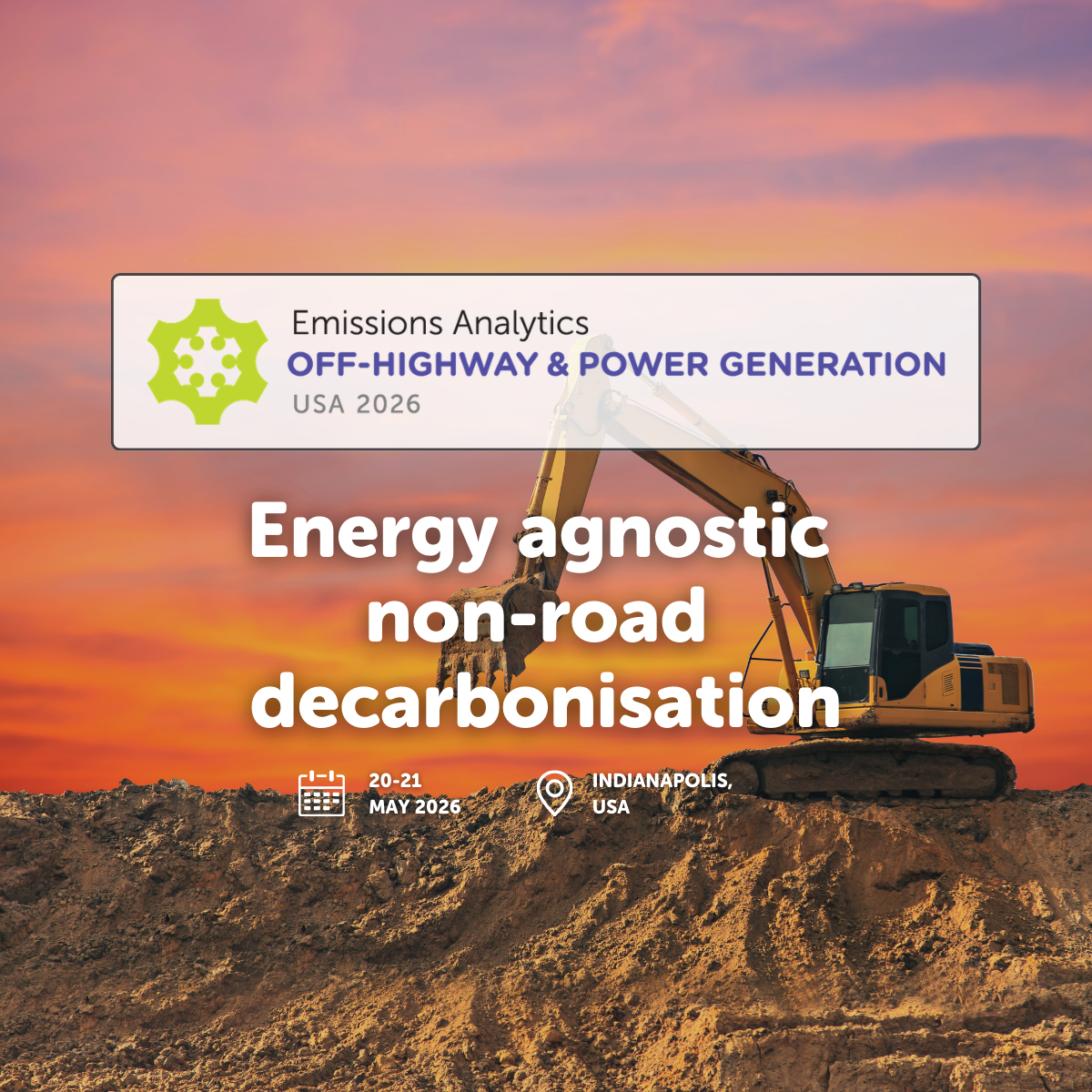
Off-Highway & Power Generation USA 2026 Programme Now Live as Industry Prepares to Meet in Indianapolis This May
The full programme for the 3rd Off-Highway & Power Generation USA 2026 conference is now live, confirming a comprehensive two-day agenda focused on energy-agnostic decarbonisation across non-road machinery and stationary power.
Taking place on 20–21 May 2026 at the Sheraton Indianapolis City Centre Hotel, the event will convene regulators, OEMs, fuel specialists, powertrain engineers and technology providers to examine what meaningful emissions reduction looks like in practice.
The full programme for the 3rd Off-Highway & Power Generation USA 2026 conference is now live, confirming a comprehensive two-day agenda focused on energy-agnostic decarbonisation across non-road machinery and stationary power.
Taking place on 20–21 May 2026 at the Sheraton Indianapolis City Centre Hotel, the event will convene regulators, OEMs, fuel specialists, powertrain engineers and technology providers to examine what meaningful emissions reduction looks like in practice.
With May approaching, delegates can now review the confirmed speaker line-up and detailed session structure spanning ICE, electrification, renewable fuels and power generation technologies.
Off-highway machinery remains heavily reliant on diesel, yet alternatives are advancing rapidly. Electrification, hybridisation, biofuels and e-fuels are all progressing, each with its own technical, economic and lifecycle questions.
At the same time, power generation is under renewed scrutiny. The exponential growth in energy demand, particularly from data centres and AI infrastructure, has placed stationary engines and backup generation firmly in the spotlight.
The 2026 programme has been structured to reflect that reality. This is not a single-technology conference. It is a systems discussion about performance, durability, regulation and commercial viability.
Much like an off-highway duty cycle, the path to decarbonisation is rarely linear. It requires balancing load, terrain, fuel availability and regulatory pressure. The agenda is designed to explore those trade-offs openly.
Day One: Regulation, Powertrains and Electrification
The first day opens with a regulatory and market outlook, including:
Kim Heroy-Rogalski, Chief, Mobile Source Regulatory Development Branch at California Air Resources Board
Allen Schaeffer, Executive Director of Engine Technology Forum
Dr Graham Conway, Director, Industrial Sustainability at Opportune LLP
Powertrain developments feature contributions from:
Professor Dr Greg Shaver, Purdue University
Dr Danan Dou, John Deere Power Systems
Chris Sharp, Southwest Research Institute
Afternoon sessions move into abatement, ICE and electrification, with speakers from:
Proventia
Cambustion
Volvo Construction Equipment
Ymer Technology
Convergent Science
Sessions will address topics including hydrogen combustion NOx variability, advanced exhaust aftertreatment, thermal management for electrification and simulation-led optimisation tools.
Day Two: Power Generation Under Pressure
The second day shifts focus to stationary power and decarbonisation.
Confirmed contributors include representatives from:
Johnson Matthey
Rolls-Royce Solutions America Inc.
Cummins Inc.
Dinex Emission Inc.
EPRI
Neste US
Innospec Fuel Specialities
Kaizen Clean Energy
Sessions will examine:
The evolution of the stationary power market
Emissions from gensets in data centre applications
Emerging fuels and gas turbines
Renewable diesel as an immediate carbon reduction pathway
Dispatchable off-grid microgrids
Catalyst technologies ready for future fuels
A concluding leaders’ panel will address a central question: how can the power generation industry make meaningful emissions reductions while meeting urgent customer demand? 
Off-Highway & Power Generation USA was launched to provide a neutral meeting place for non-road stakeholders at a time when energy debates are often polarised.
Organised by Emissions Analytics, an independent real-world emissions testing specialist, the conference reflects a clear principle: focus on measurable outcomes rather than rhetoric.
From Portable Emissions Measuring Systems for NRMM to laboratory fuels analysis, the company’s testing background informs the conference structure, ensuring discussions are grounded in data, comparability and practical implementation .
Registration is now open.
With the full programme now confirmed and May fast approaching, registration is open for delegates wishing to attend in Indianapolis on 20–21 May 2026 .
The delegate pass includes:
Access to all presentations
Electronic copies of materials
Refreshments throughout
Evening networking reception
Group bookings are available.
About Emissions Analytics
Emissions Analytics is an independent global leader in real-world emissions testing and analysis. The organisation provides evidence-led insight across tyres, powertrains and fuels, supporting industry and policymakers with robust data to inform decision-making and regulation.

Tear down the sign!
Every morning, this shopkeeper places a sign in his window: “Workers of the world unite.” He doesn’t believe it, no-one does, but he places a sign anyway to avoid trouble, to signal compliance, to get along. And because every shopkeeper on every street does the same, the system persists – not through violence alone, but through participation of ordinary people in rituals they privately know to be false.
Mark Carney, prime minister of Canada, was quoting Czech dissident and subsequent Czech president Václav Havel in his special address at the World Economic Forum in Davos in January 2026.
The capacity to stop pretending
Every morning, this shopkeeper places a sign in his window: “Workers of the world unite.” He doesn’t believe it, no-one does, but he places a sign anyway to avoid trouble, to signal compliance, to get along. And because every shopkeeper on every street does the same, the system persists – not through violence alone, but through participation of ordinary people in rituals they privately know to be false.
Mark Carney, prime minister of Canada, was quoting Czech dissident and subsequent Czech president Václav Havel in his special address at the World Economic Forum in Davos in January 2026.
Since perhaps 1997 and the Kyoto Protocol we have arguably been “living within a lie,” as President Havel put it when referring to how the post-War Communist regime could sustain itself. Not because climate change is unimportant, nor that other environmental challenges around air, water and soil pollution and biodiversity can be ignored, but because we collectively have been pursuing policies that we know are not working. Most vexingly, everyone in power still clings to net zero, just as citizens are beginning to take their window signs down: …the old order is not coming back.

We can argue at length as to how severe the threat from climate change is – noting that none of the International Panel for Climate Change scenarios forecast planetary extinction – and whether electrification of vehicles or decarbonisation of the electricity grid through solar and wind are the optimal policy responses. That is not the point of this article. Emissions Analytics has long proposed, based on its real-world test data, that hybrid electric vehicles are the optimal solution for the immediate future, and there is no true route to decarbonisation without a very significant expansion of nuclear fission energy generation.
The deeper question is how so many current environmental policies are sustained when they are obviously not working. More specifically, how can environmental laws be maintained when they are perennially violated. It is perhaps no surprise, then, that citizens are increasingly discontent with their political systems.
What is increasingly clear is that, in 2026, for the world of environmental rules and emissions reduction, things have fundamentally changed. It is ironic that the individual calling this change towards “strategic autonomy” is a Canadian prime minister who has historically been a major proponent of global net zero policies.
He was personally responsible for embedding net zero into the core of financial policy and institutions, particularly through his leadership at the Bank of England and later as the UN Special Envoy for Climate Action and Finance. As Governor of the Bank of England, he helped reframe climate change as a systemic financial risk rather than a purely environmental issue, driving early work on climate stress testing, scenario analysis, and stronger expectations for climate-related disclosure across the banking and insurance sectors. In his UN role, he extended this agenda globally by mobilising private finance for the transition, including co-founding the Glasgow Financial Alliance for Net Zero (GFANZ) at COP26, which brought together major financial institutions to align lending and investment with net-zero goals.
Yet, in January 2026, he is saying: Friends, it is time for companies and countries to take their signs down… We participated in the rituals, and we largely avoided calling out the gaps between rhetoric and reality.
While he was talking about the rupture in the rules-based order generally, net zero arguably forms part of that order, and so he might as well have been talking about net zero specifically. The fact is that the world is currently not close to meeting its obligations under international climate change treaties, particularly the Paris Agreement, which aims to limit warming to well below 2°C and ideally 1.5°C. While most countries have submitted climate plans (NDCs) and reporting systems are improving, the combined commitments remain far too weak, putting the world on track for roughly 2.3-2.9°C of warming this century rather than meeting the agreed targets. Emissions continue to rise in many regions, enforcement mechanisms are limited and global cooperation is weakening.
But this is not just a question of being off track on one, albeit important, international treaty. Not meeting environmental laws has become institutionalised, extending beyond climate change to other areas of environmental legislation such as air, water and chemicals. Just two examples are that most member states of the EU have failed fully to implement the Marine Strategy Framework Directive (Directive 2008/56/EC) that required Member States to achieve Good Environmental Status (GES) of EU marine waters by 2020, and there is still persistent and widespread non-compliance with the 1991 Nitrates Directive (91/676/EEC) that targeted reducing nitrate pollution from agriculture to protect water quality. In England, the Office for Environmental Protection, a watchdog that was set up in 2021, has concluded that the country is “largely off track” for seven out of its ten Environmental Improvement Plan goals for 2023, with the remaining three goals only “partially on track.” These goals cover biodiversity, air, water, chemicals and pesticides, resource wastage, climate change and biosecurity.

A legally binding environmental target is at risk of being little more than a rhetorical device if it is not supported by a clear enforcement mechanism. If governments can miss the target without penalties, if no institution is truly accountable for delivery, and if failure carries no concrete consequences, then the “binding” nature of the commitment becomes largely meaningless. In that sense, a target can exist in law while remaining effectively optional in practice.
Proponents often point to indirect forms of enforcement — judicial review, statutory duties, reporting requirements or oversight bodies — but these mechanisms frequently amount to weak substitutes for genuine compulsion. Courts can rarely force governments to achieve outcomes, only to revise plans or explain themselves, and transparency alone does not guarantee action. Too often, legally binding targets end up binding process rather than performance: governments are required to publish strategies, not to deliver results. Without clear sanctions or automatic regulatory triggers, the practical force of such targets remains doubtful.
You may ask why a government would not want to meet its own environmental target? Most likely, the true direct costs and indirect economic and social effects may have been underestimated, or that the government department or agency did not have the appropriate skills. Witness the current struggle to 95% decarbonise the UK electricity grid by 2030 – setting such a tight deadline doomed the government to have to overpay for infrastructure. We also must consider the possibility that there was never an intention to address to the target, but it was announced anyway for political gain.
Non-compliance is not cost-free. Assuming the target was socially desirable in the first place, any period of non-exceedance is sub-optimal. It also may punish organisations that have met legal requirements, creating a free-rider benefit for those who have not met the target – an unfairness. The act of having to defend non-compliances in the face of the judiciary or public opinion via campaign groups, takes up significant time and resources of ministers, officials and parliamentarians, which could be better spent.
What should we conclude from this? Is it that governments are just over-ambitious in setting environmental goals and poor at implementing policies to meet them? Or is this all just evidence of a deeper game, where power can be sustained despite little foundation by maintaining a collective delusion? Either way, it is easy to see when citizens in many countries are increasingly disillusioned with their governments.

What is the solution? One side might bludgeon the other into submission. Net zero as currently set up might win in the face of popular opposition. Conversely, climate denial voices might harness popular discontent, and environment policies gutted as a result. What may be a better outcome is to acknowledge citizens’ instincts, priorities and pressures and strike a fundamentally pragmatic balance between environmental and social damage. Drop the dogma. Drop the moralising. Focus on real-world effects, realistic costs, deliverable plans, pragmatic compromises. And deliver. In doing so, trust can be rebuilt.
As a final thought, Mark Carney was perhaps the natural person to call an end to our collective delusion about the rules-based international order, as someone central in building the net zero edifice but who became prime minister of Canada, a country that pulled out of the Kyoto Protocol in 2012. We have, as he rightly said: the capacity to stop pretending.
Tear down the sign!
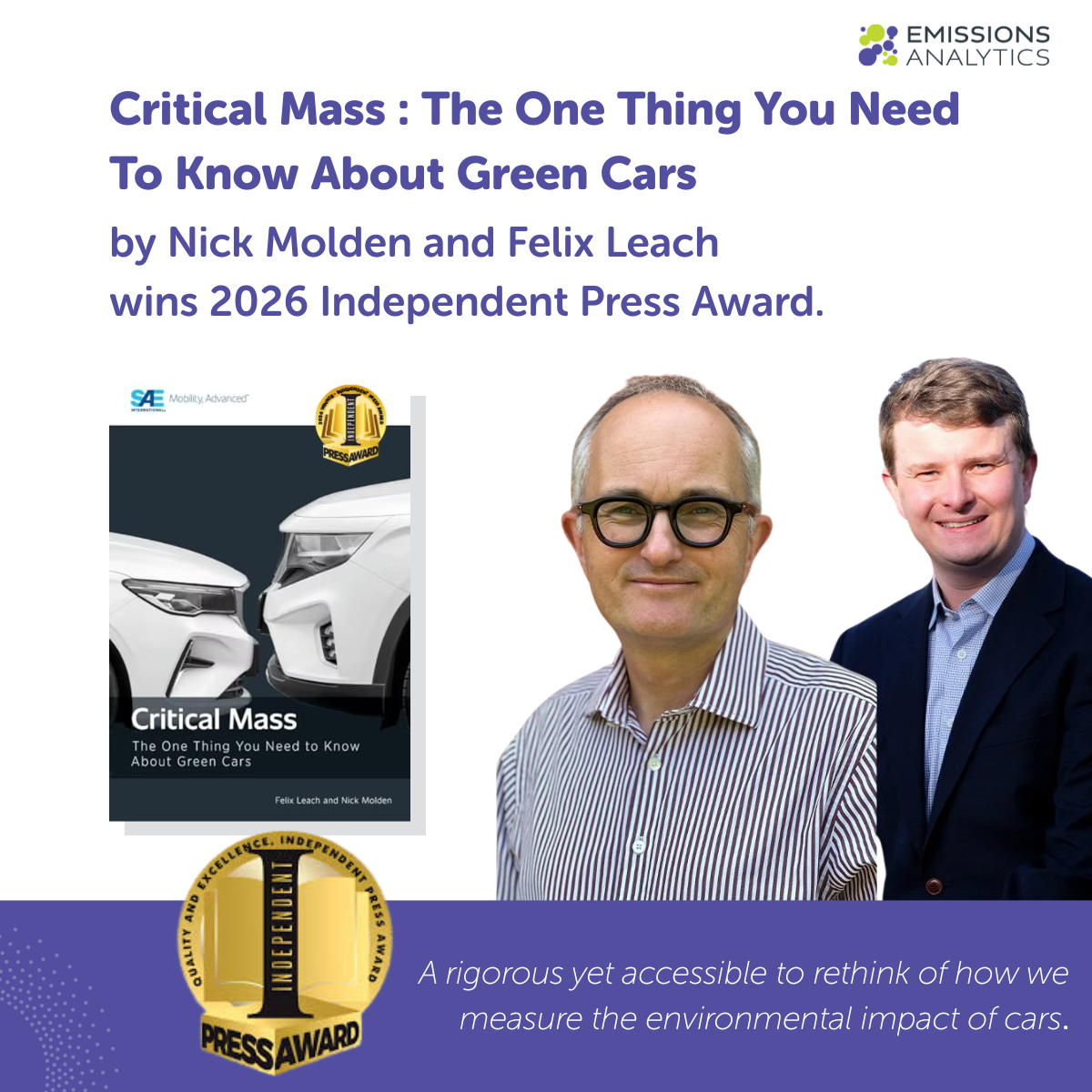
Critical Mass Wins 2026 Independent Press Award
Critical Mass Wins 2026 Independent Press Award
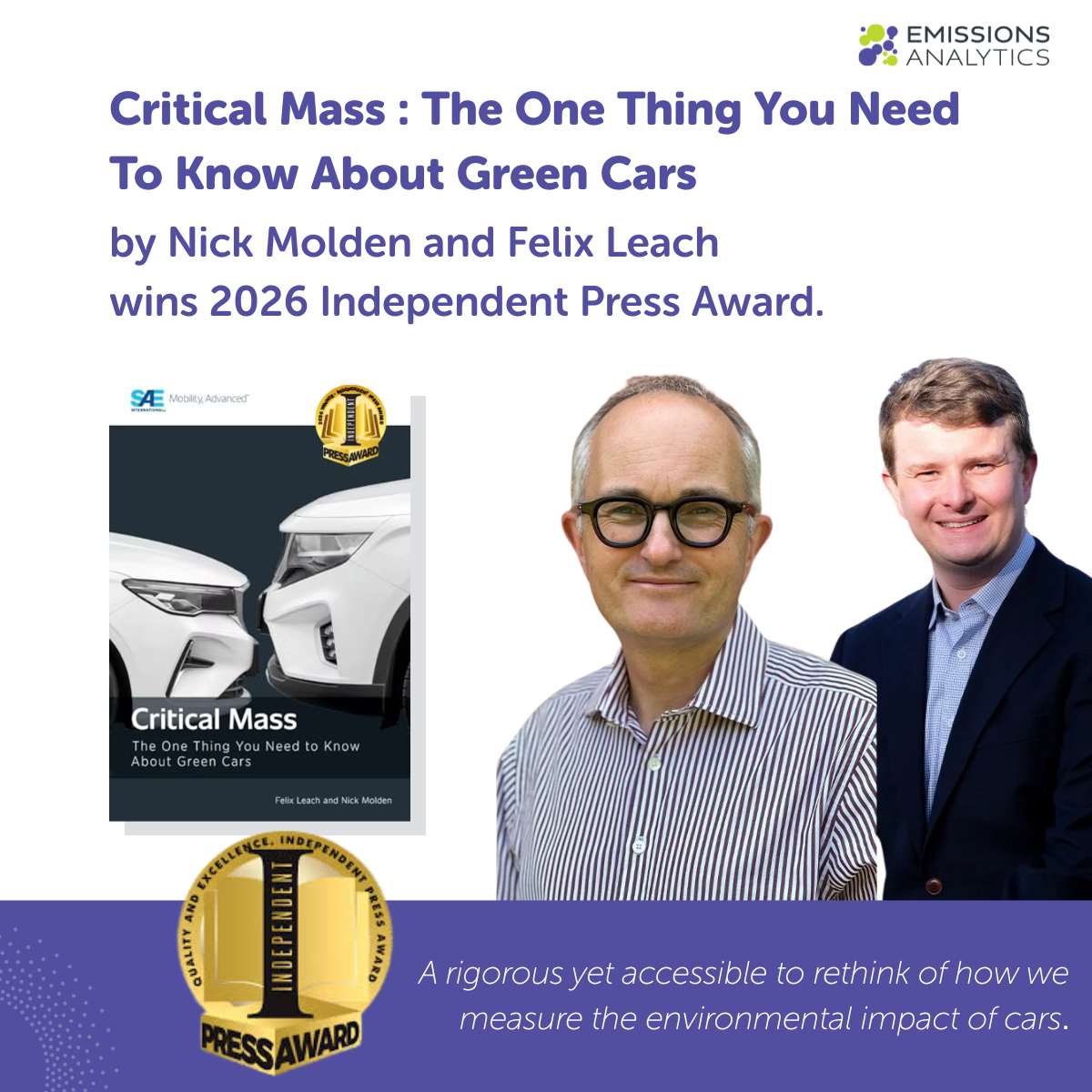
We are proud to share that Critical Mass: The One Thing You Need to Know About Green Cars has been named a 2026 Independent Press Award Winner.
In an era where climate change dominates global discussion, Critical Mass sees Felix our CEO, Nick Molden and Felix Leach unpack the complexity of vehicle emissions with clarity and rigour. Building on insights from Felix’s previous work, Racing Toward Zero, the book tackles the often-confusing landscape of automotive pollution by asking a deceptively simple question: what single piece of information best captures the true environmental impact of cars?
We are proud to share that Critical Mass: The One Thing You Need to Know About Green Cars has been named a 2026 Independent Press Award Winner.
In an era where climate change dominates global discussion, Critical Mass sees Felix our CEO, Nick Molden and Felix Leach unpack the complexity of vehicle emissions with clarity and rigour. Building on insights from Felix’s previous work, Racing Toward Zero, the book tackles the often-confusing landscape of automotive pollution by asking a deceptively simple question: what single piece of information best captures the true environmental impact of cars?
Written for a digital age awash with information but eluded of meaningful understanding, Critical Mass challenges oversimplified narratives around road transport and sustainability. Leach and Molden advocate for a more sophisticated, yet accessible perspective about emissions, examining the real-world impacts of different vehicle powertrains and moving beyond CO₂ alone to consider wider environmental and societal effects.
The Independent Press Award recognises excellence in independent publishing and honours books that demonstrate strong editorial quality, originality, and relevance. Being selected as a 2026 winner reflects the growing importance of transparent, factual analysis in climate and mobility discussions.
At Emissions Analytics, our work has always focused on delivering robust, independent data to inform policymakers, industry leaders and the public. This award reinforces the value of applying the same rigorous approach beyond research and into public-facing dialogue.
We would like to thank the Independent Press Award judges, Gabrielle Olczak from IPA, Sherry Nigam and SAE International for your support as publishers, our readers and everyone who has engaged with the book since its publication.
Find the full award listing here:
https://www.independentpressaward.com/2026-winners/9781468608212
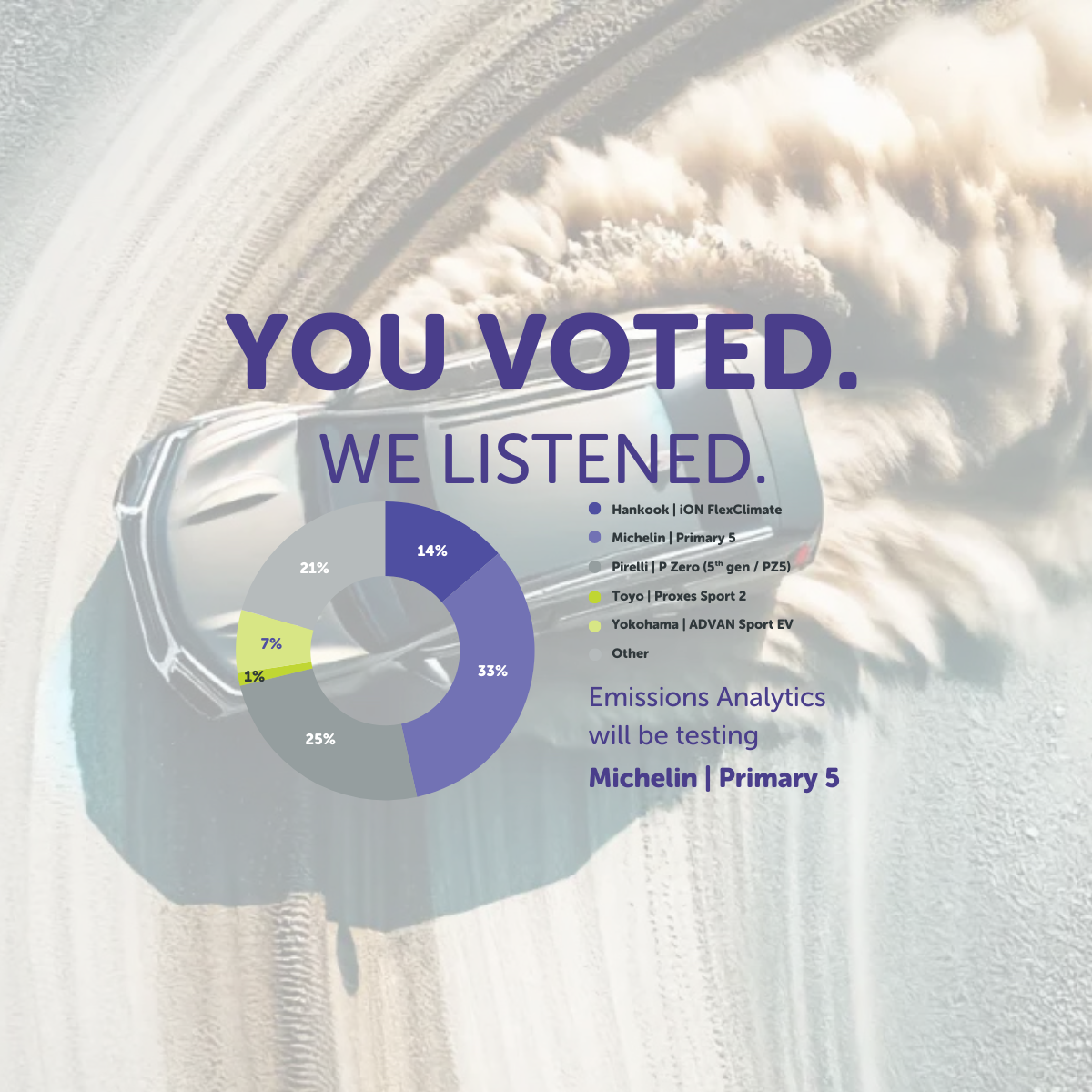
Tyre Emissions & Sustainability USA 2026 agenda nears completion as ticket sales open
Industry leaders set to convene for critical discussions on tyre wear, regulation and real world emissions.
Emissions Analytics is proud to announce that the agenda for Tyre Emissions & Sustainability USA 2026 is now close to finalisation, with tickets officially available for purchase.
The conference will bring together regulators, OEMs, tyre manufacturers, material scientists and researchers to address one of the fastest-moving areas in transport sustainability. As non-exhaust emissions move firmly into the regulatory spotlight, tyre wear has become a defining challenge for the industry, with implications for air quality, environmental impact and vehicle design.
Industry leaders set to convene for critical discussions on tyre wear, regulation and real world emissions.
Emissions Analytics is proud to announce that the agenda for Tyre Emissions & Sustainability USA 2026 is now close to finalisation, with tickets officially available for purchase.
The conference will bring together regulators, OEMs, tyre manufacturers, material scientists and researchers to address one of the fastest-moving areas in transport sustainability. As non-exhaust emissions move firmly into the regulatory spotlight, tyre wear has become a defining challenge for the industry, with implications for air quality, environmental impact and vehicle design.
With the programme now largely confirmed, attendees can expect a technically rigorous agenda shaped around real-world data, regulatory direction and practical engineering pathways. Sessions will explore tyre wear particle emissions, test methods and measurement, material innovation, environmental impact, and how emerging standards are likely to shape future tyre and vehicle development.
The USA event builds on the established Tyre Emissions & Sustainability conference series, known for cutting through theory and focusing on evidence-based insight. The near-final agenda reflects growing industry urgency, with speakers contributing perspectives from across policy, research and commercial application.
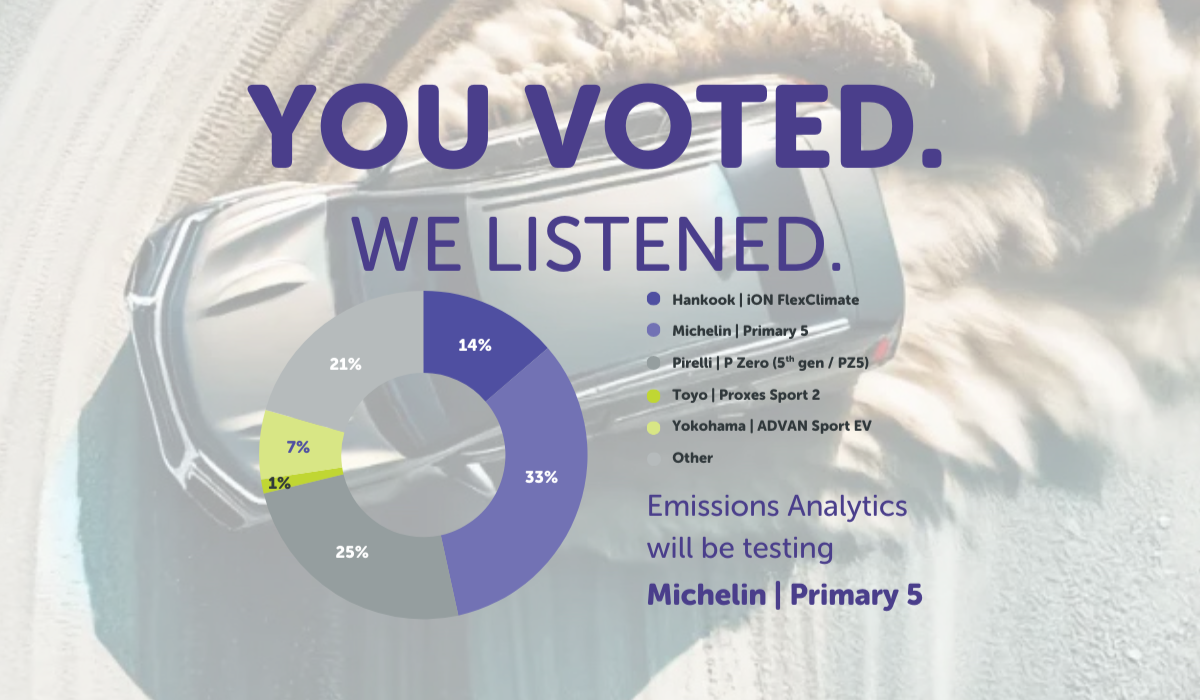
A major highlight of Tyre Emissions & Sustainability USA 2026 will be the exclusive first reveal of Emissions Analytics’ independent test results for the Michelin Primacy 5 tyre, selected by public vote, with findings presented live at the conference and not released elsewhere until after the European event.
Tickets are now on sale, with early booking recommended as interest continues to build across the North American market. Early bird pricing is now available for a limited time, offering discounted rates for those booking in advance, with this discount ending on February 7, 2026.
Further details on the agenda, speakers and registration can be found here.
About Emissions Analytics
Emissions Analytics is an independent global leader in real-world emissions testing and analysis. The organisation provides evidence-led insight across tyres, powertrains and fuels, supporting industry and policymakers with robust data to inform decision-making and regulation.
Archive
- AIR Alliance 3
- Air Quality 38
- Audio 3
- Climate Change 14
- EQUA Index 21
- Electrified Vehicles 28
- Euro 7 3
- Fuel Consumption/Economy 20
- Fuels 4
- Infographic 18
- Media 4
- NRMM/Off-road 3
- Newsletter 103
- Podcast 7
- Presentation/Webinar 18
- Press Release 19
- Regulation 16
- Reports 4
- Tailpipe Emissions 49
- Tyre Consortium 2
- Tyre Emissions 26
- Vehicle Interior 6