

The impact of road-tire wear: a hidden source of airborne microplastics and black carbon
Recent studies conducted in the Colorado Rocky Mountains reveal that tire particles, laden with nano-sized carbon black, are being deposited on high-altitude snow, contributing to accelerated melting and atmospheric warming. Analysis by Emissions Analytics identified organic compounds in these particles that match those found in road tires, highlighting their widespread environmental presence.
A major source for airborne microplastic particles is road-tire wear. Microscopy and chemical analyses of wind-blown particles on dirty, high-elevation (2865-3690 m) snow surfaces in the Colorado Rocky Mountains revealed the presence of black carbonaceous substances intimately mixed with microplastics, particles interpreted as tire matter.
Identical and similar particles occur in shredded tires and in samples collected from road surfaces. The black substance responsible for the black color of all tire particles is nano-size carbon black, a tire additive that homogeneously permeates tire polymers and other additives and that strongly absorbs solar radiation .
The key to documentation of worn tire matter was the identification in two-dimensional gas chromatography by Emissions Analytics of many organic compounds in snow common to those in road tires. The mass of black carbonaceous particles produced by road-tire wear may be estimated by multiplying measured mass of eroded tire-per-distance traveled by vehicular distances. The eroded tire mass from moving vehicles used for these estimates was measured by Emissions Analytics.
Under assumptions of amounts of tire-wear particles emitted to the atmosphere, the mass proportion of atmospheric black carbonaceous matter from annual road-tire wear might be as much as about 10-30% of atmospheric black carbon, such as soot from vehicle exhaust and domestic cooking. Black particles from road-tire wear may thus be an important component that contributes to melting of snow and ice as well as to warming the atmosphere. The potential toxicity of organic compounds in black-tire matter is another concern for the health of organisms in mountain ecosystems. A revised estimate for the annual mass of eroded tires globally is 6550 kilotonnes.
Citation:
Reynolds, R. L., Molden, N., Kokaly, R. F., Lowers, H., Breit, G. N., Goldstein, H. L., Williams, E. K., Lawrence, C. R., & Derry, J. (2024). Microplastic and Associated Black Particles from Road-tire Wear: Implications for Radiative Effects across the Cryosphere and in the Atmosphere. Journal of Geophysical Research: Atmospheres, 129, e2024JD041116, https://doi.org/10.1029/2024JD041116
Emissions experts call for reform of car taxation to be based on a combination of weight and mileage

· Simpler car tax system proposed, based on vehicle weight and miles travelled
· Would apply the ‘polluter pays’ principle
· Switching to 150 kg lighter car or driving 1,000 fewer miles will save £100 a year
· Experts call current VED system ‘a mish-mash of incentives and penalties’
Cars should be taxed on a combination of weight and mileage, according to a radical new study from emissions experts Nick Molden and Felix Leach.
Molden, who is the CEO of emissions testing company, Emissions Analytics, and Leach, Associate Professor of Engineering Science at the University of Oxford, will be launching their new book: Critical Mass: The One Thing You Need to Know About Green Cars at Keble College, Oxford, on November 25th and Imperial College, London, on December 2nd. The events will outline proposals for a simpler, more environmentally-credible road tax system.
The launch of the book will be hosted by Chief Executive of the RAC Foundation and former Director General at the Department for Transport, Steve Gooding, and Professor Gautam Kalghatgi, until recently Visiting Professor at the University of Oxford.
The book outlines in with brutal clarity that the current system for Vehicle Excise Duty (VED) is flawed, even calling it a ‘mishmash of incentives and penalties’.
The result is a powerful evidence-based thinking that has the basis to overcome bitter factional disputes between different groups trying to promote one powertrain over another. Former Secretary of State for the Environment and Deputy Prime Minister, Michael Heseltine, said: “I welcome this contribution to the most important challenge of our time.”
It is a timely release. Next year the so called ‘road tax’ will undergo a major overhaul and it will include Electric Vehicles (EVs) that are currently exempt from VED.
Starting April 1st, 2025, EVs will lose their VED exemption, however. That means buyers of new EVs will have to pay the next lowest first-year tax rate, which currently stands at £10. Once an EV hits its second year on the road, owners will be required to pay the standard VED rate, which is currently £190 and is expected to increase with inflation from April 2025.
The new legislation will also hit buyers of EVs costing over £40k with additional tax and used EV buyers and hybrid buyers will also have to pay more.
But Molden and Leach say there is a solution that is not only better for the environment, but simpler to administer and much easier to understand.
Molden explained: “Taxing a car on a combination of its weight and mileage offers a simple, potentially universal approach to pricing-in the environmental impact of cars while at the same time overcoming the objections to the current mish-mash of incentives and penalties.
“In our book, we offer an intuitive ‘proof’ of why mass and distance are fundamental to designing a system to incentivise the purchase of ever-greener cars and this is contrasted with other flawed bases for judging environmental impact, such as measures of vehicle efficiency, including energy and fuel efficiency, as well as elements incorporated in the current system such as fuel type and laboratory carbon dioxide emissions.”
The two experts outline ways in which the system can be adopted and show the types of cars likely to taxed lightly and those that will be more expensive to keep on the road. Broadly, smaller cars will be cheaper to tax.
Under Molden and Leach’s proposed system (taking the example of the UK) if an average car is 150 kg lighter or does 1,000 fewer miles, the owner would pay £100 less per year.
“Specific tax rates are proposed and compared to existing taxes to illustrate winners and losers – winners being small city cars and loser including high-mileage heavy cars and SUVs,” explained Leach. “The concept proposed is a reliable revenue-raiser at a time of widespread fiscal pressure and declining vehicle taxation. It could also be adopted rapidly and transitioning to it is easy.”
The idea of taxing a car on the basis of its weight and miles travelled, also translates easily for a car-buying public that has to negotiate confusing rates and inconsistencies, while car makers have increased the size and weight of their models with impunity.
Molden added that deploying a single measure of a car’s environmental credentials to guide purchases and government policy is the way forward, and the measure that takes account of approximately three-quarters of the environmental impact of a car is the car’s weight, and that metric correlates well with environmental damage.
Molden added: “Most people want to do the right thing environmentally when they are buying a car, but the information and choices are now too complex for any normal consumer to understand fully. The question was whether there is a simple, practical way to point the car buyer in the right environmental direction and allow governments to tax and subsidise the right things – and there is.”
Ends
Notes to editors:
Nick Molden is the Chief Executive Officer of Emissions Analytics (https://www.emissionsanalytics.com) and a Honorary Senior Research Fellow at Imperial College London
Felix Leach is Associate Professor of Engineering Science at the University of Oxford (https://eng.ox.ac.uk/people/felix-leach/)
Critical Mass: One Thing You Need to Know about Green Cars is now available in hard copy and as an ebook. To obtain a copy go to: https://www.sae.org/publications/books/content/r-575/ or https://amzn.eu/d/2FrpYUH.
To apply for tickets to the launch events, please email info@emissionsanalytics.com.

Kohlendämmerung?
Twilight of the carbon economy
Dusk approaches, but the denouement is unclear. Will the flames of 2026 engulf fossil fuels, the internal combustion engine, electric vehicles or net zero? Are we about to see the twilight of the carbon economy? Or perhaps twilight of our environmental idols?
Twilight of the carbon economy
Dusk approaches, but the denouement is unclear. Will the flames of 2026 engulf fossil fuels, the internal combustion engine, electric vehicles or net zero? Are we about to see the twilight of the carbon economy? Or perhaps twilight of our environmental idols?
The clever construction of zero emission vehicle mandates and the exclusion of manufacturing emissions from the definition, has created a scenario where European authorities apparently must triumph in their push for electrification of new vehicles, whether it actually reduces carbon dioxide emissions sufficiently. The battle has now moved to second-hand cars. To meet net zero by 2050, it is a priority to get all internal combustion engine (ICE) vehicles off the road, just as those drivers for whom battery electric vehicles (BEVs) are not suitable hold onto their ICE cars as long as they can. Although car drivers are repeatedly assured by governments and their funded spokesmen that no-one will appropriate their existing ICE vehicles, current drafting of EU legislation suggests otherwise. While it remains controversial whether they are coming after your ICE car, let us examine the question of whether such a policy could be justified by any emissions reduction it would bring about.

Before going further, this topic has previously generated controversy, when it was wrongly reported that new legislation proposed a ban on repairing cars over 15 years old. This was rightly debunked by AFP. Even though no such time limit was proposed, there is genuinely good motivation in stopping unroadworthy vehicles in Europe being exported to countries with lesser standards. However, is there further nuance in the proposed regulation, and how does it square with emissions reduction?
To incentivise low carbon dioxide emission vehicles into the market, Europe – with some minor differences between the European Union and the United Kingdom – use three main tools. First, and most high profile, is the ‘zero emission vehicle’ (ZEV) mandate, which requires a certain proportion of each manufacturer’s new car sales in a year effectively to be BEVs. Second, there are the fleet average carbon dioxide targets, also applied to each manufacturer, and which are in practice similar to the Corporate Average Fuel Economy (CAFE) targets in the US. Weighted by sales, their emissions each year must be below a certain threshold set by the EU. The third and least visible tool, is the very definition of BEVs, along with hydrogen fuel cell vehicles, as emitting zero carbon dioxide, which creates a large hidden bias in their favour. This is clearly untrue during their usage – as the electricity to power them in almost all cases emits some carbon – and during their manufacture. On average, a BEVs emits around six tonnes more carbon dioxide when it is made compared to an equivalent ICE vehicle, but then emits around 1.5 tonnes less each year during its use. As this zero emission definition feeds into the requirements of the ZEV mandates and CAFE targets, all three can be seen to work in harmony to create a strong incentive for manufacturers to sell BEVs, and an incentive that is stronger than is warranted by the emissions reduction potential.
Despite these incentives, only about one in five new car buyers in Europe are opting for BEVs, which is a flattering proportion as the size of the market remains subdued, in part due to some people switching to buying used having been priced out of the new market as manufacturers have rationalised their traditional vehicle ranges. Nevertheless, authorities will be able to force through their BEV targets because manufacturers can simply ration the availability of ICE vehicles. As CAFE targets and ZEV mandates are based on market share by technology, if manufacturers are struggling to sell BEVs, they can always restrict ICE vehicle numbers. To match supply to demand, this would be done by increasing ICE vehicle prices and consequently their per unit profitability. Manufacturers would let governments and authorities take the heat for factory closures and lost jobs as a result of lower vehicle sales volumes. The alternative scenario is that governments ply the industry with BEV subsidies to boost their sales volumes, thereby maintaining ICE vehicle sales volumes too. This is less likely, however, as most governments are fiscally constrained, and such subsidies would primarily act as significant financial transfers to industry.
The lack of desirability of BEVs is most vividly seen in their current depreciation rates. In the first three years of life, a typical BEV in Europe loses around half of its value. In cash terms the reality is starker, as a typical BEV is more expensive than the equivalent ICE vehicle, so the cash depreciation can be over 50% more for the BEV. So long as this demand remains weak, the effective price of new BEVs will remain higher, thereby limited the quantity sold. At the same time, the second-hand value of ICEs vehicles is strong – up 21% in Europe since the start of 2020, according to EUROSTAT – through some combination of consumers switching from new to used vehicles and a general rising demand for car transportation. As ZEV mandates get tougher, this trend is only likely to strengthen. Existing owners of used ICE vehicles will be incentivised to hold and maintain them for longer than before, while those who would previously have bought new will enter the market for used ICE vehicles. For a long time, demand for BEVs may remain weaker than governments wish due to the presence of a preferable alternative.
With the rules already in place, as described above, authorities will be able to force all new vehicles to be BEVs, but at a cost to government in terms of higher unemployment, lost tax revenue and electric vehicle subsidy payments. This total political and fiscal cost could be high. How could this be avoided? How could governments stop demand leaching away from BEVs to ICE vehicles? The only way is to eviscerate the second-hand market for ICE vehicles.

It is highly unlikely that governments would directly confiscate vehicles, or even force them off the road at a certain fixed age, such as 15 years. Property rights are still generally well respected in Europe. It is also relatively unlikely that vehicles would be priced off the road through punitive taxation, as the owners of the oldest vehicles would often be people on low incomes and requiring their vehicle to get to work. More subtly, the EU has in fact already promulgated a regulation that may effectively achieve this goal, included within ‘Green Deal’ legislation in July 2023: “REGULATION OF THE EUROPEAN PARLIAMENT AND OF THE COUNCIL on circularity requirements for vehicle design and on management of end-of-life vehicles, amending Regulations (EU) 2018/858 and 2019/1020 and repealing Directives 2000/53/EC and 2005/64/EC.” Take a look at Annex I, Part A, clause 2.
The vehicle is economically irreparable if its market value is lower than the cost of the necessary repairs needed to restore it in the Union to a technical condition that would be sufficient to obtain a roadworthiness certificate in the Member State where the vehicle was registered before repair.
The owner must deliver such an ‘end of life’ vehicle to an authorised destruction facility if told that it meets these criteria. The owner is not permitted to repair or sell the vehicle. Members states will be left to designate the authorised facilities, which will then issue the edict that a vehicle is beyond economic repair, although it would seem reasonable to assume that it would be garages or safety testing centres such as the German TÜVs or performing the MOT, if applied in the UK. There is a carve-out for certain classic vehicles over 30 years old.
In addition, the European Commission website carries an explanation of the proposed regulation, which includes:
If a car needs a repair, any part may be changed as long as the vehicle is fit to pass the roadworthiness inspections and remains authorised to operate on the EU roads. [our emphasis]
What is apparently a clarification leaves open the question of what “…remains authorised to operate on the EU roads…” means. By the construction of the sentence, it must mean more than just being roadworthy. As drafted, therefore, this could mean exactly that any repairs must cost less than the residual value of the vehicle for the car still to be authorised to be used.
We would like to hear from anyone within the EU’s legislative process as to whether, and in what way, the text is going to be changed. As poorly drafted legislation has a nasty habit of finding its way onto the statute book through omitting to correct it, what is written on the page is more important that words of reassurance.
If the correct interpretation is that vehicles will forcibly be scrapped if repairs are too expensive, let us examine what that would mean in practice and the effect on emissions. We have researched twelve popular vehicles in Europe and looked at the age at which they could be written off under the definition above. Assume the market value is the trade rather than retail price. We have then considered two scenarios: a mild-to-moderate repair of a full set of brake pads and discs, and a moderate-to-serious repair requiring the replacement of the gearbox. The costs of these repairs include labour and any taxes, and are based on costs in the UK. The table below summarises the youngest model year of each vehicle where the value of the vehicle is less than the cost of the repair.

The aim of this table is not primarily to compare vehicles, but to derive a representative average for the market. For example, the Citroen Picasso would be deemed scrap if it needed a new gearbox at just seven years old. For a new set of brakes, it would be written off at 15 years old. The Ford Fiesta would survive much longer, due to its slower depreciation rate.
This analysis suggests that the proposed regulation would be able to force almost all vehicles off the road above the age of 18.5 years, as a mild-to-moderate fault is highly likely by that age. It would also force the scrappage of a material proportion of vehicles above nine years old, for those that develop more serious problems. As there are approximately 13.2 million cars reaching their tenth birthday each year in Europe according to the European Automobile Manufacturers’ Association (ACEA), that creates a significant amount of additional vehicle demand. Some of that will further augment demand for the remaining used ICE vehicles, but a growing proportion will be forced either to buy BEVs or forego having a private motor car at all.
While this is not the place to discuss the political or social aspects of the policy, what does it mean for emissions? There are three main aspects. The first, and the flawed premise of the whole policy, is that BEVs are zero emission and, therefore, ‘perfect.’ As we have shown in previous newsletters, on a lifecycle basis, BEVs reduce carbon dioxide emissions by about 50%, compared to full hybrids offering a 30% reduction – so, 20% points more. Still much better, but this is a gap that may not justify such an extreme policy.
The second aspect is around whether it is better to keep your old car as long as possible or upgrade to the latest technology. The general answer is that, from a carbon dioxide perspective, it is almost always better to keep an old car as long as possible, because building a new BEV car will incur an extra six tonnes of emissions upfront in making it. Even where the new car has a substantial efficiency advantage, the payback time of these manufacturing emissions can be long. The main caveat to this is that if the other tailpipe emissions – air pollutants such as nitrogen oxides and particulates – are high, it can be justified to upgrade on the basis of overall damage. Broadly, gasoline vehicles after 2005 do not contribute significantly to air pollution; for diesels, it is more complicated, but anything after 2018 should be fine, anything before 2009 is bad, and many in the middle are questionable – not least due to the emissions manipulation crisis that became Dieselgate.
The final aspect relates to the correlation between vehicle age and miles driven. The older the car, the less it tends to be driven on average. For example, from the UK’s periodic technical inspection MOT data, a car under three years old in Europe is typically driven 8,086 miles (13,018 km) per year, but a car between nine and twelve years old only goes 5,241 miles (8,438 km) annually. As most of the emissions from an ICE vehicle arise from its usage, the distance driven is highly relevant to the optimal emissions decision. To take an extreme example, if an ultra-high-emitting, modern classic ICE vehicle were driven only 500 miles year, a forced upgrade to a BEV would cause the emission of six tonnes of carbon dioxide in the latter’s manufacture, for almost no saving in in-use emissions. We discussed this is more detail in a previous newsletter, which showed that if you drive fewer than 3,000 miles (4,830 km) per year it is unlikely you would ever pay back the manufacturing emissions from switching to a BEV. The EU policy proposed above is targeting exactly those older vehicles. Consequently, this policy, if enacted, would likely lead to substantial increases in lifecycle carbon emissions, by driving old, lightly-used ICE vehicles off the road. From an emissions point of view, it would be better to let them run until they die naturally.

Beyond the need artificially to increase demand for BEVs by forcing ICE vehicles off the road, there are other potential reasons for this policy. As Europe continues to equivocate on expanding its nuclear electricity generation, the grid will be decarbonised mainly through additional wind and solar capacity. This creates a significant intermittency problem, which must be balanced by a large storage mechanism. This can be done, but it is expensive. Better, would be to harness a large, pre-existing fleet of battery electric vehicles and mandate bi-directional charging so energy could be moved in and out of that fleet as the grid needed for balance. A second motivation may be to make sense of the ambitious aims for autonomous driving, often motivated by the desire to improve road safety. The prospect of true automation – level 5 – on the open road is far away, and may prove to be impossible while there is a vehicle fleet of different ages and technologies, and while only some are autonomous and connected. By forcing these older vehicles off the road, it could lead more quickly to algorithm- rather than human-controlled driving.
In summary, we question the headlong rush to BEVs on the grounds that the cost per unit reduction of carbon dioxide emissions is too high and there are more pragmatic and effective ways, such as with full hybrids. However, the rules of the game as set in the EU and UK mean that authorities must be the winners, unless the fundamental mischaracterisation of BEVs is overturned. Otherwise, BEVs will win, it is just a question of at what price. That cost to taxpayers and industry will be minimised if older ICE vehicles can be forced off the market as soon as possible. In doing so, the cost will be surreptitiously shifted to consumers, and especially owners of older vehicles and lighter users. And, to aggravate the situation, it may well lead to higher carbon emissions. But if this added cost forces many people out of cars completely, that will certainly meet the objectives of a prominent minority of policy makers. It appears that we are the point where the EU and UK want to force through their BEVs mandates at any cost.
But Valhalla is not an end, but a beginning.
Podcast: Nick Molden joins Chris Caldwell, CEO of United Renewables on his podcast Conversations on Climate change
Nick Molden discusses with Chris Caldwell, CEO of United Renewables on his podcast Conversation on Climate.Nick and Chris discuss why electric vehicles may not be the future, the challenges and opportunities around adoption of electric vehicles.
Why Electric Vehicles Are NOT The Future (Yet) Conversations on Climate
Nick Molden discusses with Chris Caldwell, CEO of United Renewables on his podcast Conversation on Climate.
Nick and Chris discuss why electric vehicles may not be the future, the challenges and opportunities around adoption of electric vehicles.

Molden and Schmidt: the sustainable motoring podcast
Nick Molden, and former Volkswagen executive Oliver Schmidt, have joined forces to confront the thorniest issues facing the industry. The podcast brings together two of the sector's most experienced independent analysts . Their podcast - Molden and Schmidt - is available on Spotify, YouTube, Apple and the Emissions Analytics website.

Busting the myths around sustainable motoring - that's the theme of an insightful new podcast from Emissions Analytics. Cutting through the polemics, such as the destructive pro- and anti-electric-vehicle debate, the podcast aims to get at the truth.
Its founder Nick Molden, and former Volkswagen executive Oliver Schmidt, have joined forces to confront the thorniest issues facing the industry.
Can Europe meet the 2035 deadline for banning ICEs? Should governments promote hybrids ahead of BEVs? And how on earth do we tackle the pollution caused by tyres?
From the dilemmas facing consumers, to the US-China EV tariff wars, Nick and Oliver pick their way through the disinformation to get to the bottom of the big questions for motoring's future.
The podcast brings together two of the sector's most experienced independent analysts - who used to be on opposite sides of the fence.
As chief executive of Emissions Analytics, which specialises in real-world vehicle testing, Nick runs large test programmes internationally. He was instrumental in exposing the misleading fuel-economy figures, and excessive pollutant emissions, which led to Dieselgate - and crossed swords with Oliver in his role at Volkswagen.
But now Nick and Oliver have found common cause - using their knowledge to help make sense of the often confusing and contentious world of sustainable motoring.
Their podcast - Molden and Schmidt - is available on Spotify, YouTube, Apple and the Emissions Analytics website.
Here’s how to listen:

Podcast: Emissions Analytics featured in CoMotion Postcast
Nick Molden , CEO and Founder had the privilege of being invited onto CoMotions podcast. On the podcast Nick discusses the question on everyone’s mind how can we quickly and cheaply decarbonize mobility?

Presentation: Emissions Analytics Tire Technology Expo Presentation 20 March 2024
Our CEO & Founder, Nick Molden recently spoke at the Automotive Tire Technology 2024.
CEO & Founder, Nick Molden spoke at the Tire Technology 2024.
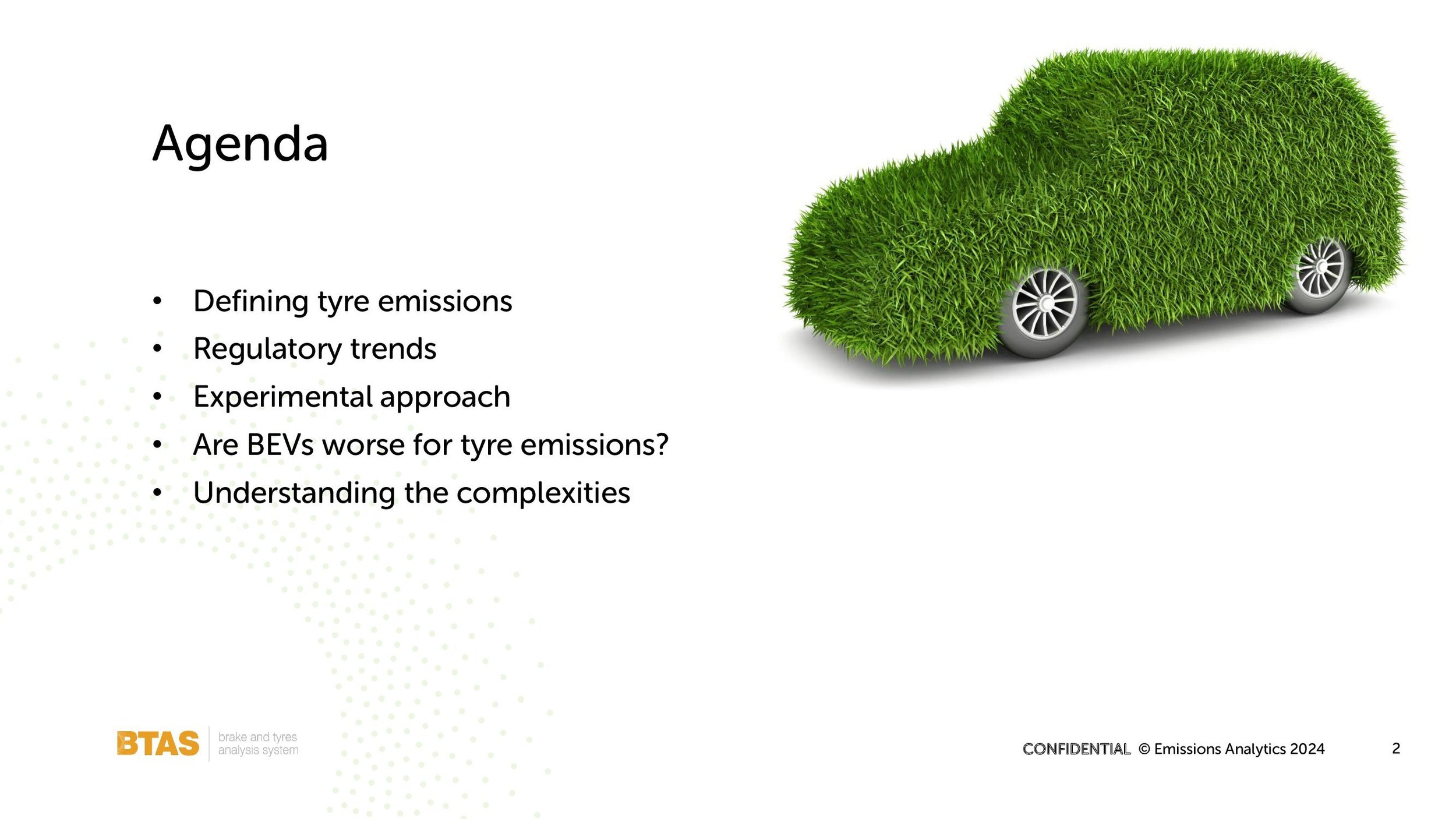







Why you should be interested in tyres
A surprisingly compelling subject
Dinner table, or social media, conversation may centre on arguments over which football team deserves to win the league, or whether the Mustang or Camaro is better, but the common feature of such polemics is that they represent simple and interesting questions. The topic of tyres, however, and if you dare raise it, may stun your companions into silence. Tyres are not simple and interesting. They are complex and boring – at least on the outside.
A surprisingly compelling subject
Dinner table, or social media, conversation may centre on arguments over which football team deserves to win the league, or whether the Mustang or Camaro is better, but the common feature of such polemics is that they represent simple and interesting questions. The topic of tyres, however, and if you dare raise it, may stun your companions into silence. Tyres are not simple and interesting. They are complex and boring – at least on the outside. Delve a little deeper, and they become items of sophistication and almost wonder. Mysterious, near-anonymous products that power many parts of the modern economy and society. Omnipresent, but no ingredients label. Emissions Analytics thinks you should be interested in tyres, and you should talk about them at dinner tonight.

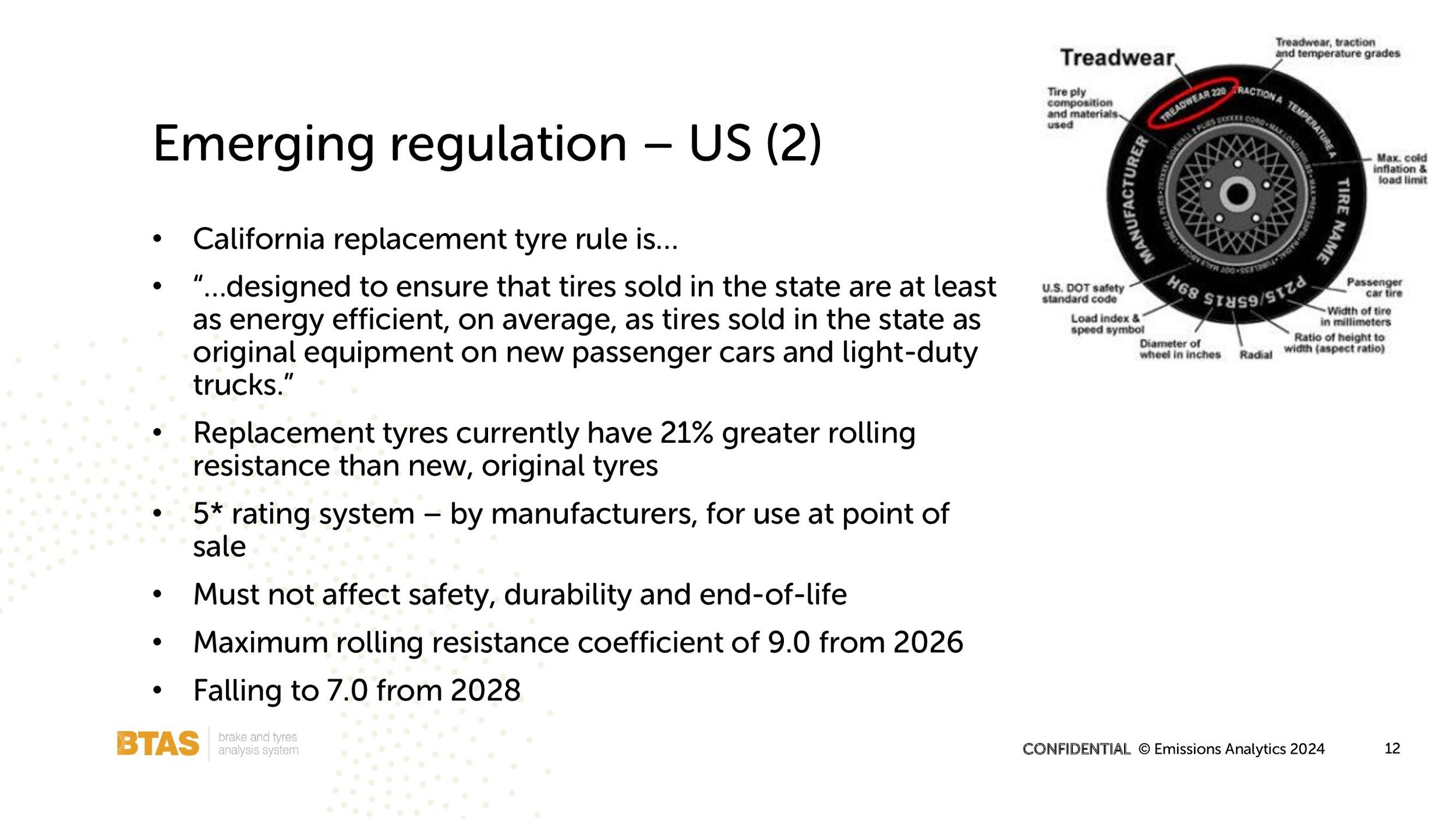
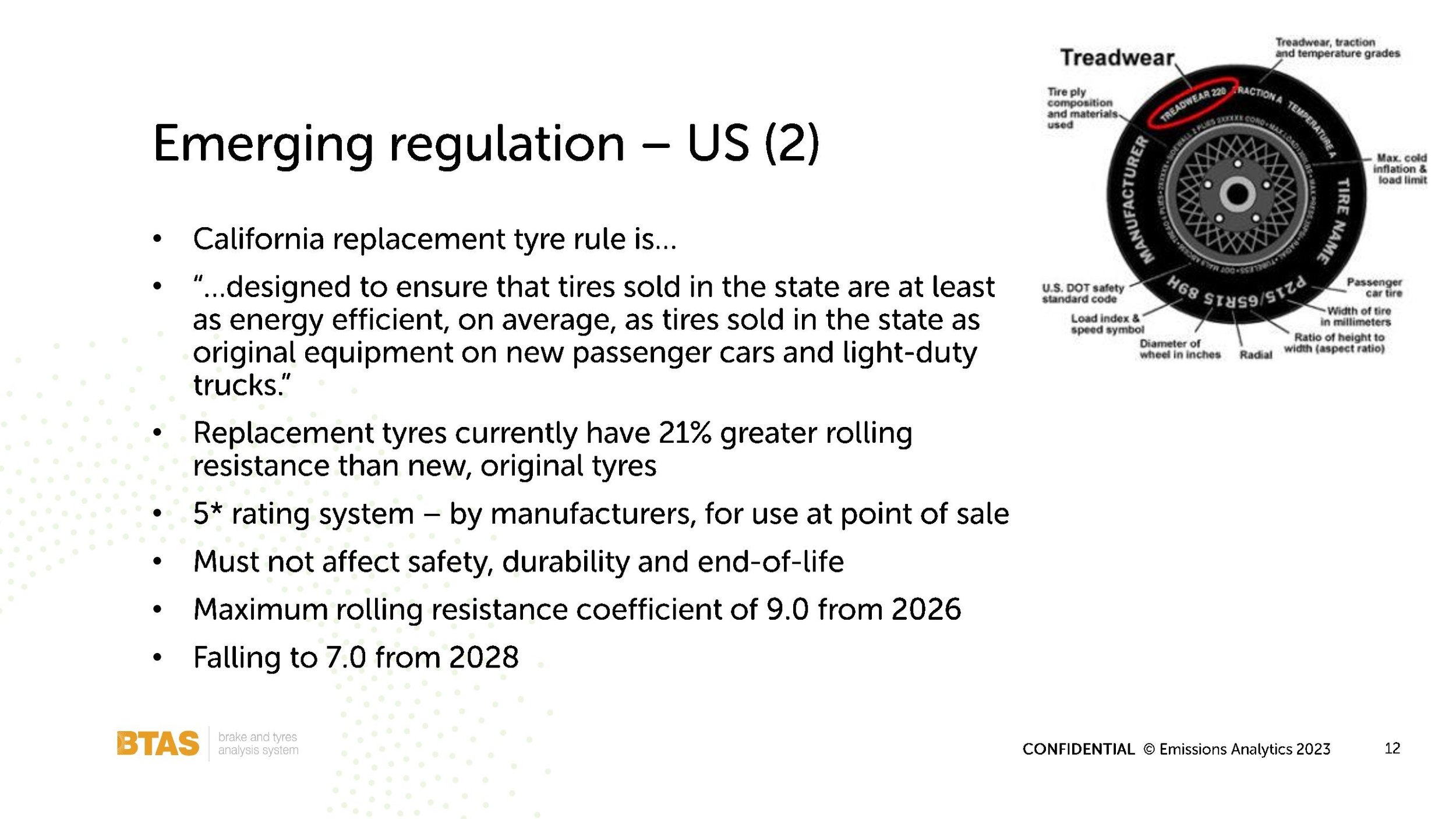
But if you can’t face that quite yet, you should first of all attend our newly launched conferences in Europe and US on tyre emissions and sustainability. Many excellent events already exist in this sector, but the common factor is that they look at tyres from the inside out: from the industry perspective in how to make better tyres. Environmental concerns are now forcing us to look from the outside in: how can we mitigate the effects of tyres from their manufacture and usage. Regulation is coming – and has already arrived in California.
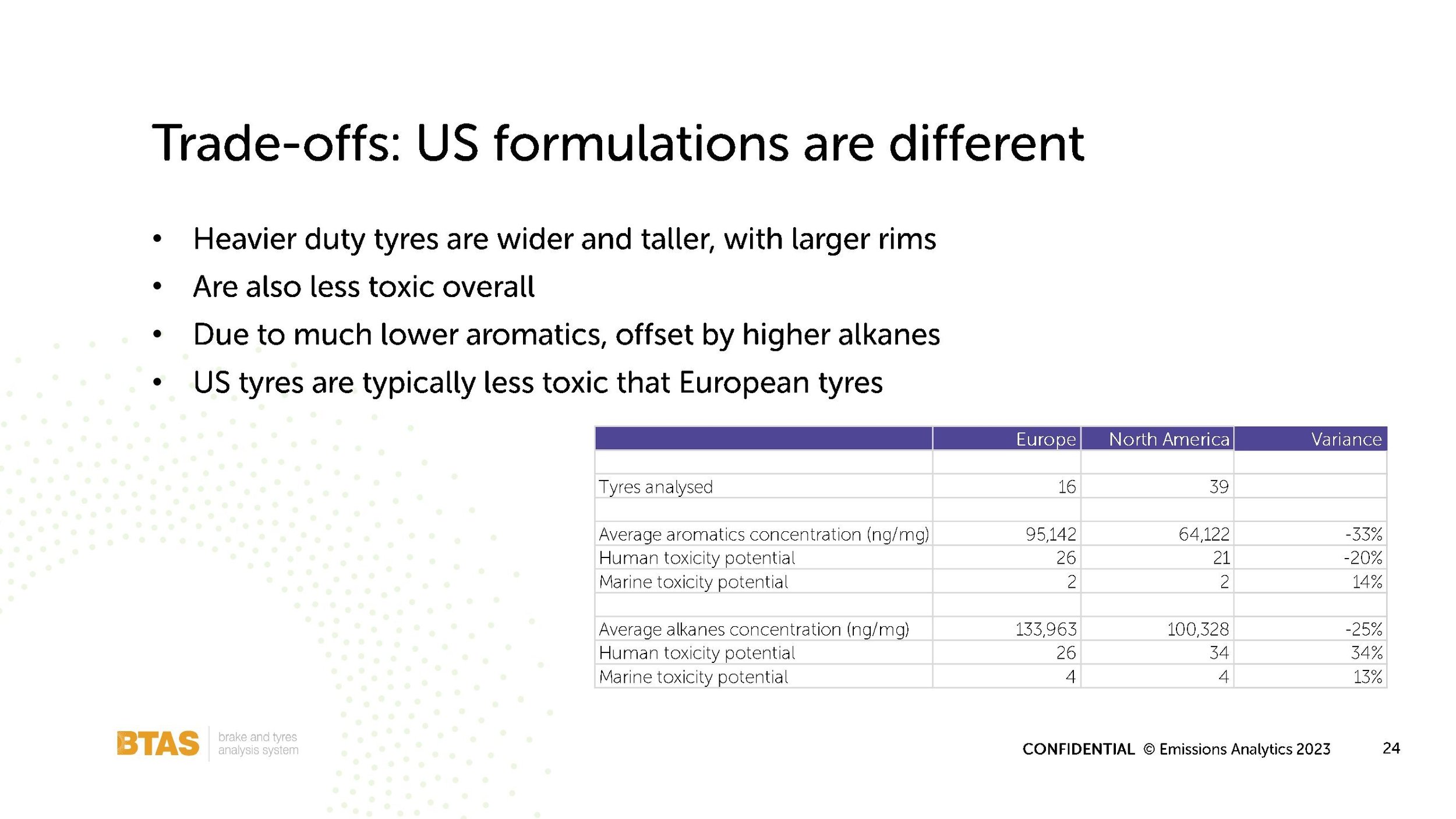
The tyre industry is highly sophisticated yet somewhat secretive. Challenging problems are solved quietly without disclosing the nature of the solution. European tyres have achieved combinations of grip, noise and rolling resistance to meet the requirements and demands and of the market, while US tyres have remained simpler in formulation as durability has remained the over-riding preference. Unlike vehicle manufacturers, which exist in spotlight of regulation and consumer interest, tyre manufacturers just get on with it. Witness the invention of synthetic rubber in the Second World War, which has defined the industry ever since.
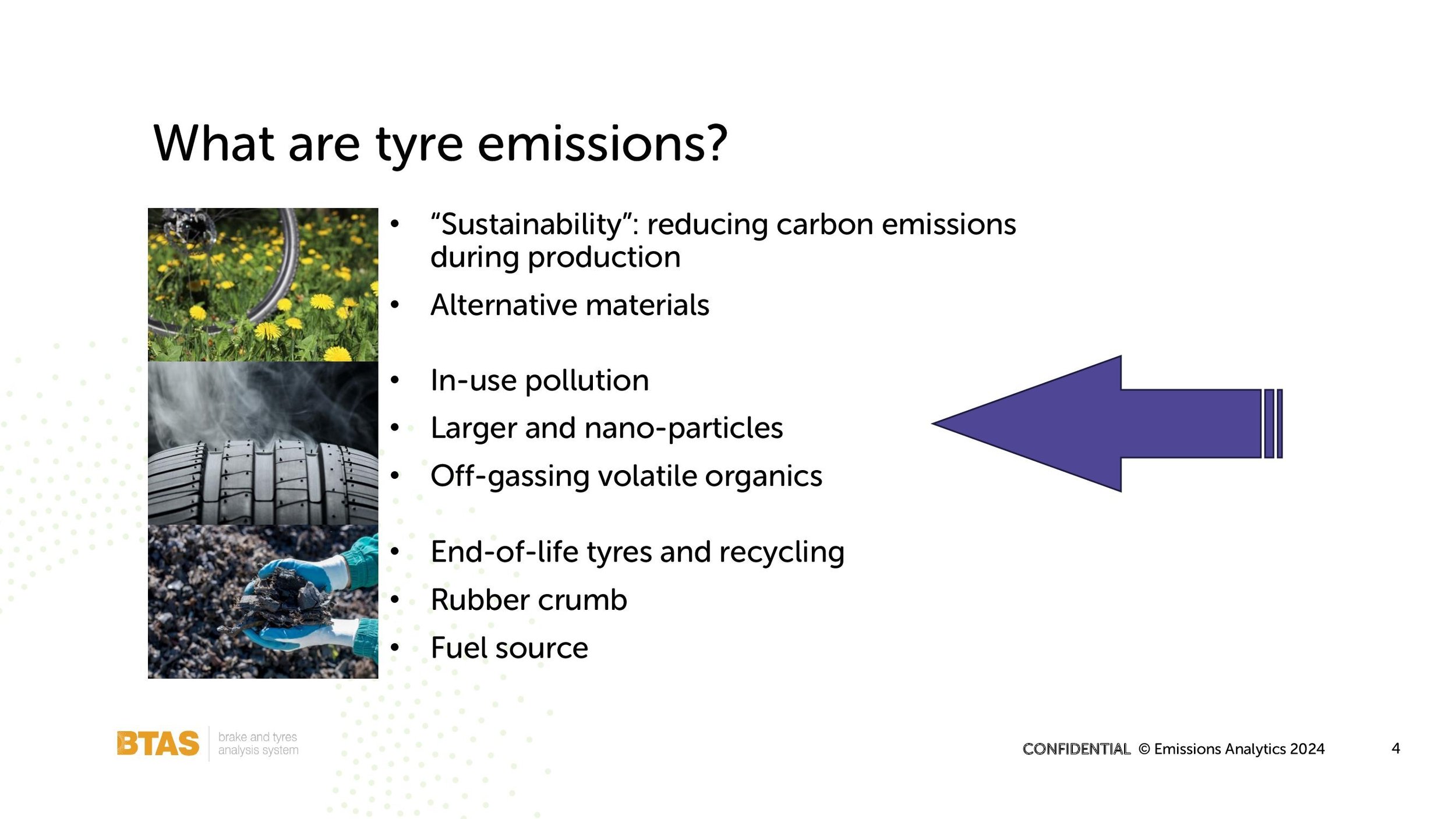
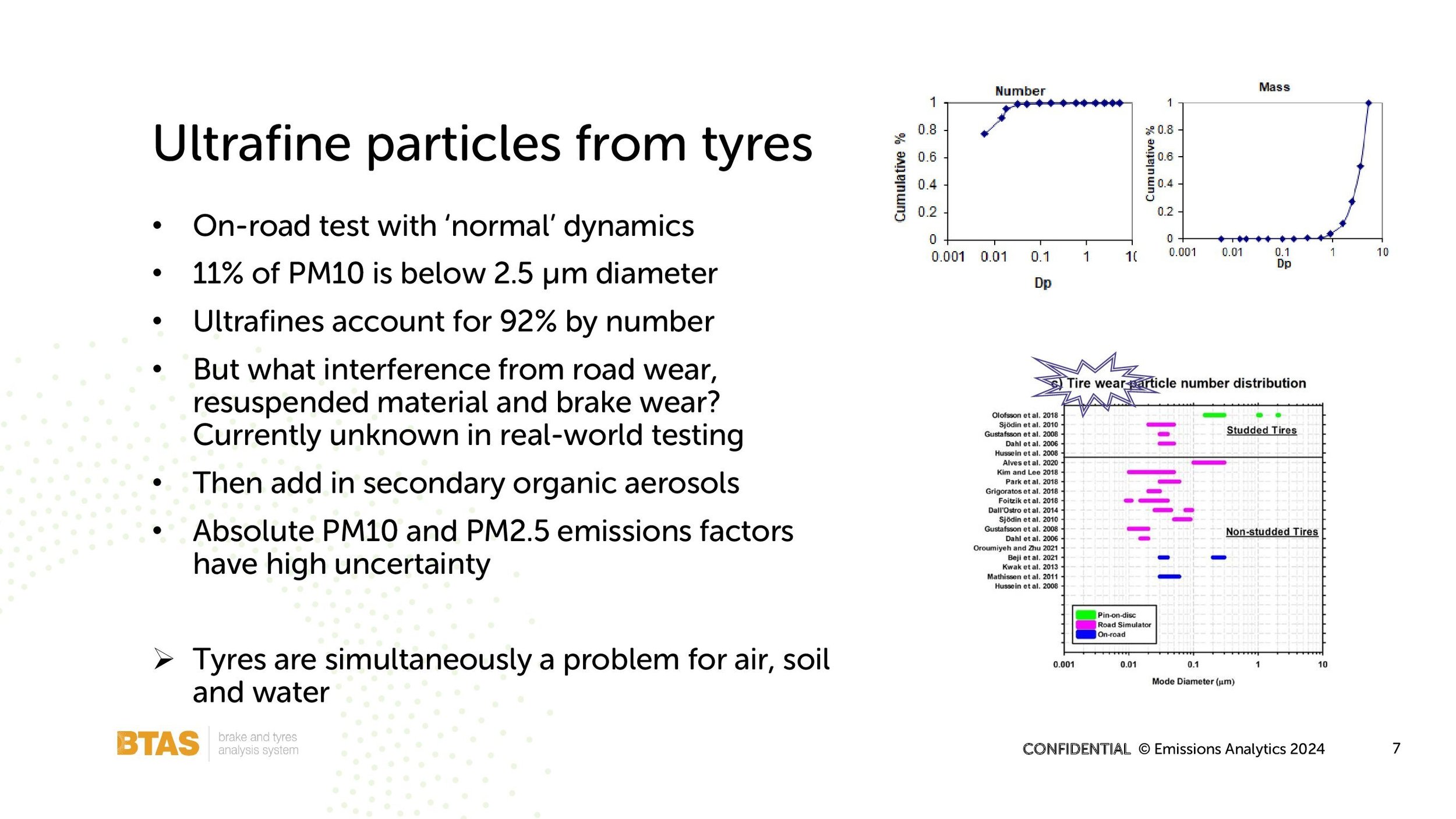
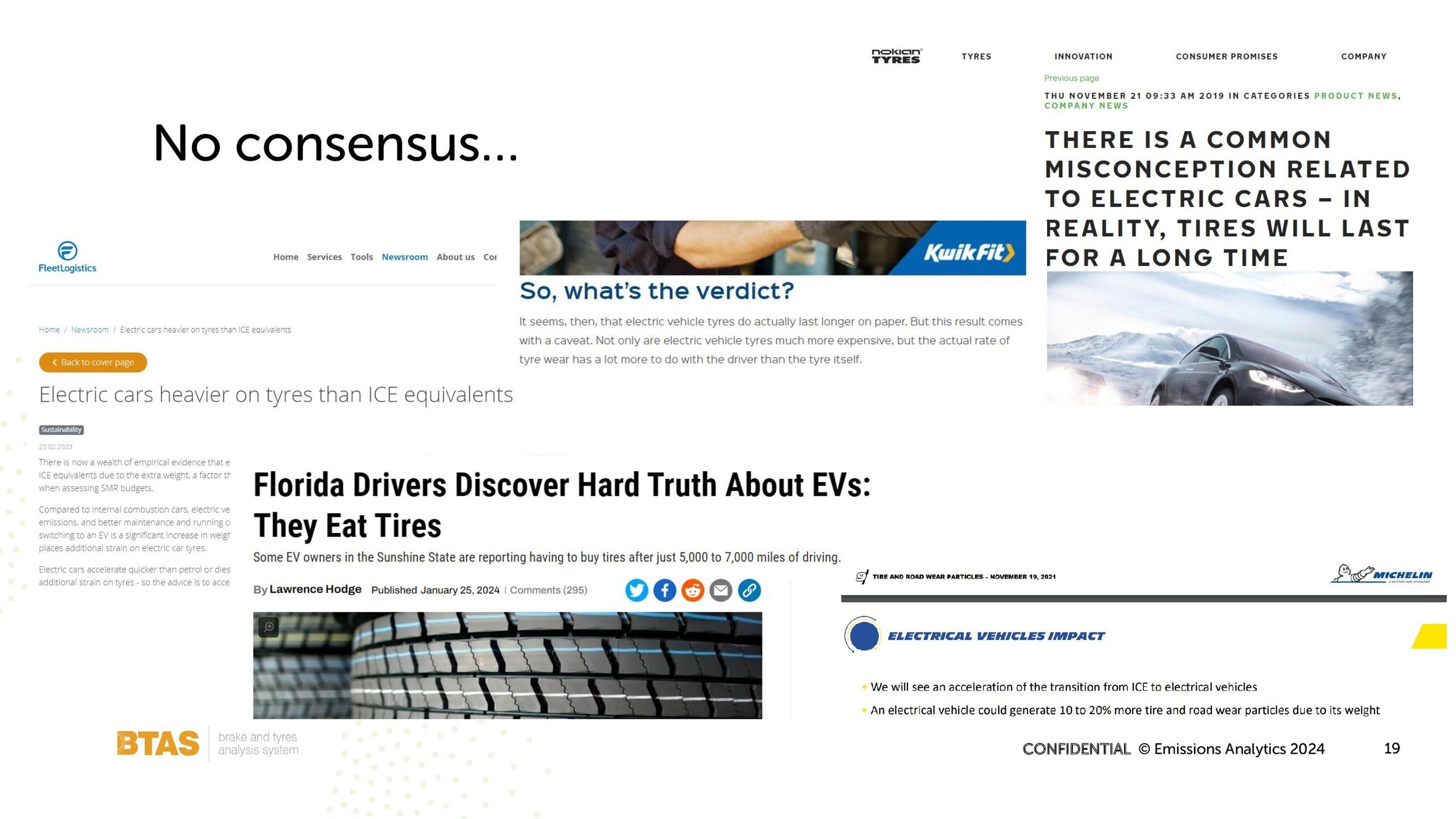
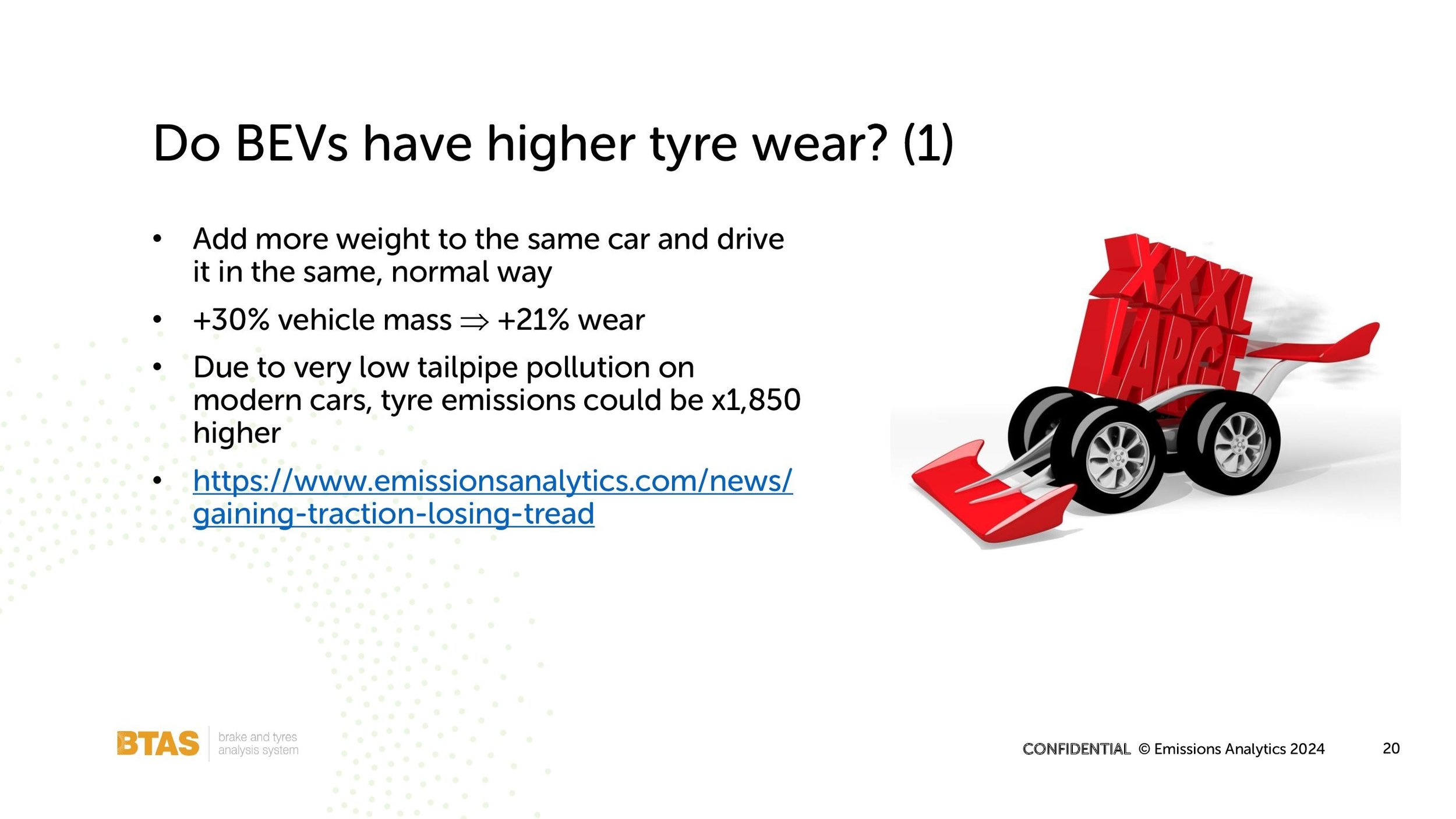
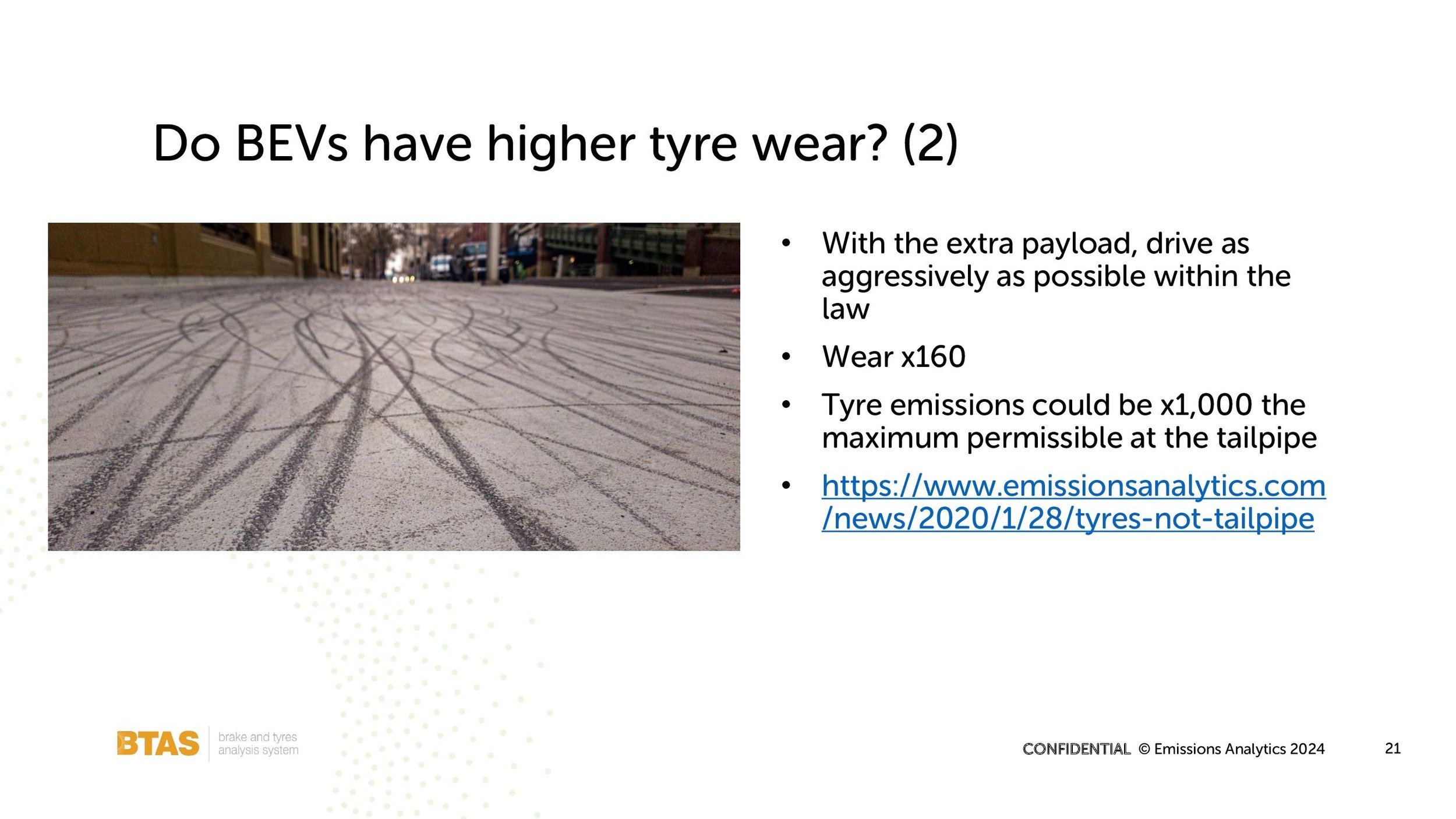
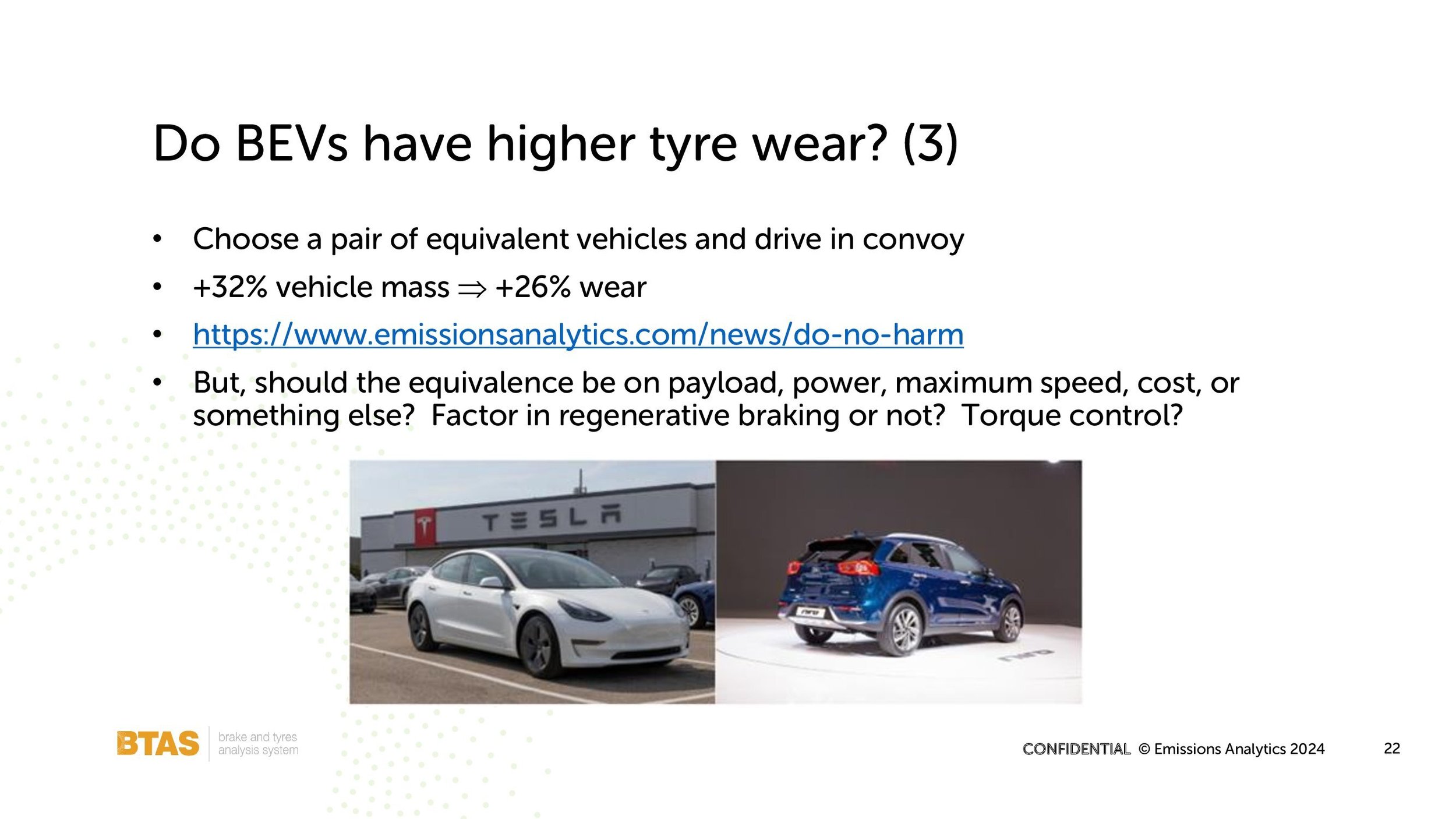
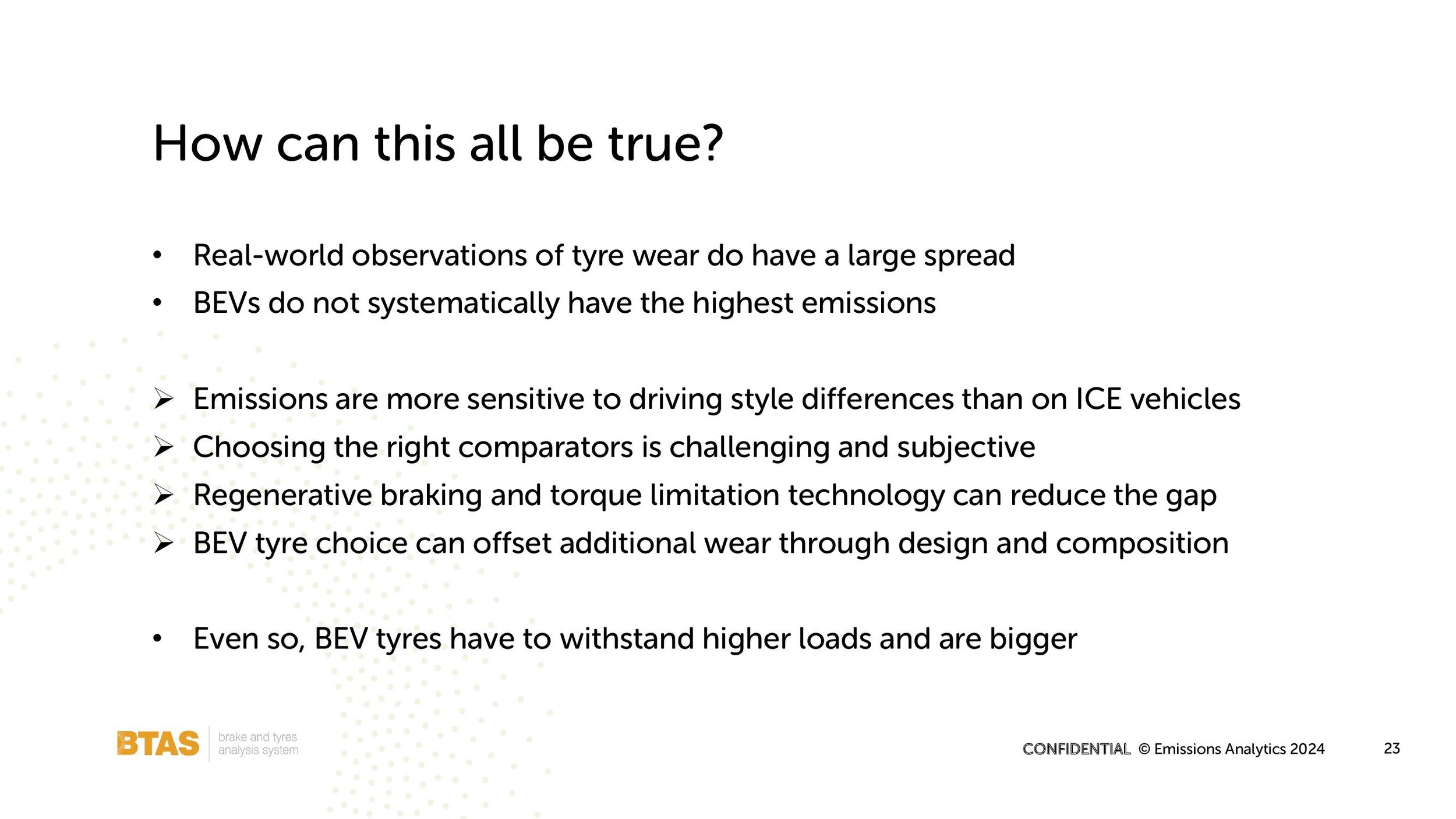
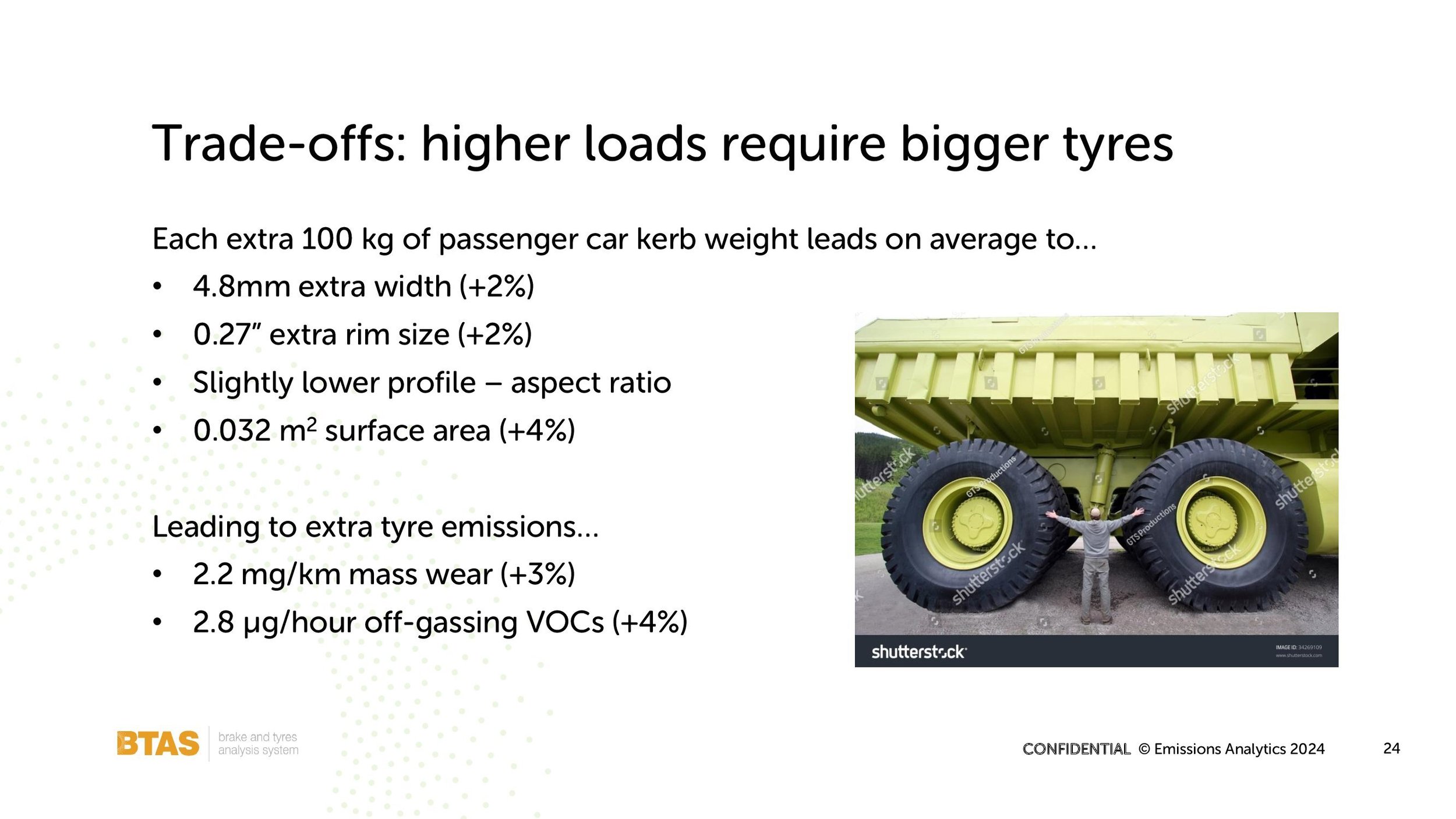
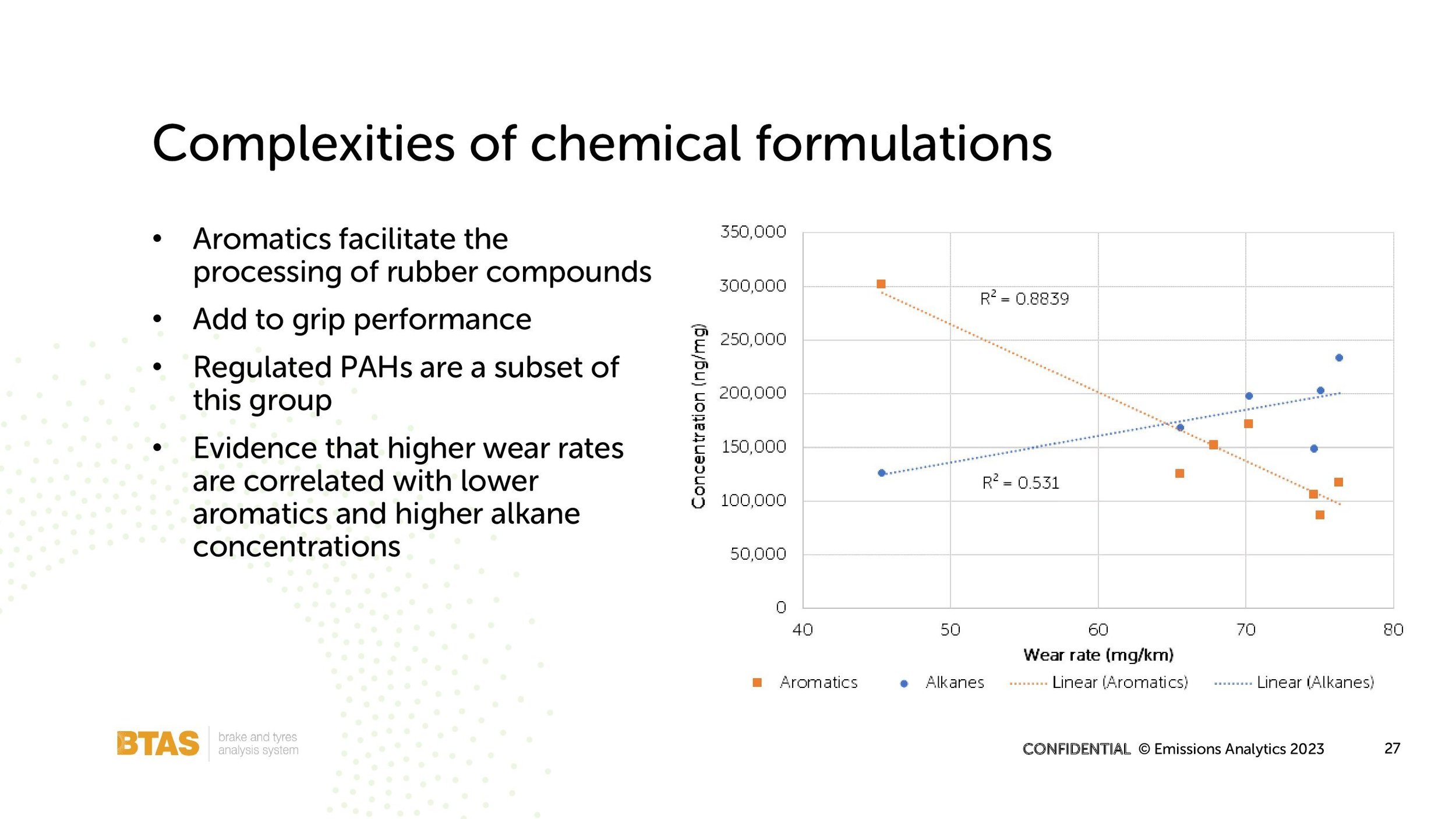
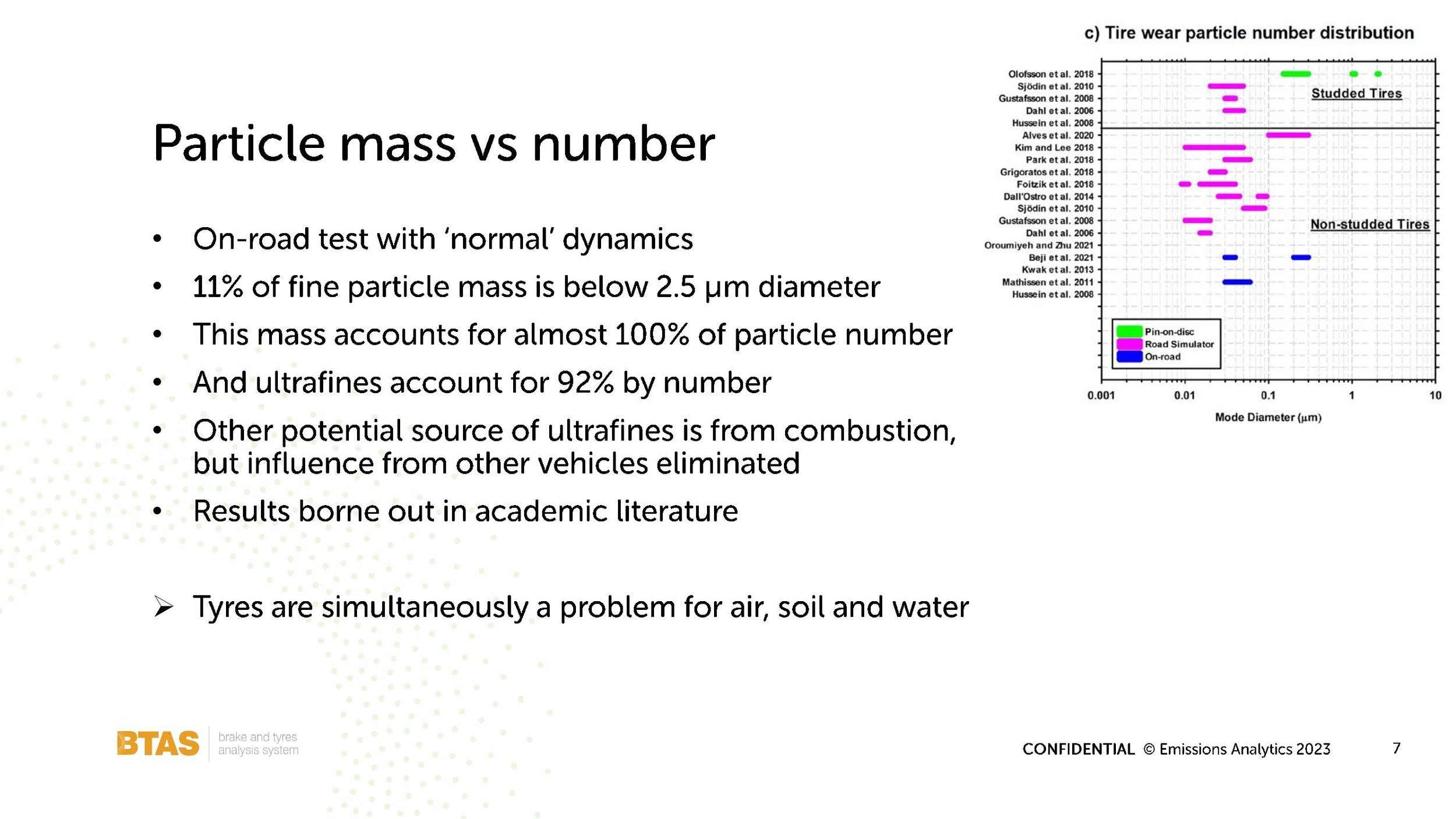
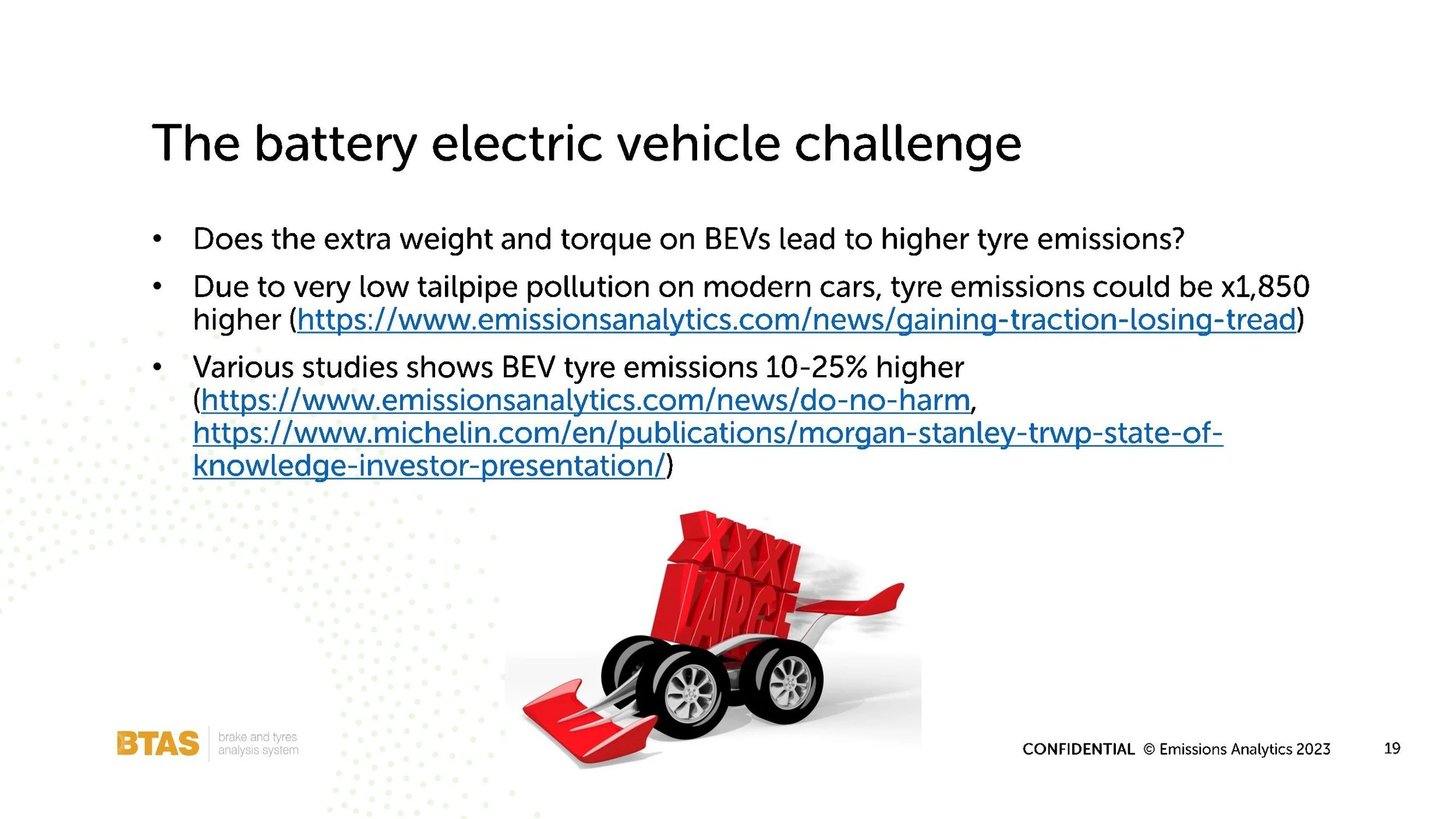
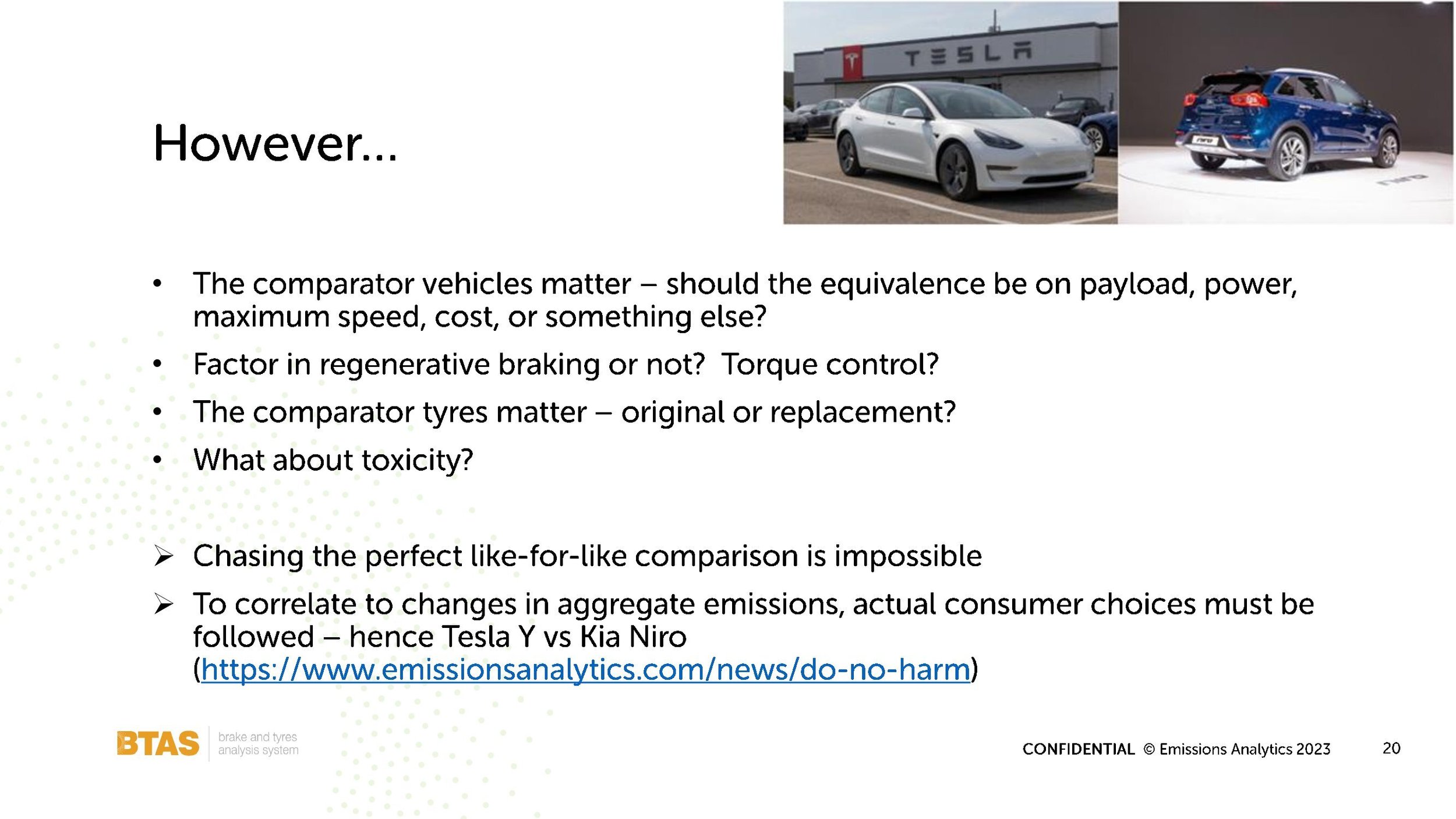
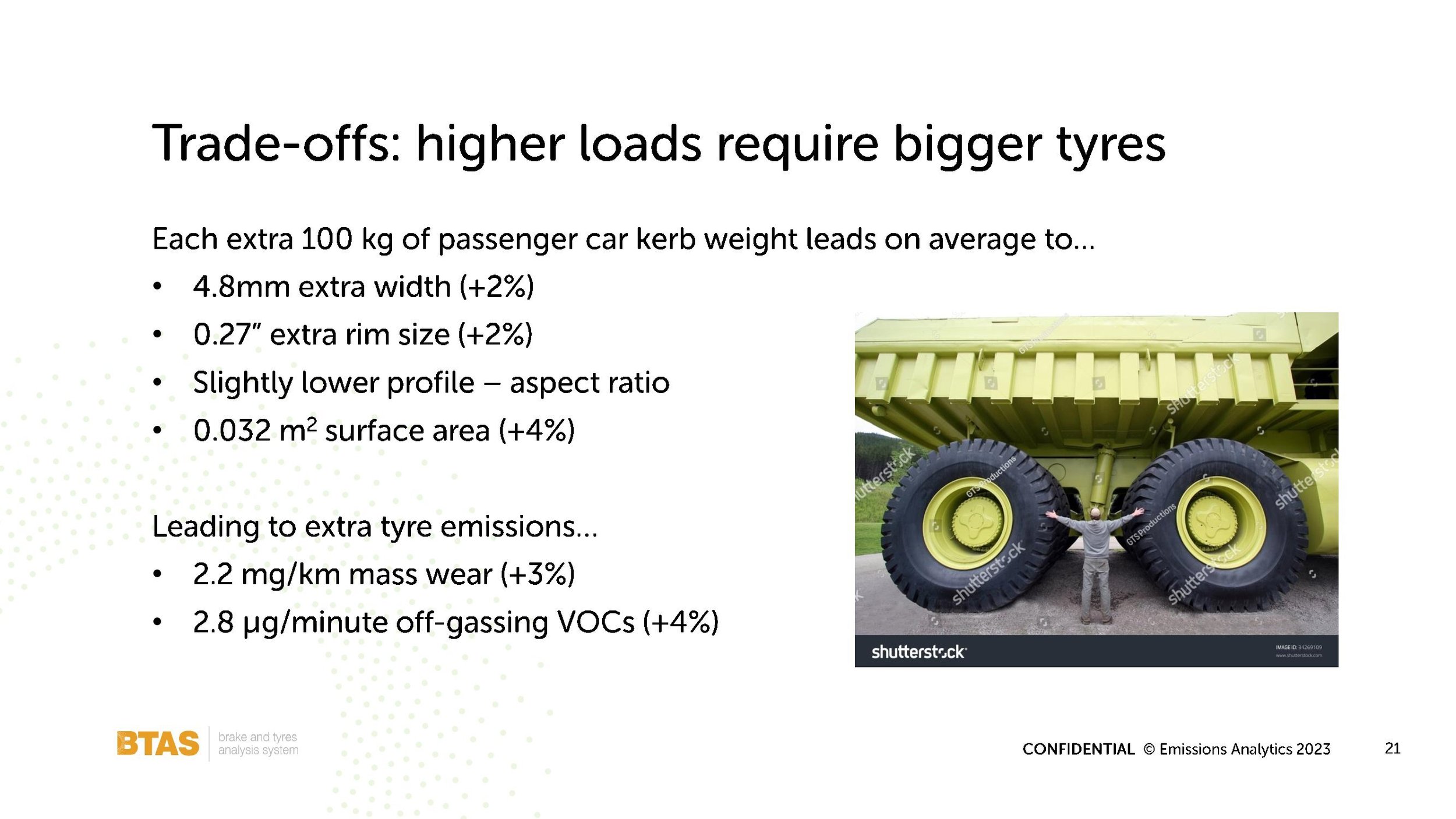
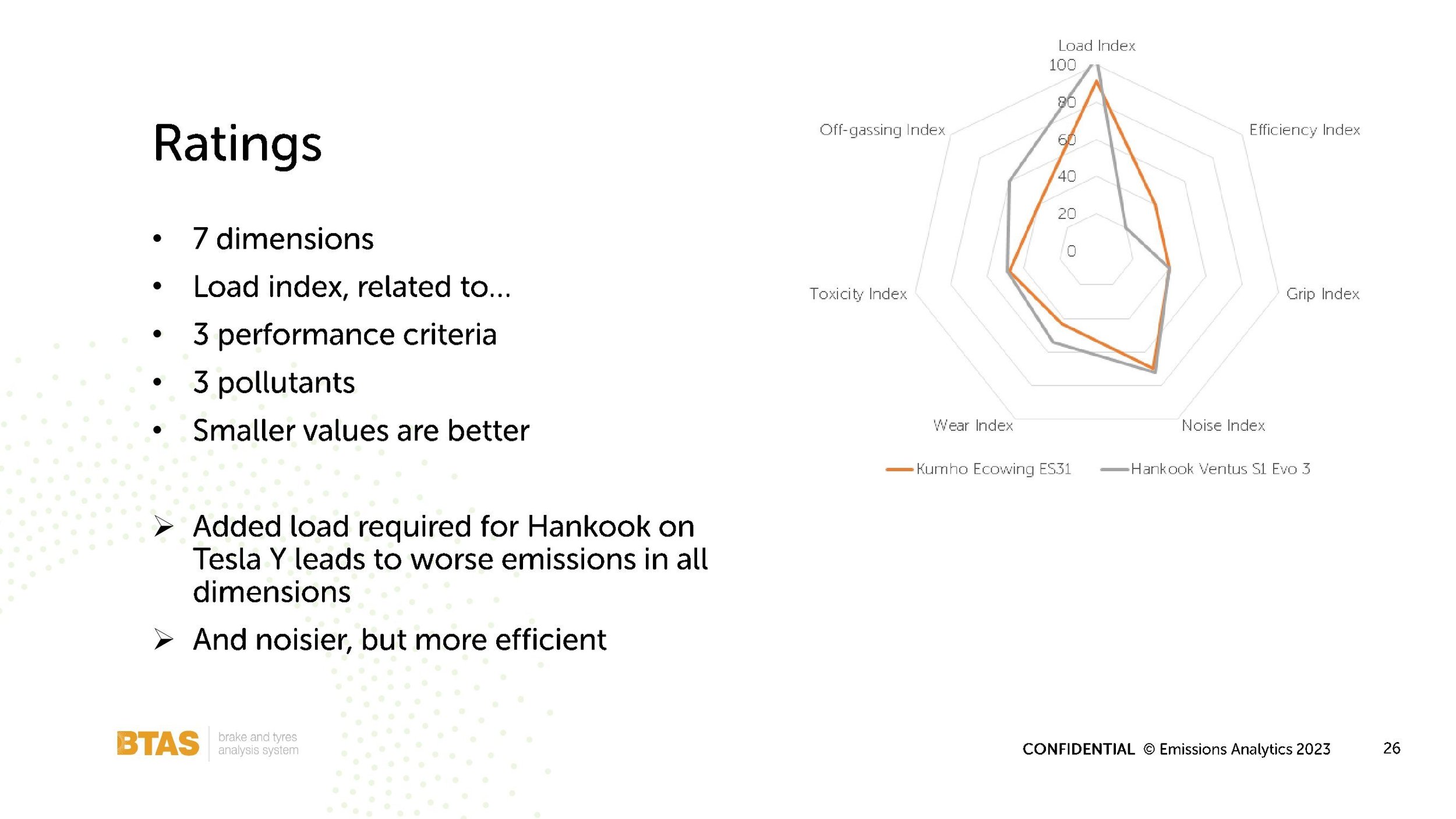
The big challenges today are often environmental. How to makes tyres with more sustainable materials – however they be defined? How to reduce microplastic and volatile organic emissions in use? This is not a problem created by heavy battery electric vehicles, but the near elimination of tailpipe pollutant emissions from modern vehicles has brought it into focus – many vehicles now emit 90% below emissions standards for nitrogen oxides, carbon monoxide, and particles. Although distance-specific tyre mass emissions may be in long-term, like-for-like decline, this is increasingly offset by more vehicles on the road, more miles driven, heavier vehicles and more torque. Our testing suggests 26% tyre wear emissions from pure battery vehicles compared to equivalent full hybrids.
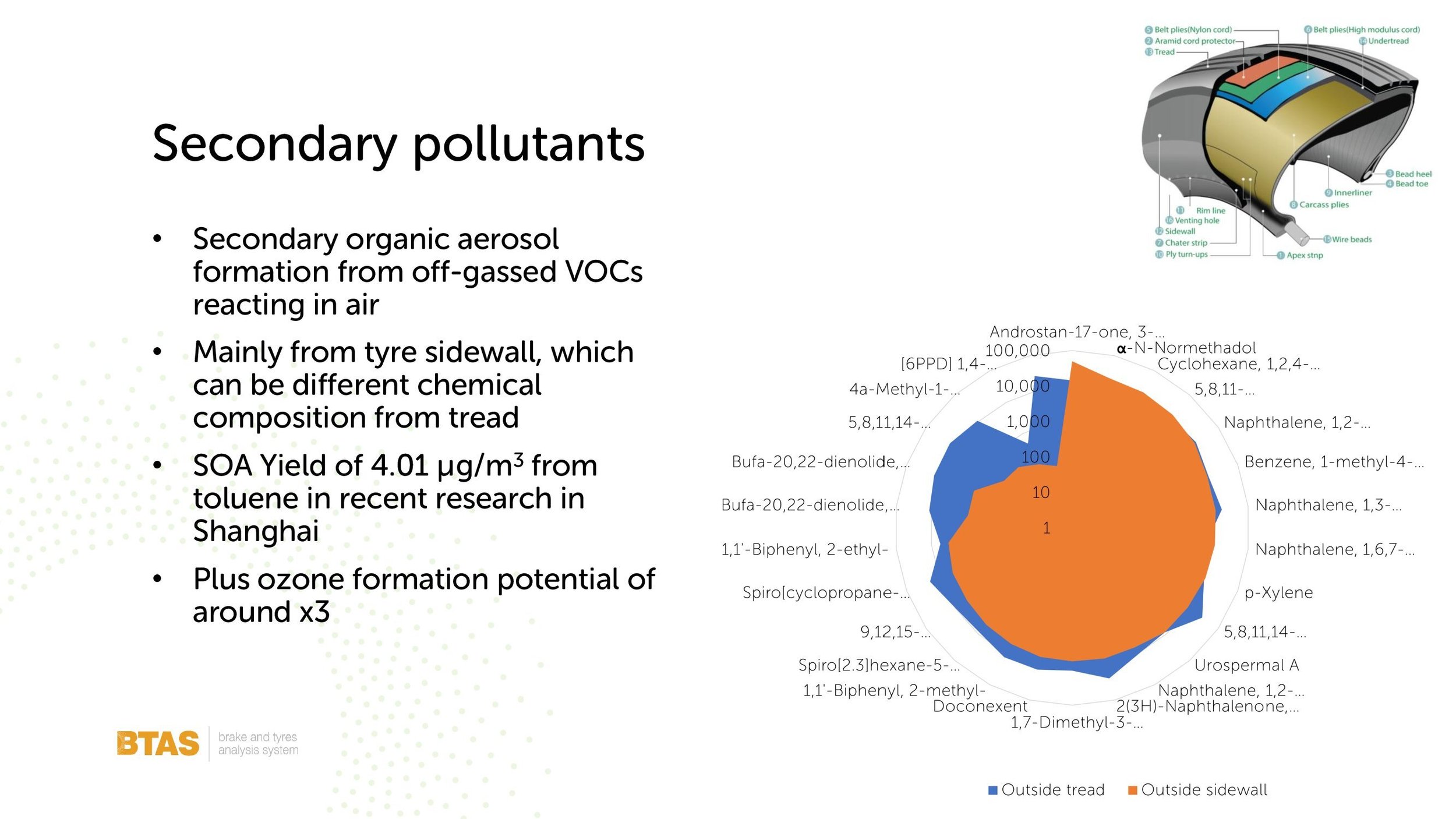
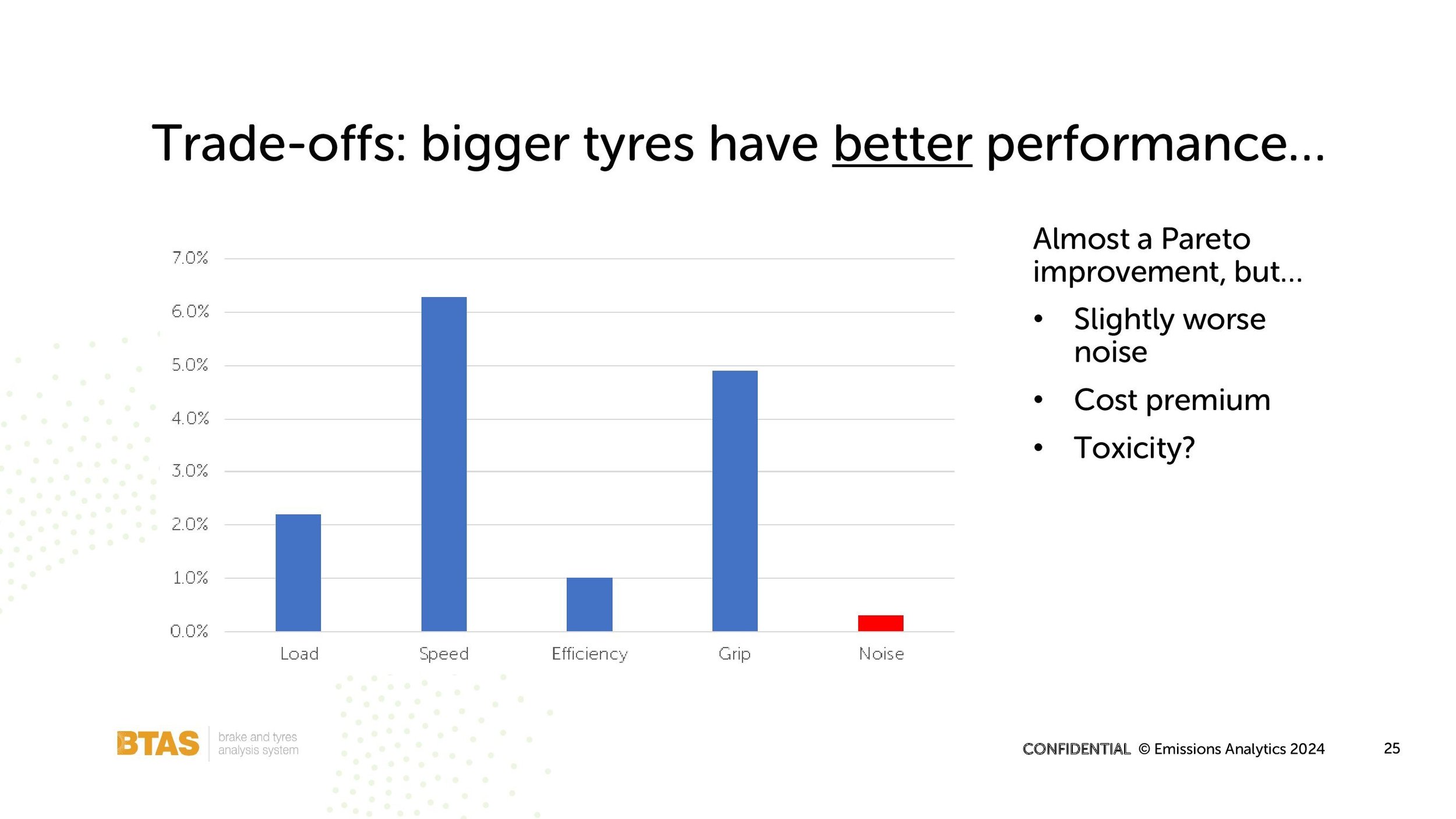
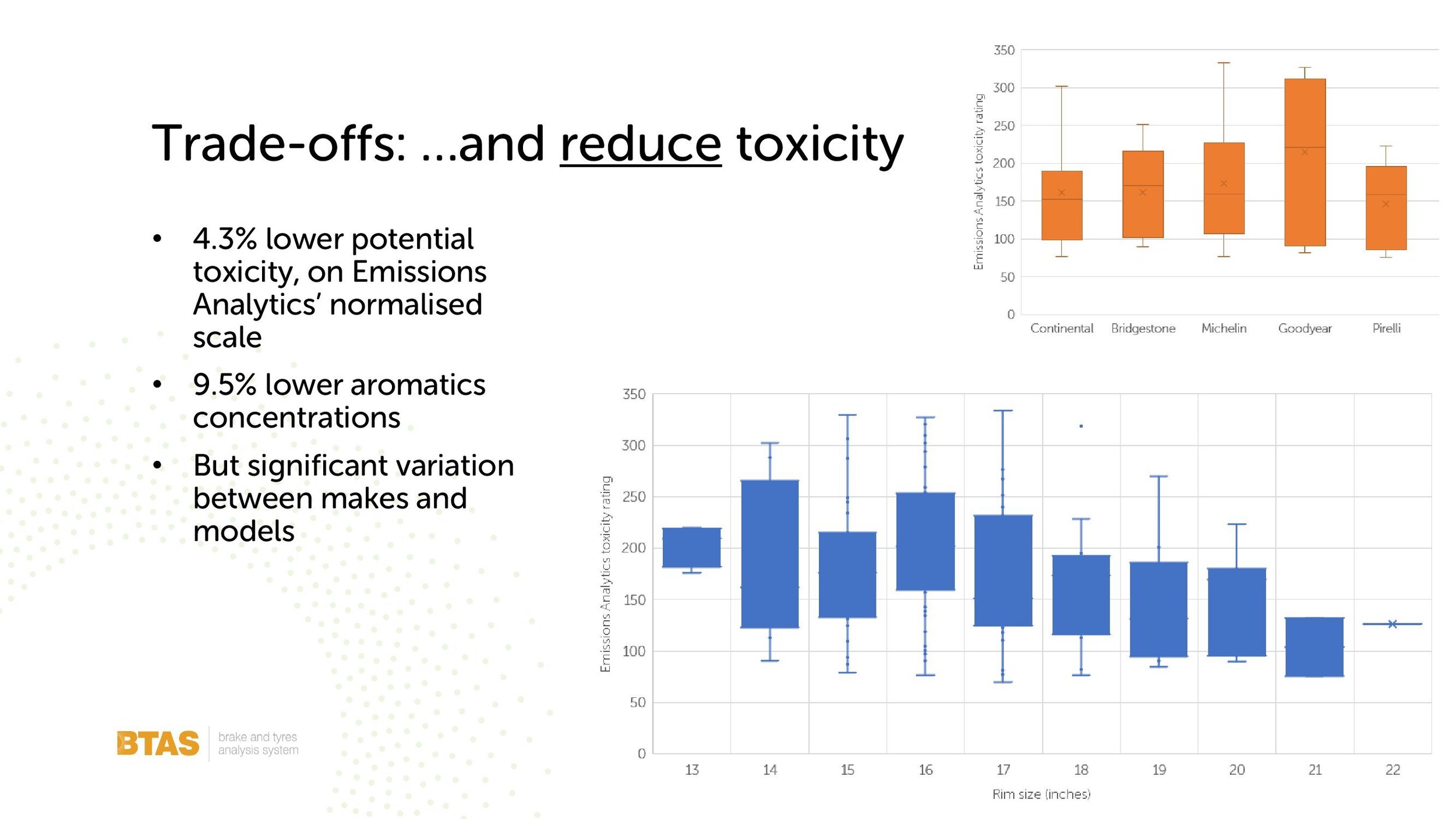
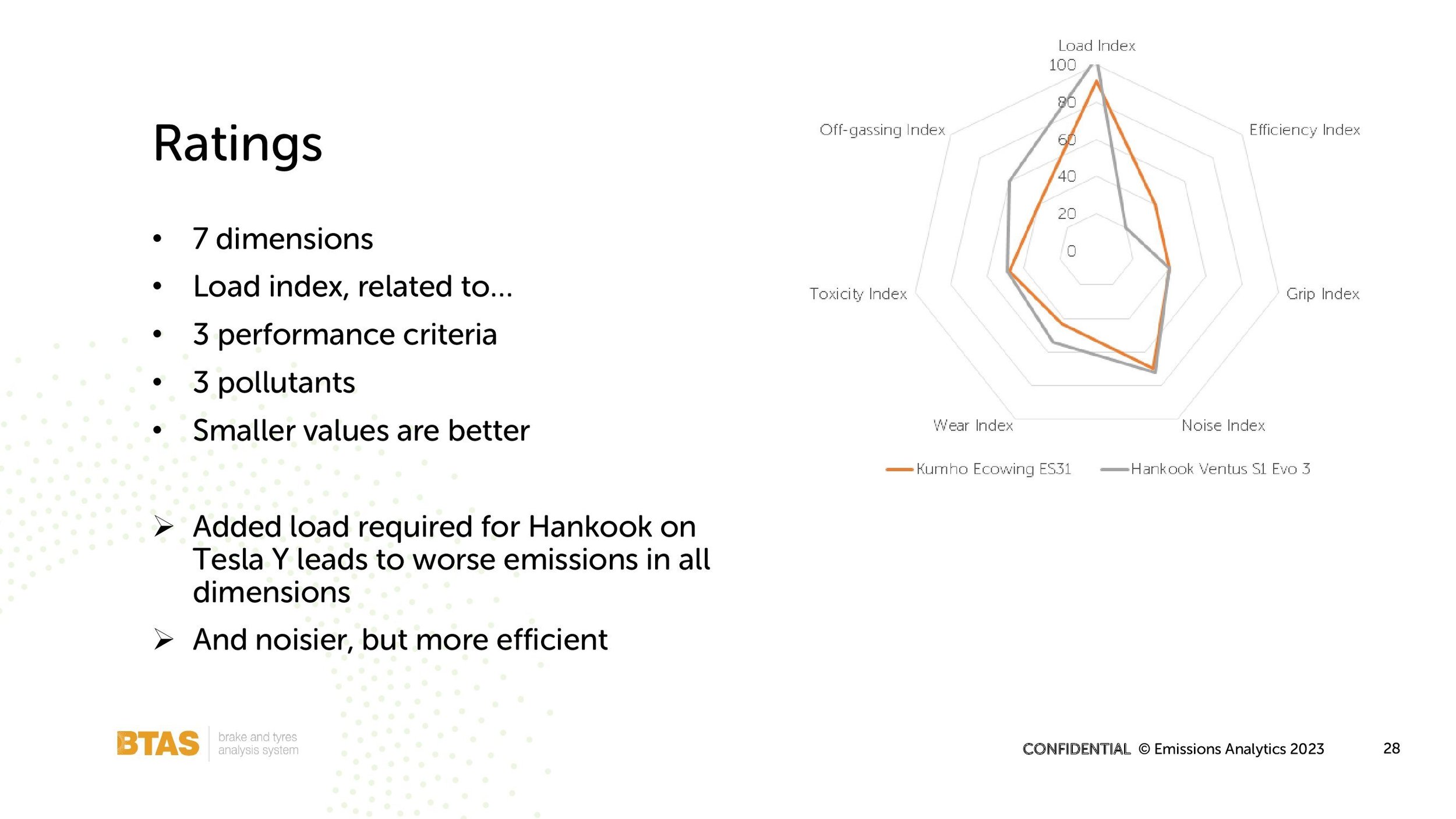
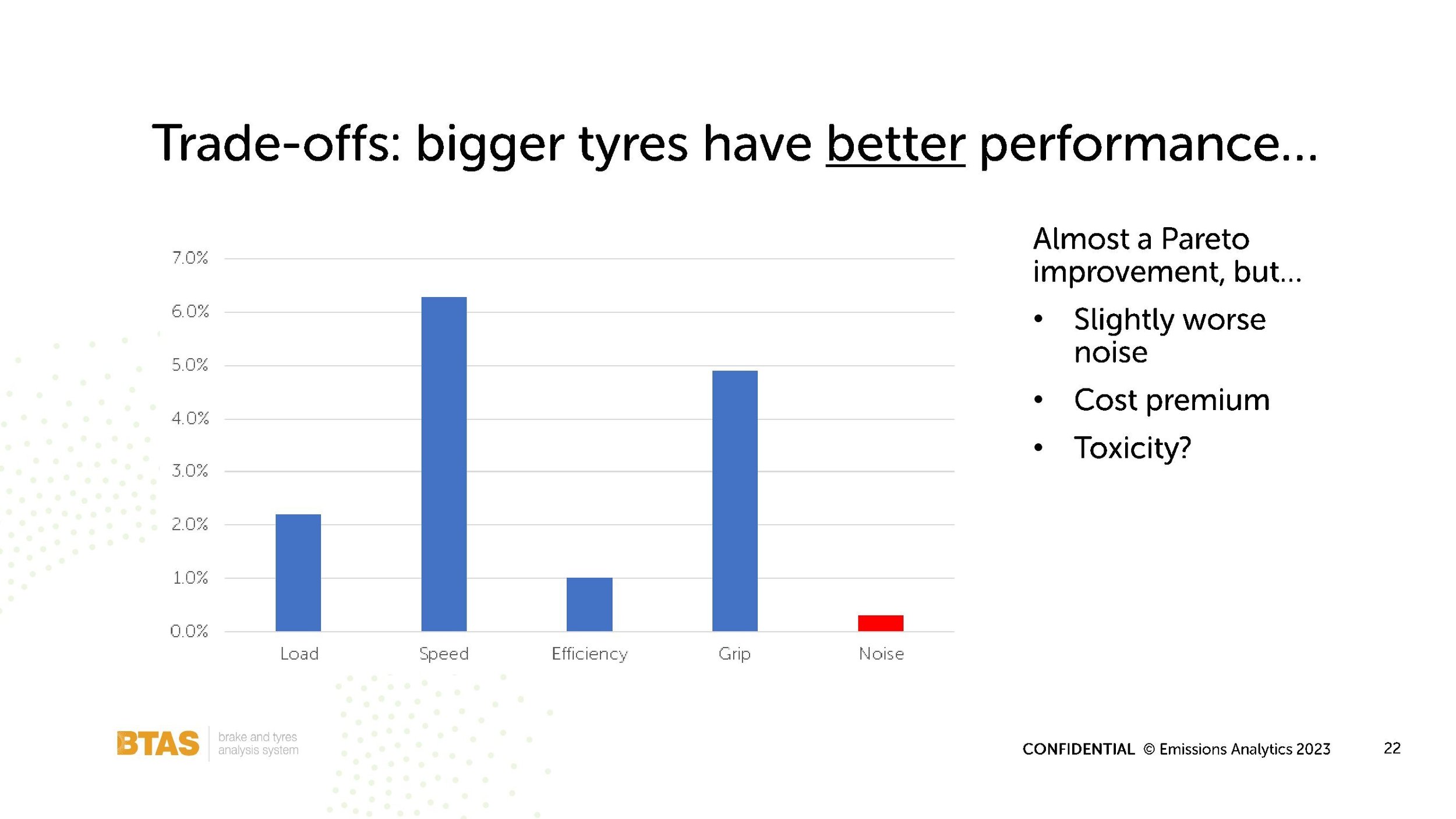
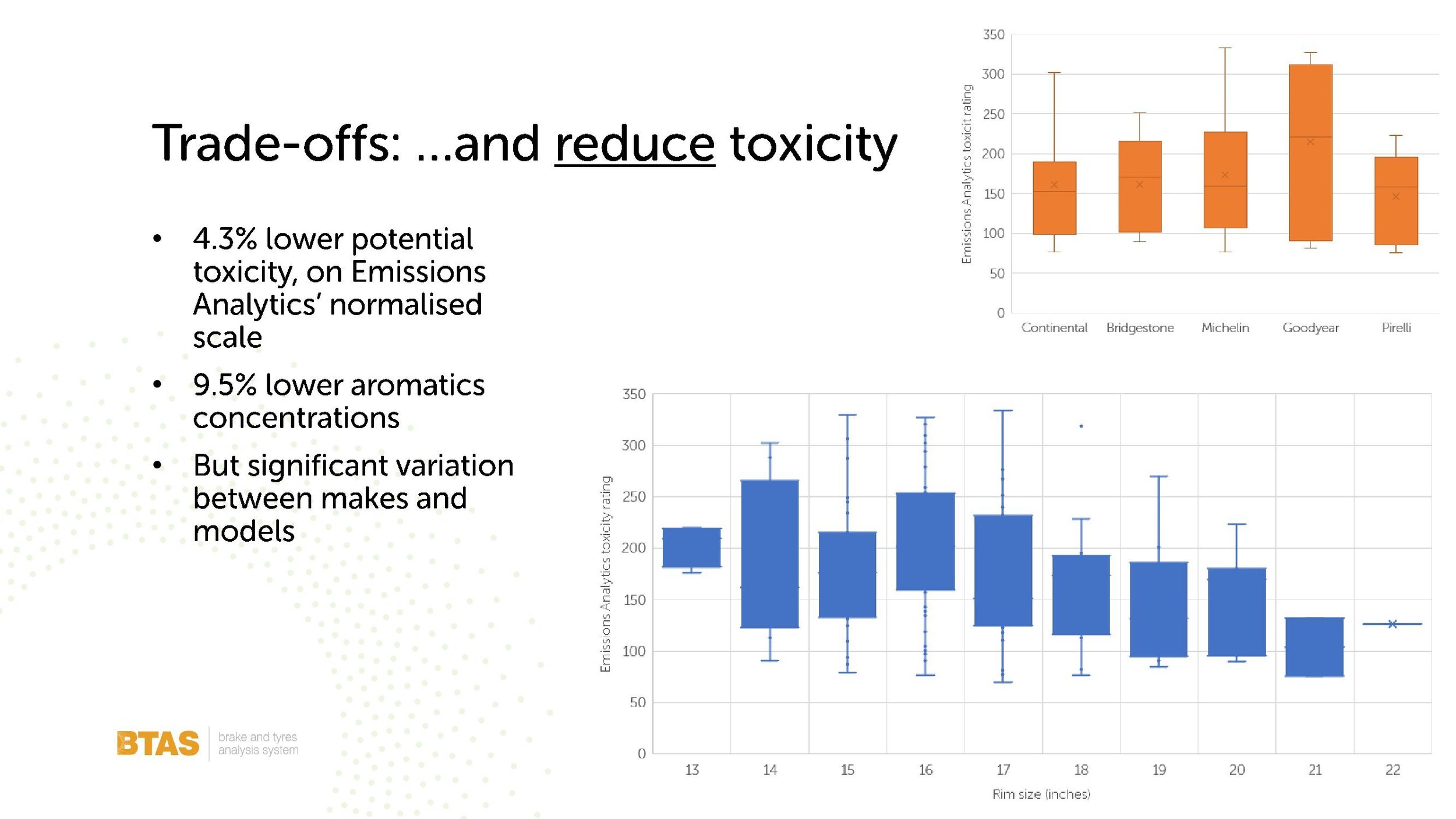
To counter this trend, new tyre formulations are being quietly brought to market to handle this heavier and ever more demanding vehicles. The immediate concern that ‘eco’ tyres could deliver such performance at the price of being more environmentally toxic appears to not to be simplistically true from Emissions Analytics’ latest testing. On our toxicity potential metric, these eco tyres may in fact be a quarter or more less toxic than standard tyres. This could to a great extent neutralise the increased mass wear rates, but with two caveats, First, it requires detailed analytical testing to verify this. Second, these eco tyres come at a financial price to the consumer.
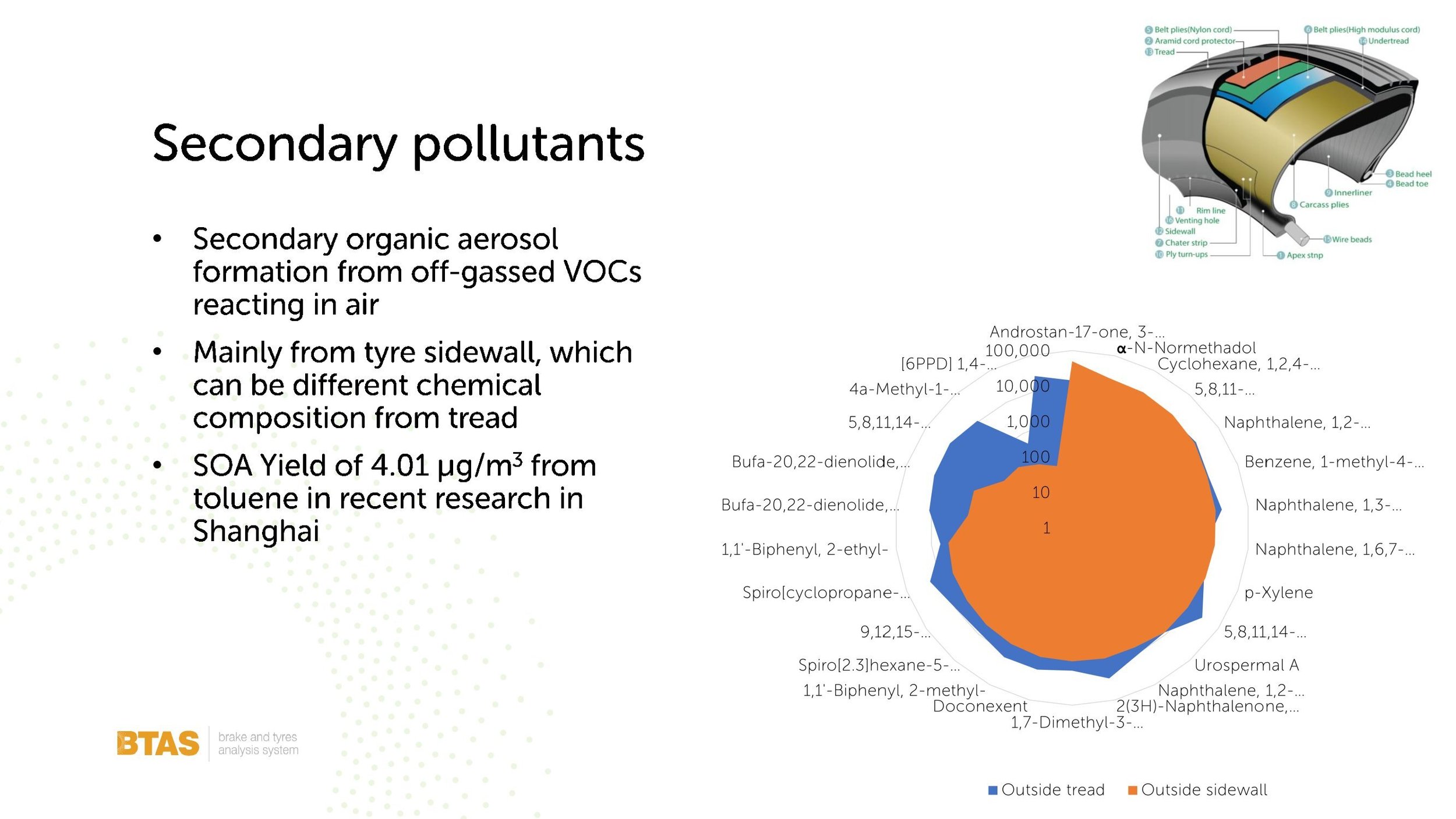
While the focus in such matters of regulation tend to start with new products, it may be regulations about replacement tyres that will have a greater bearing on the combined environmental of tyres. A brand-new battery vehicle equipped with the latest, most sophisticated eco tyres limit emissions, only for that good work to be undone when they are ultimately replaced by cheaper, less sophisticated alternatives. A private saving for the vehicle owner may create a public cost in pollution.

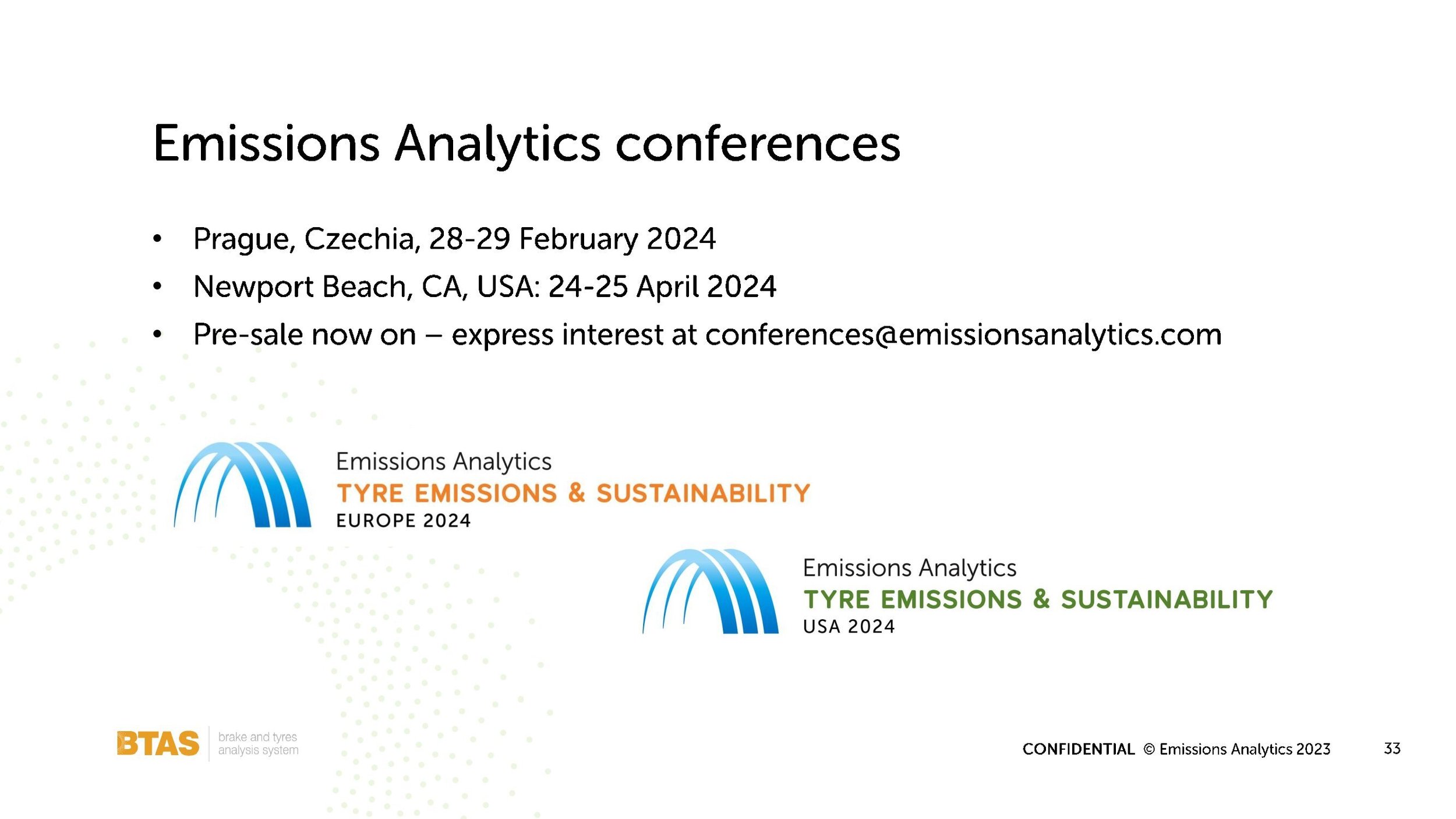
Seeking to address these questions, our first event will take place in Prague on 28-29 February 2024, and further details can be found here. Two months later, on 24-25 April, we will pick up the discussion in Southern California, details here. We encourage you all to apply to attend and submit abstracts for presentations.
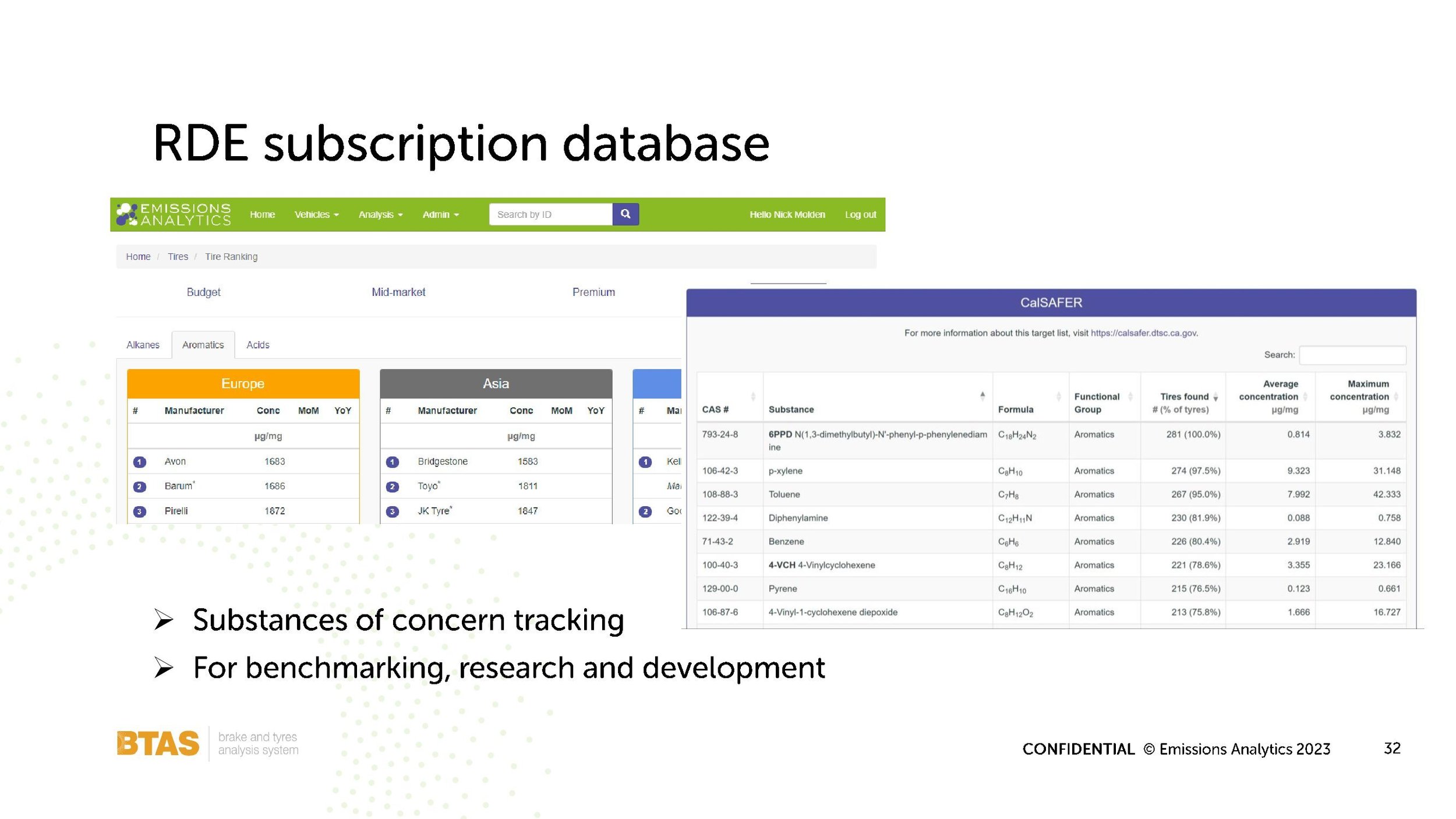
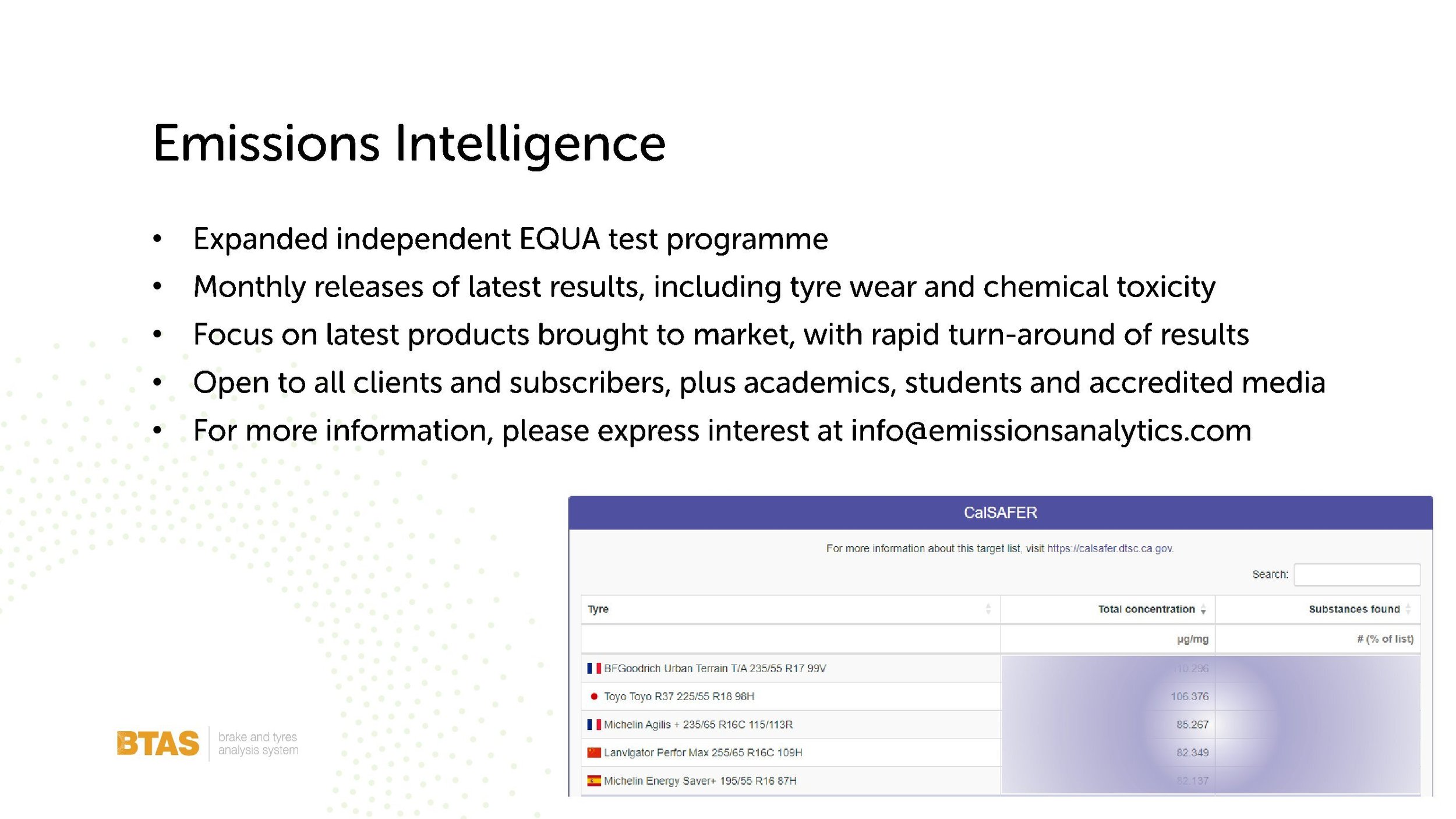
Alongside this, we will be publishing regular, detailed results of Emissions Analytics’ tyre wear and chemical composition testing, along with our monthly newsletter, via our Emissions Intelligence subscription – please contact us to find out more.
Together, these new initiatives from Emissions Analytics are engaging with society and industry to bring about an understanding and appreciation of the sheer cleverness and importance of tyres, and how vital the right choices are for the environment. Consumers want to do the right thing, but the choice of tyres for many is currently too boring and complex. Let’s change this. Let's start the conversation.

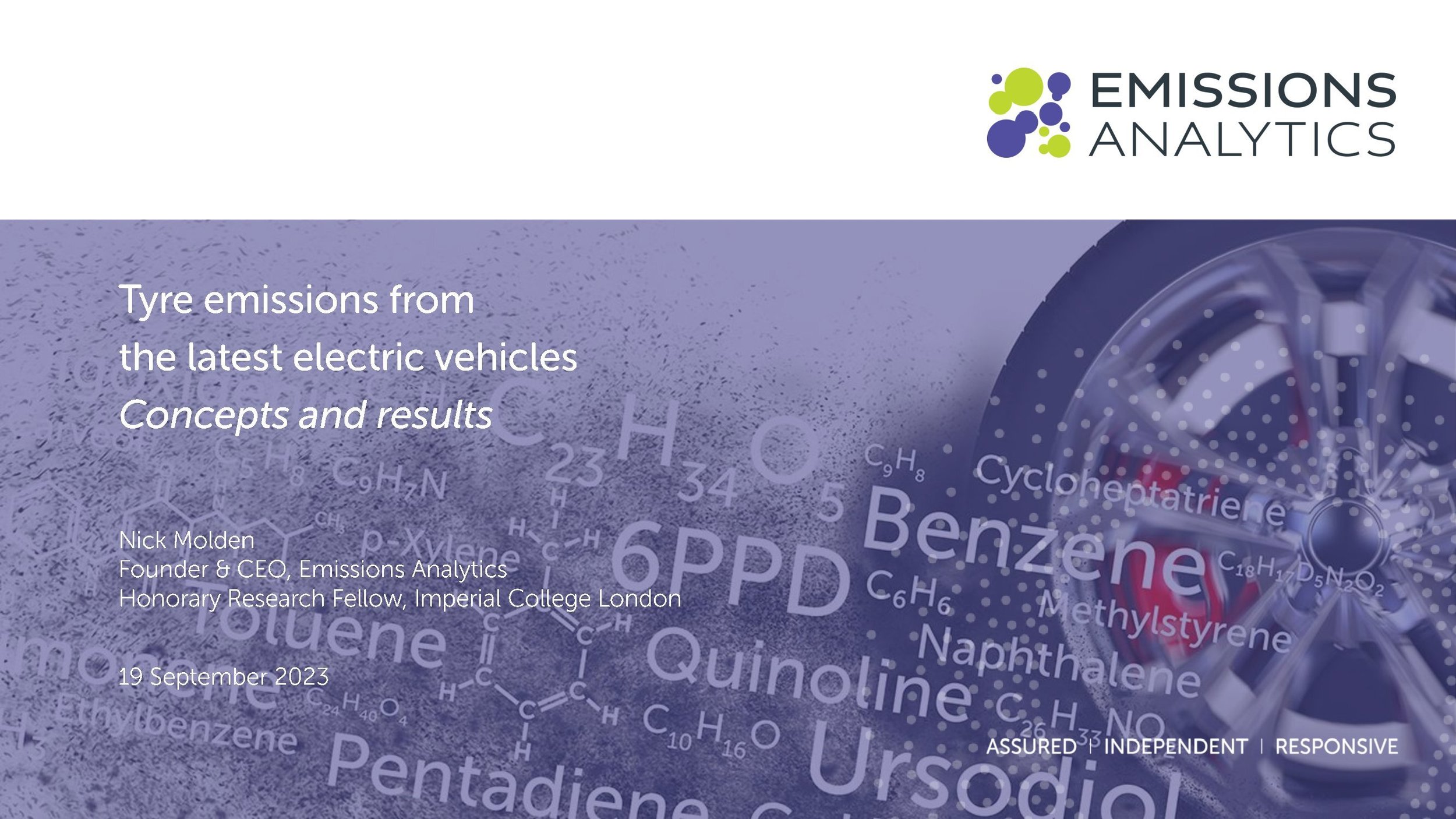
Webinar: Tyre emissions from the latest electric vehicles
Our CEO & Founder, Nick Molden presented a webinar on the tyre emissions from the latest electric vehicles on 19th September 2023. The world is on a path to electrifying everything that moves, primarily driven by the desire to decarbonise. But no vehicle is zero emission, and the latest emissions regulations in Europe, the US and beyond are now starting to incorporate non-exhaust emissions.
Our CEO & Founder, Nick Molden presented a webinar on the tyre emissions from the latest electric vehicles on 19th September 2023.





To watch the webinar and download the presentation please see below.
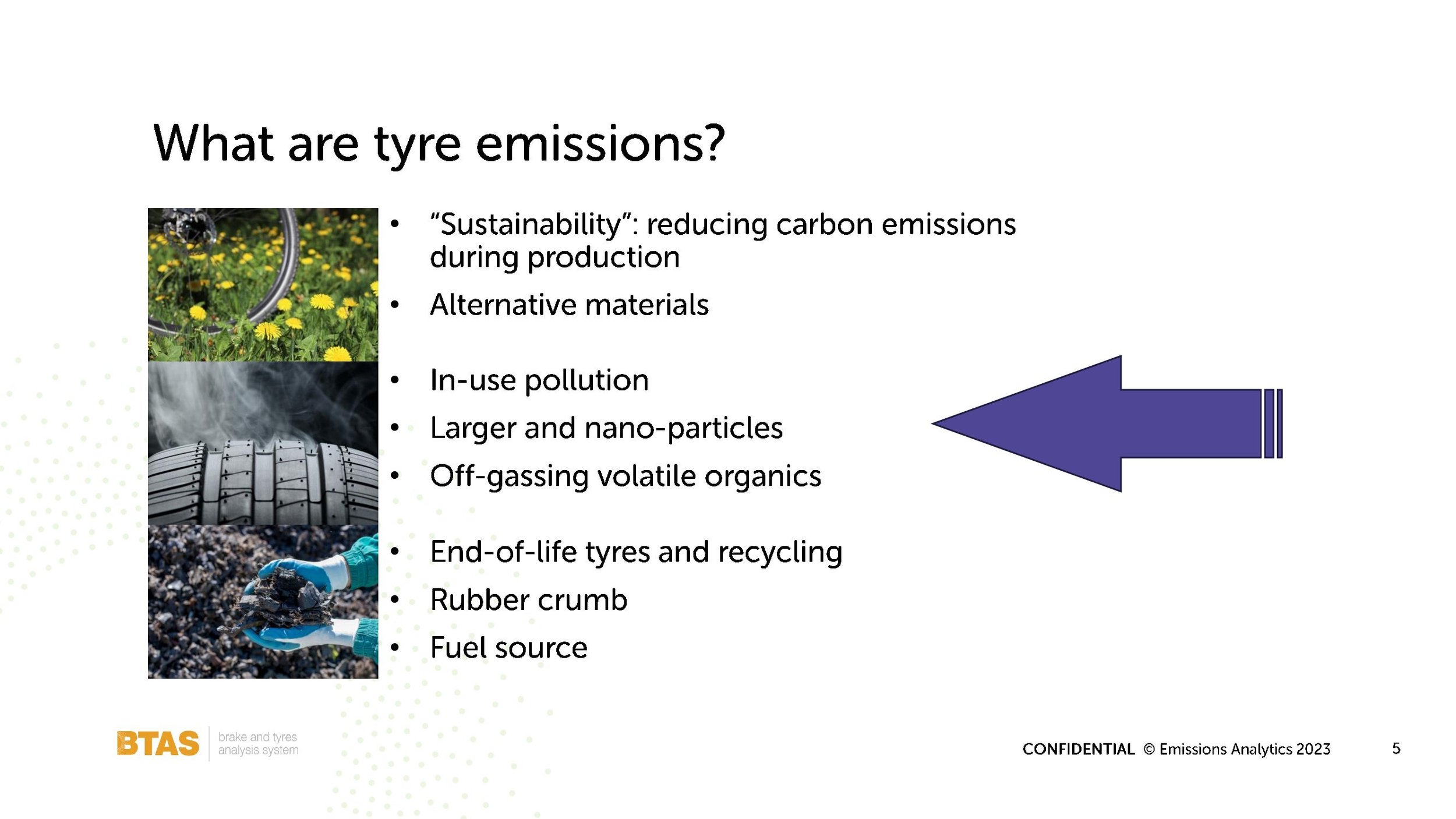
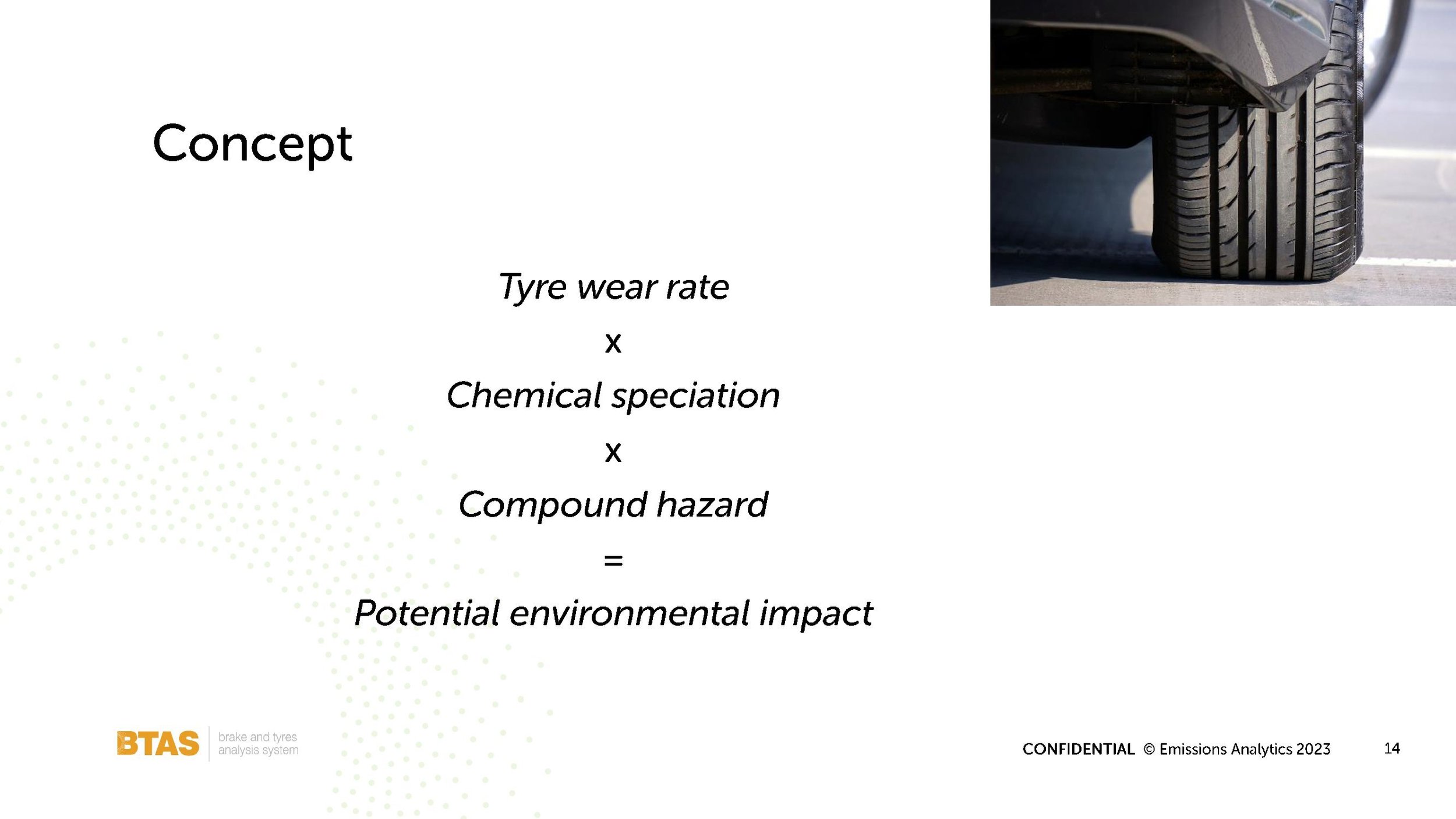
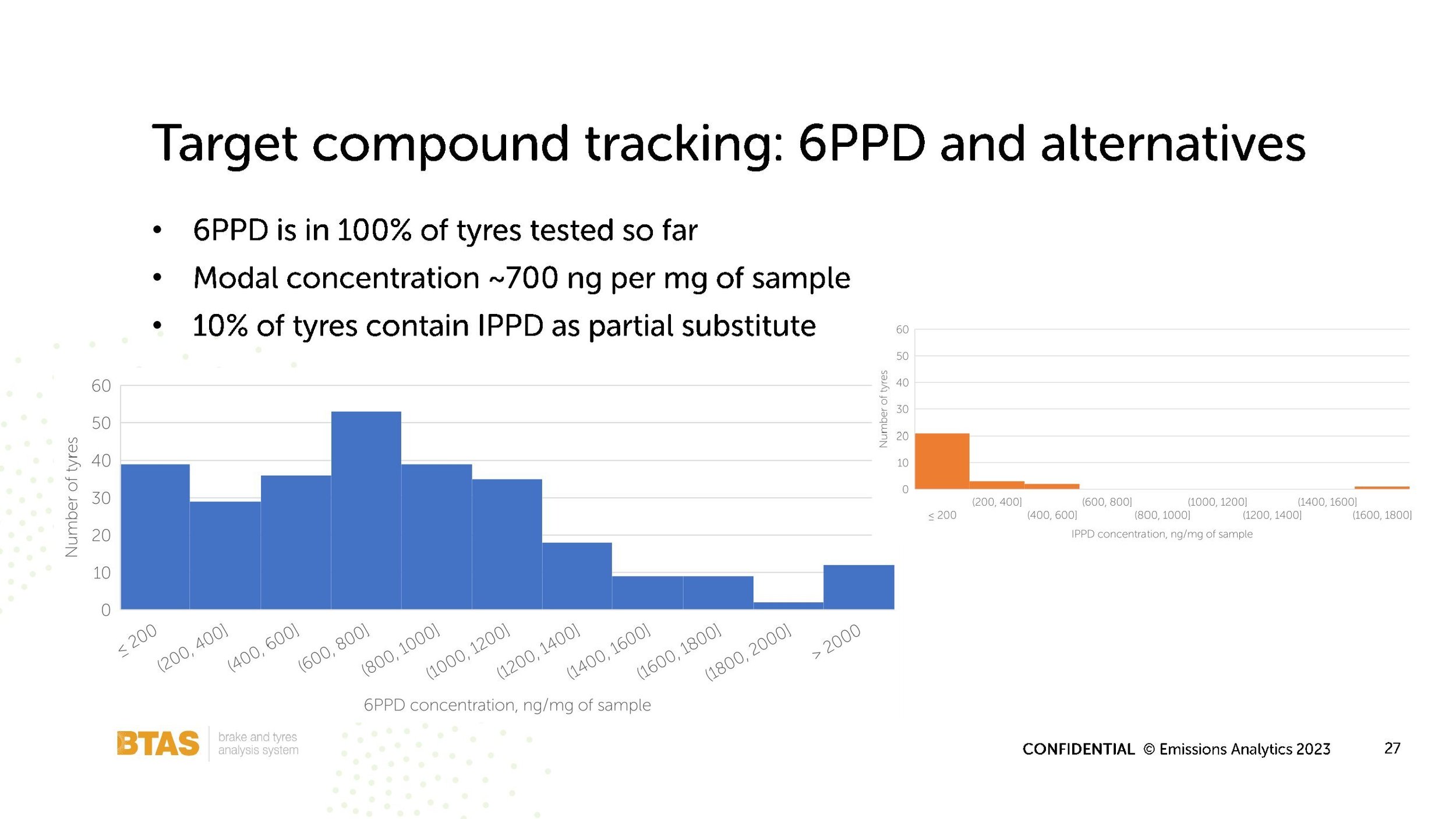
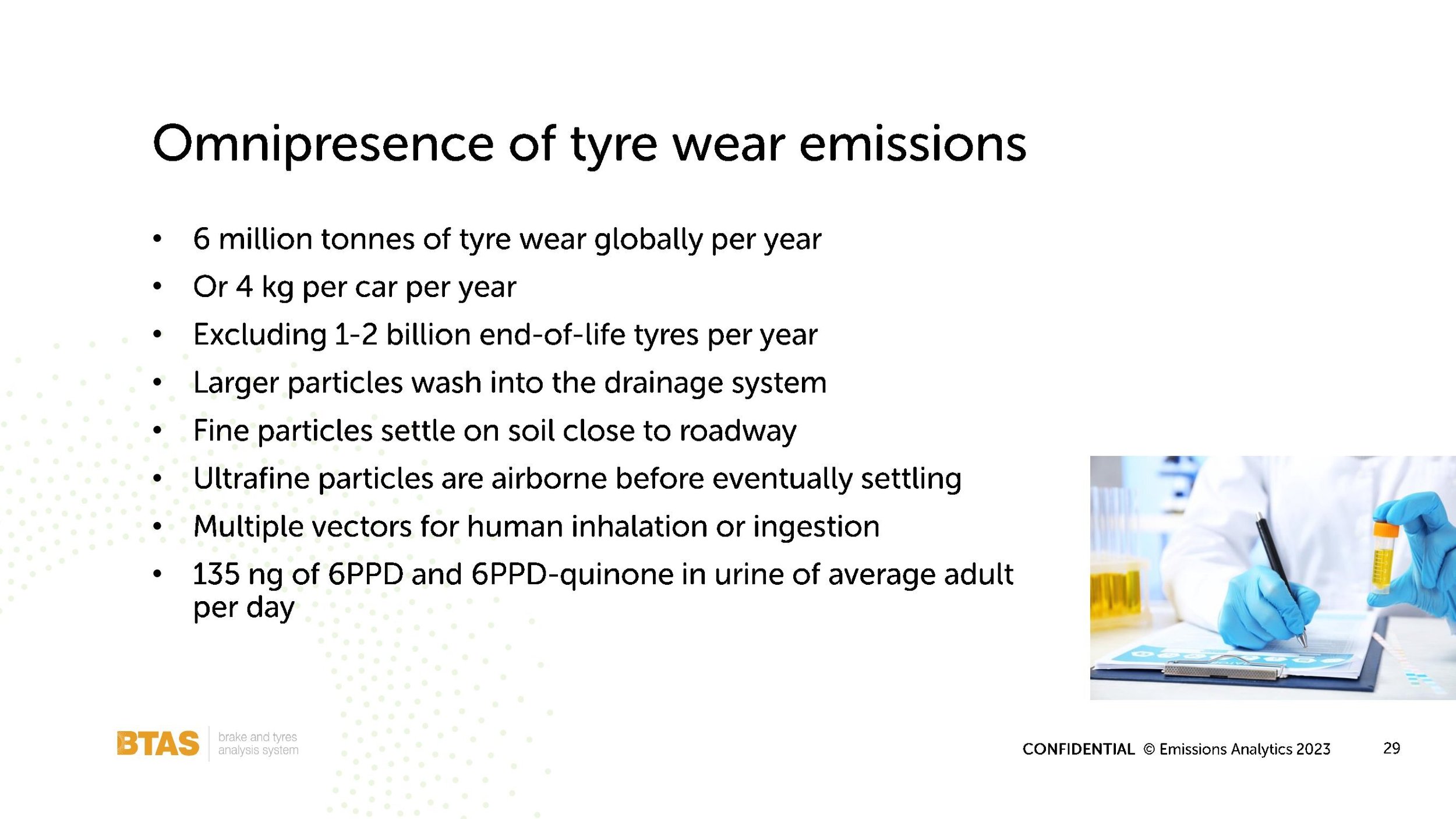
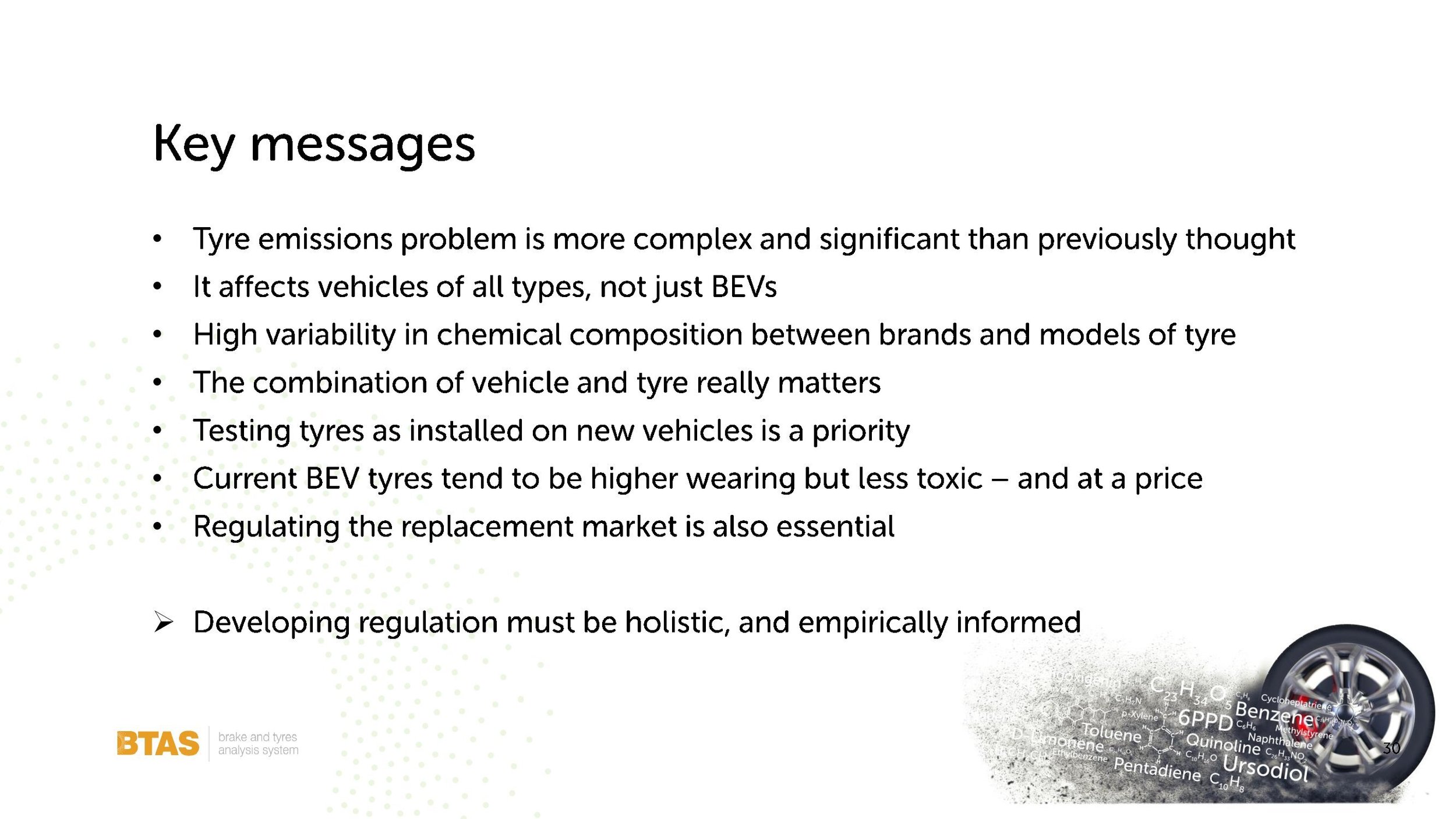
The world is on a path to electrifying everything that moves, primarily driven by the desire to decarbonise. But no vehicle is zero emission, and the latest emissions regulations in Europe, the US and beyond are now starting to incorporate non-exhaust emissions. The task is a major one, though, as changes in other regulations and tastes are leading to ever-heavier vehicles, which is likely to increase tyre emissions. What is less well understood is the chemical formulations used in specialist 'EV tyres', and whether they are potentially more or less toxic that standard tyres. This webinar will share the latest chemical profiling results from our EQUA test programme, to show the key trends.
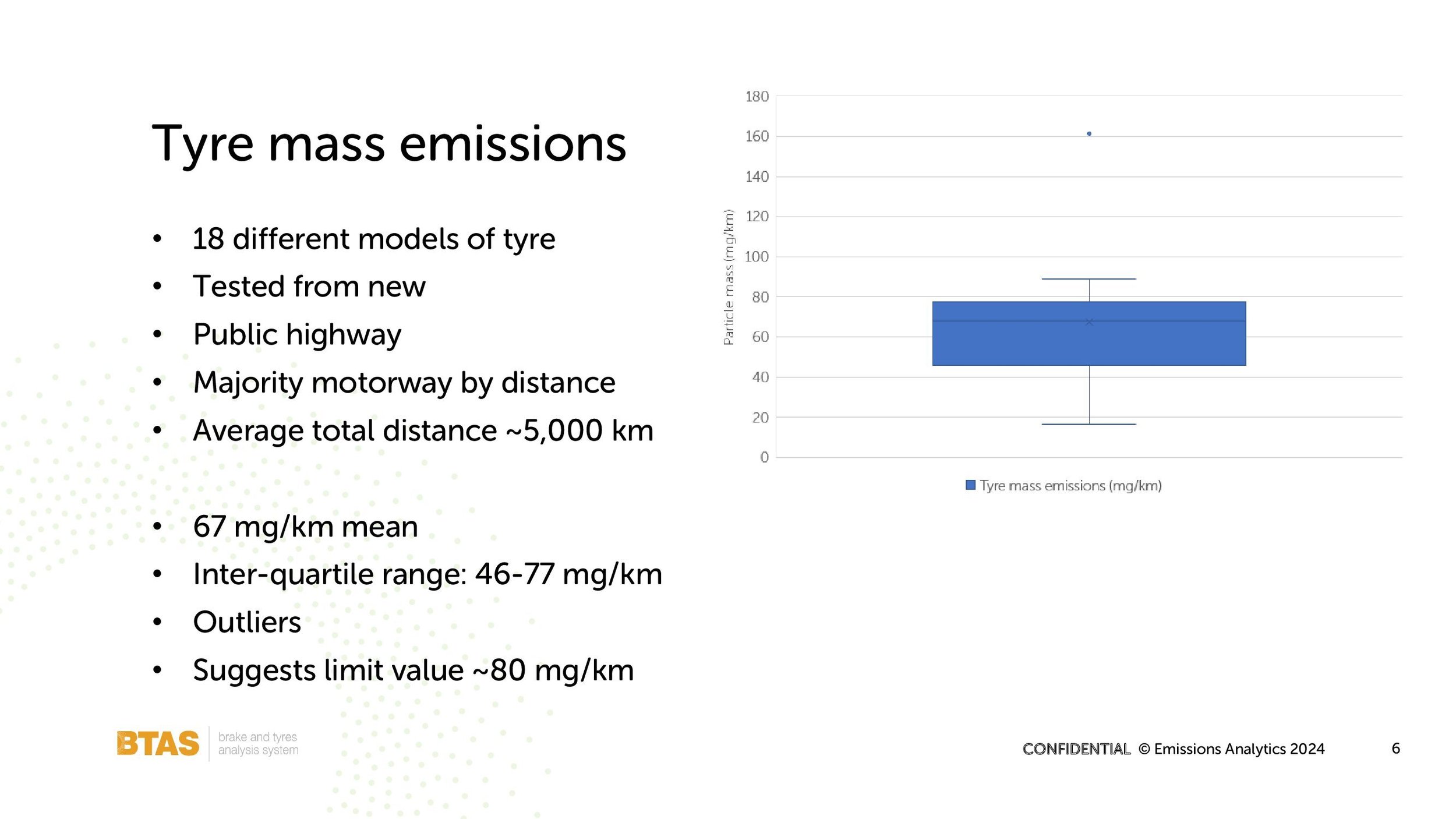
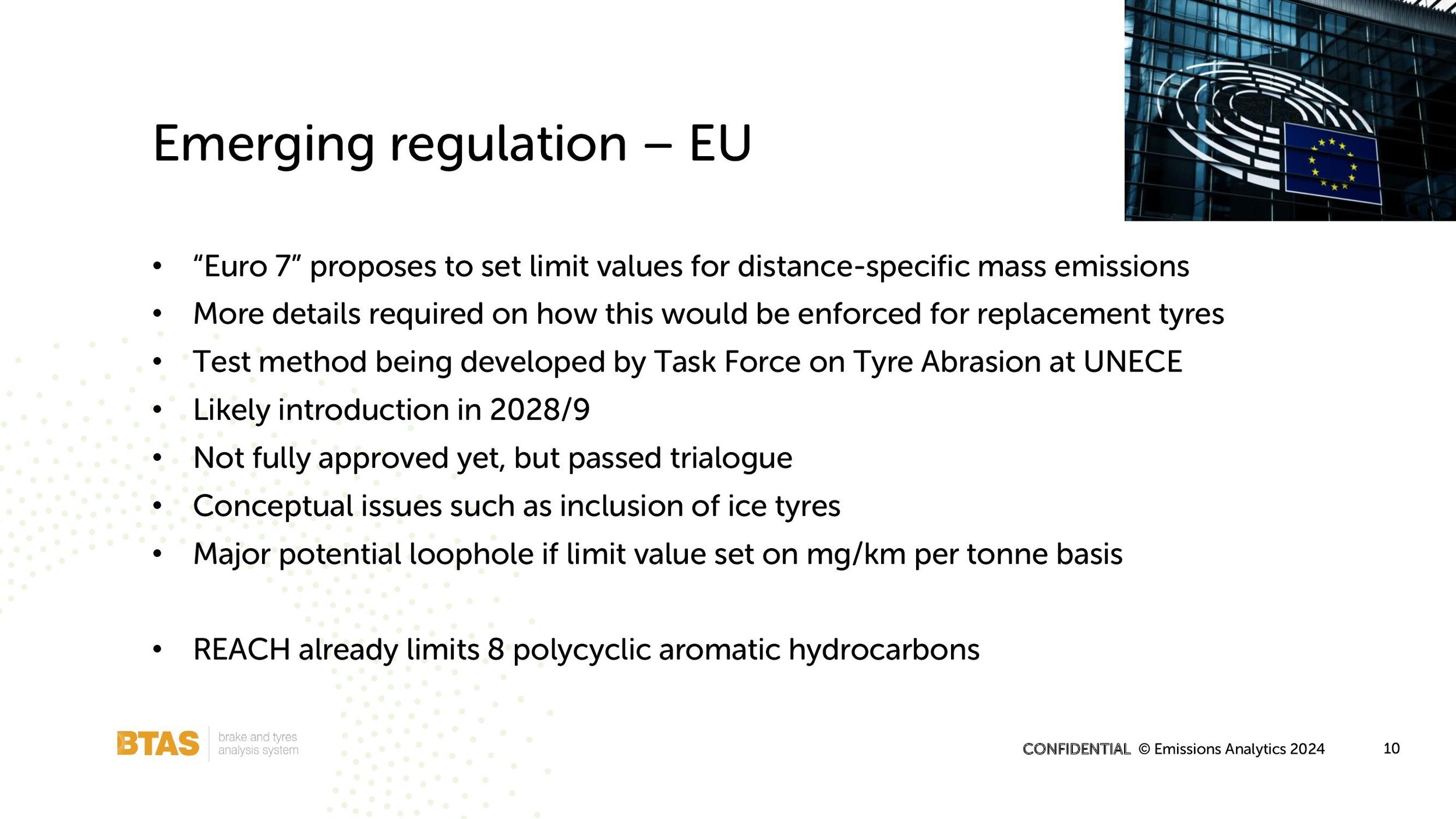
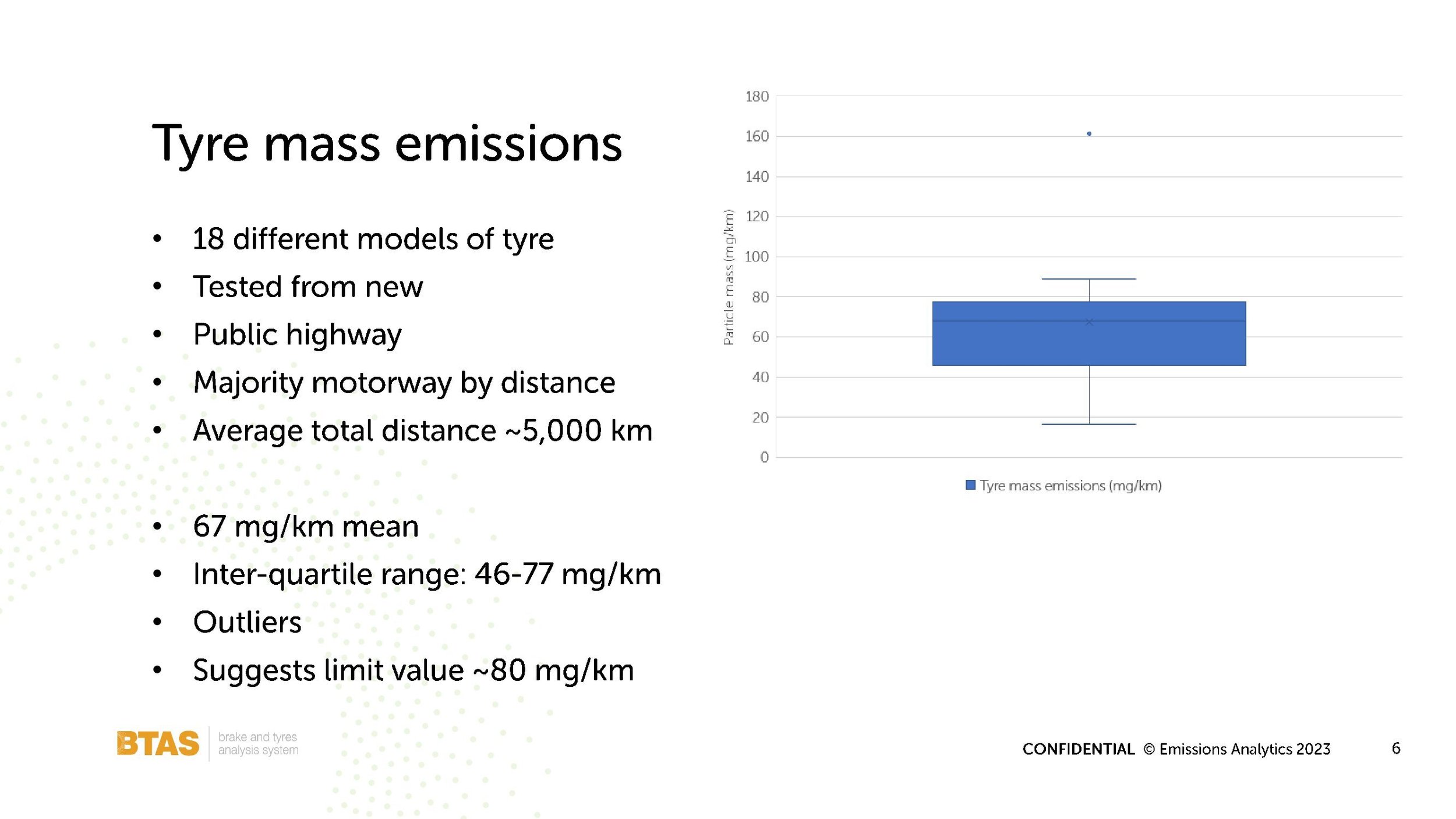
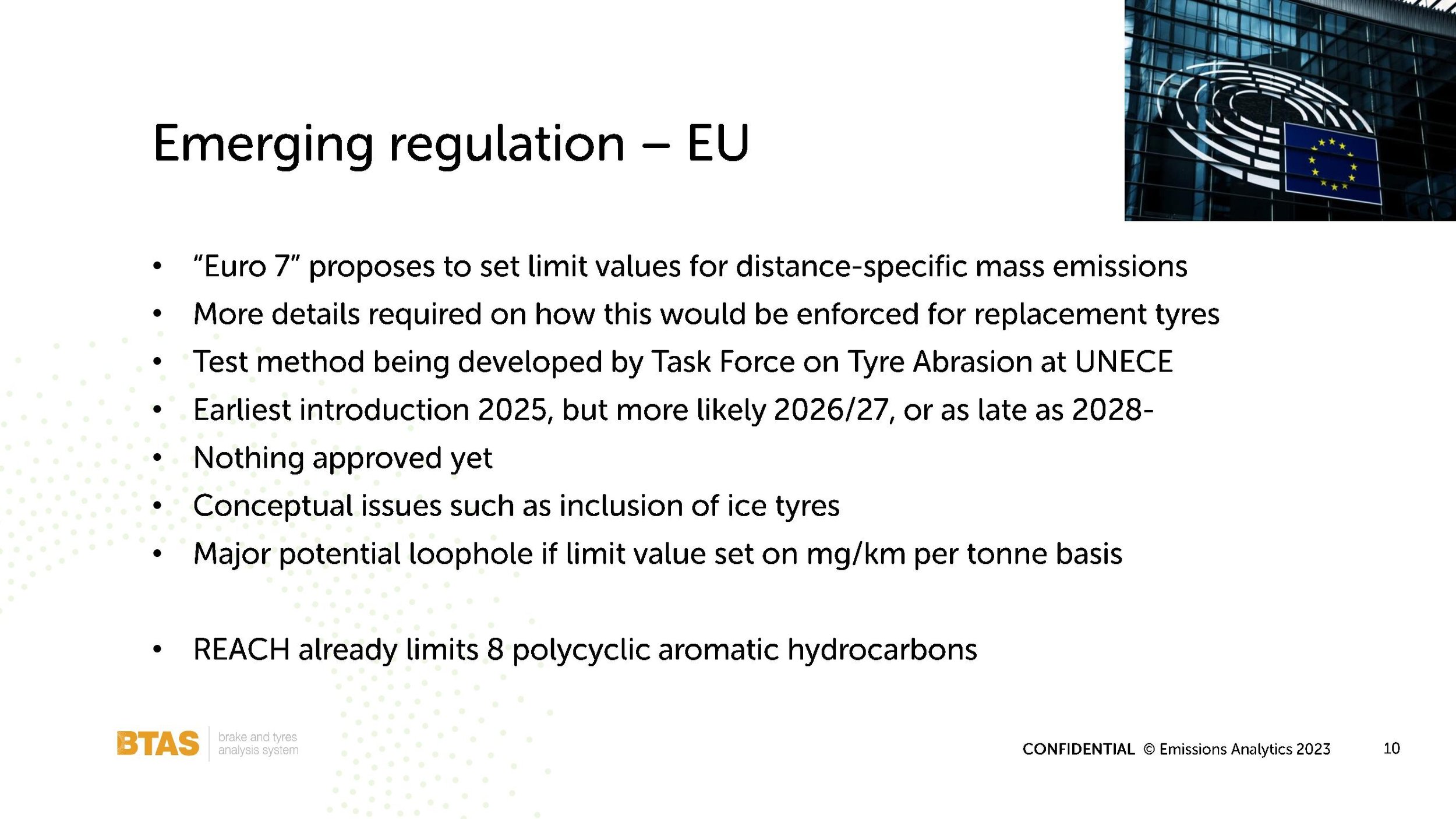
This is particularly relevant in the light of the California Environmental Protection Agency’s new rule on chemical composition, aiming to reduce the use of the toxic 6PPD preservative. We will show the extent to which alternatives are already being used. We will also consider the progress the European Union is making on its Euro 7 regulation for tyres. Current proposals for a measurement method fromt he Task Force on Tyre Abrasion will be reviewed in the light of our real-world wear rate testing. How efficient and effective will the proposed method be, and what might an optimal initial limit value look like? This testing fits within Emissions Analytics’ expanded EQUA test programme, which includes regulated and unregulated tailpipe emissions and vehicle interior air quality. Watch out for future webinars on these topic, and do subscribe to Emissions Analytics' newsletter to find out about priority access.

FUD off
Fear, uncertainty and doubt in an age of decarbonisation
Fear. Uncertainty. Doubt. This rhetorical triptych is increasingly used as an insult to describe interventions from anyone who deviates from the current environmental orthodoxy. When French philosopher René Descartes sat down in the seventeenth century Netherlands to write his Discourse on Method, he also faced FUD.
Fear, uncertainty and doubt in an age of decarbonisation
Fear. Uncertainty. Doubt. This rhetorical triptych is increasingly used as an insult to describe interventions from anyone who deviates from the current environmental orthodoxy. When French philosopher René Descartes sat down in the seventeenth century Netherlands to write his Discourse on Method, he also faced FUD. Fear that his beliefs about the world, both factual and ethical, were built on flimsy foundations. This led to great uncertainty in a time of religious adherence. The solution was doubt: to chip away at any beliefs that were not based on good reason, applying persistent and critical doubt. In doing so, he believed that he had rebuilt knowledge and faith but with firm foundations, based on his cogito ergo sum - I think therefore I am.

Rather than being used as an insult, FUD is what should be applied with urgency to the current debate about climate change and transport decarbonisation. Now faced with a growing body of information and concerns about a strategy of pure battery electrification being the optimal approach, we should stand back and re-evaluable. Chip away at the idols.
Descartes was a supreme rationalist, and reason is what we need. We debate tailpipe regulation, clean air zones and air quality largely with facts and figures, and logical arguments. Move onto climate change – a closely related issue – and calm, rational debate gets suspended in favour of polemics. This changes the nature of the debate in a way that destroys the debate. For many, doubt cannot be tolerated. Fear should used to keep order.
The “climate emergency”, as fearsomely styled, is serious. It is scientifically highly certain that climate change will have bad effects on humanity, possibly very bad. However, none of the standard models say that life and our planet will end, yet the challenge is being presented as an emergency, of existential significance. Of ontological significance.
But climate change is something to fear. There are many uncertainties as to what exactly will happen. Applying critical doubt is essential to working out the optimal response. So, let’s embrace FUD. Better than blind faith. There will always be strongly opposing views – centrist, European technocracy is an illusion – so rather than demonising the traditional energy sector or the environmental NGOs, let’s hammer it out as humans in the human realm.

One of the other more likely health risks in the garage experiment was from asphyxiation due to high CO2 levels, arising from the engine combustion. The parallel in the vehicle cabin is elevated CO2 due to respiration of the occupants. Human harm tends to occur when concentrations exceed 15,000 ppm, although cognitive impairment can occur well below that, which might lead to reduced reaction times and increased accident risk. While the garage concentration reached 8,509 ppm after half an hour, concentrations inside the vehicle when tested on the road reached just 1,564 ppm after the same time, even with the ventilation system on the ‘recirculation’ mode. On fresh air mode, concentrations rose by an average of just 13% above the 417 ppm background. As with PN concentrations, there were big variations between vehicle models as to how fresh the air was kept on recirculation: CO2 increased by 103% in the best case and 275% in the worst.
Overall, therefore, the particle exposure inside the cabin is a bigger risk than when locked in a garage with an idling ICE vehicle of the current generation. While CO2 concentrations in the garage were higher than in the cabin, driving a vehicle is operating a complex, mobile machine and, therefore, even a modestly elevated level of CO2 could compromise safety. It should be noted that some relevant pollutants have not been studied here. Particle mass was not chosen due to the relatively low levels being emitted from modern tailpipes and entering the cabin even with low-quality filters and ventilation systems. Nitrogen dioxide (NO2) emissions are extremely low from gasoline vehicles – the dominant powertrain now – and concentrations in the cabin are also very low. A major area of focus in our future work is the role of volatile organic compounds (VOCs). These tend to be low from tailpipes, although some species can be highly toxic even in low concentrations. Inside the cabin, these VOCs arise mainly from interior materials, especially in hot conditions. Some mix of compounds, of varying potential toxicity, evaporate from seats, carpets, dashboards and other plastics. In short, the greatest risks in the cabin are PN, CO2 and VOCs, while in the garage it is PN, CO2 plus carbon monoxide (CO) for gasoline vehicles and NO2 for diesels.
Taking this complex area and turning into something that vehicle owners and buyers can use practically, the AIR Alliance this month is launching its Cabin AIR Index, based on CWA17934. The most immediate action that can be taken, rather than changing the vehicle itself, is to swap the filter in the ventilation system. Changing the filter regularly is important to avoid degradation, and then the choice of filter brand is important. The initial test results – comparing six different filters on the same vehicle – show that the best filter reduced the interior pollution almost three times more than the worst filter. Therefore, this simple component of typically around $40 in value, can make a significant difference in chronic pollution exposure in the cabin.

For the truth is that there is much common understanding as to our environmental challenges. There are arguments as to the best solutions, and who should benefit and who should pay the price. And what is that largely common understanding? Decarbonisation of transport is vital, and electrification is the key. However, electrification is very different from “full electrification”, and electrification can manifest itself in many ways, including non-battery forms of storage. The real question is not whether battery electric vehicles will take off, but whether they will reduce total carbon dioxide (CO2) emissions as much as implied. Air quality continues to improve in most places, and new internal combustion engine vehicles are not the cause, but rather it is from older vehicles and non-tailpipe sources from a wide range of vehicles. Energy efficiency is one important aspect of emissions reduction, but cost efficiency is more important if maintaining our standard of living is the priority. ‘Net zero’ is nothing magical or sacrosanct. If we can get to net-minus-80% for half the cost, might that not be better for society in the round?
Or perhaps: cogito ergo sum hybrida.
With the profound importance of these matters, Emissions Analytics will be redoubling its efforts to bring independent, real-world data to the debate. We will chip away persistently to reveal the facts, and to analyse, recognising uncertainties where they exist. We have for many years supported the work of the not-for-profit AIR Alliance in publishing free-access ratings for real-world nitrogen oxide (NOx) and CO2 emissions. In July, a rating for vehicle interior air quality was added, showing how drivers can reduce their exposures to ultrafine particles in the cabin. Early this year, we launched the Tyre Emissions Research Consortium, with the aim of bringing together researchers and interested parties from around the world to foster and accelerate understanding of how emissions from tyres affect air, water and the food we eat. Remarkably, it already has over 800 participants.

We are continuing to expand our in-house EQUA testing programme, which takes vehicles from the marketplace and subjects them to testing for their tailpipe emissions, tyre emissions, and materials off-gassing fumes as part of vehicle interior air quality. We offer access to the full data as part of our subscription products, but from this autumn we will also launch Emissions Intelligence, which will present a monthly webcast with the very latest results and interpretation in the context of market and regulatory developments. It will allow any market player to have their finger on the pulse of emerging problems and solutions, and will be free for all existing clients and collaborators.
The first webinar in the series will take place on Tuesday 19 September 2023, and will look at the latest developments in tyre emissions testing and regulation, and sharing highlights from our EQUA testing. Please sign up on our website.
Finally, in 2024 we will be launching a series of conferences, including a European conference on the decarbonisation and pollutant emissions reduction in the non-road mobile machinery, with a particular focus on renewable fuels. This is a classic area where electrification is valuable but cannot solve all problems – a multi-pronged approach is necessary. The programme will be published soon. Do sign up and attend if you are working in this area.
We invite you all to participate in these efforts. Please get in touch.
We embrace discussion and creative, fact-based disagreement. We are technology neutral, open to any approaches that can address global environmental problems while preserving standards of living. We don’t know all the answers. But we have a good instinct as to where to look.
Cabin fever
In our last newsletter we looked at the unethical challenge set by a high profile academic to see whether you would die if locked inside your garage with an internal combustion engine (ICE) vehicle running.
Why vehicle interior air quality is worse than in your garage
In our last newsletter we looked at the unethical challenge set by a high profile academic to see whether you would die if locked inside your garage with an internal combustion engine (ICE) vehicle running. Answer: no if you choose a current model, but probably yes if you choose something else and run it in a single garage. Don’t take the risk. But what happens if we invert the question? How safe is it to be inside the same car driven in the open air? That may sound like a stupid question, as most of us put ourselves in that position regularly, but how much do we really know about the quality of air inside a vehicle? Is it very different from standing in a garage with an idling engine?
The challenge of the garage test is that tailpipe emissions are being emitted into a confined space with limited air to dilute it. The question of air quality inside the vehicle cabin is actually the same: pollution from the ambient air is sucked into the sealed, confined space of the vehicle cabin. In fact, the interior air volume of the car is substantially less than the volume of the garage. This problem of pollution build-up, and the potential effect on driver health, has become more marked as the construction quality of vehicles has improved such that there is little air exchange except through the ventilation system.

To evaluate this, Emissions Analytics performed tests for vehicle interior air quality across over one hundred vehicles in Los Angeles in the US, Oxford in the UK, and Stuttgart in Germany. For each test, the interior air quality was measured in real-time for particle number (PN) and carbon dioxide (CO2) concentrations, simultaneously with testing for the same pollutants immediately outside the vehicle from a second, matched, analyser. Particle number was chosen as probably the single biggest health threat, and CO2 build-up is a driver safety issue representing the stuffiness of the interior air.
The test protocol was modelled on a new standardised methodology from CEN (Comité Européen de Normalisation or European Committee for Standardisation), published in September 2022. The CEN Workshop Agreement (CWA) 17934 was the product of Workshop 103, which was initiated and chaired by the AIR Alliance and attracted around 40 industry experts in its development and validation.
The US results, which were performed on a repeated thirty-minute route around Los Angeles International Airport, saw average external PN concentrations of 22,901 particles per cm3. For comparison, fresh country air is typically around 2,600 particles per cm3, and the concentration out of a post-2018 diesel exhaust averages just 10,000 per cm3. Across 97 recent model year light-duty vehicles tested on this route, the average interior PN concentration was 21,419 particles per cm3, so only 6.5% below the ambient. As an average this might suggest that filtration via the vehicle ventilation system is largely ineffective, but this is not true. The range of results was between 9,388 and 47,977 particles per cm3. On the Cabin Air Quality Index (CAQI) defined under CWA17934, the values were between 0.31 at the best-performing end, and 2.10 at the worst end. In other words, the vehicle with the best ventilation system protected its occupants by reducing PN pollution by 69% compared to outside, but the worst vehicle saw double the outside concentrations. This can be the case due to the accumulation of particles in a well-sealed cabin, and where the interior air is not properly refiltered. A similar pattern was seen on the European tests in terms of the relative concentrations between the inside and outside, but the outside concentrations in absolute terms were, about double – for example, around Oxford the average concentration was 43,312 particles per cm3. This may come as a surprise, but might be explained by the higher proportion of diesel vehicles with no or compromised particulate filters in Europe.
Thinking back to the garage thought experiment, over one hour with the idling gasoline vehicle in a single garage, the PN concentration rose from the 2,600 background to just 3,529 particles per cm3. Therefore, concentration rose by about a third, but remained 84% below the average exposure suffered by the occupant of the vehicle testing on the roads of Los Angeles. The chart below shows the instantaneous and cumulative concentrations from the road test on a Ford Explorer with average performance, compared to the modelled garage PN build-up. So, by a large margin, you are exposed to fewer particles in the sealed garage than driving in normal on-road conditions, and this is true due to two main factors. First, the exhaust filtration on new cars has an efficiency of over 99.9%, so these vehicles are emitting a very small net number of particles, even when the ambient air is relatively clean. Second, the ambient air for the road test has PN concentrations well above background, which must in turn come from sources other than modern vehicles with exhaust filters – most likely from older vehicles, non-exhaust emissions, industrial sources, farming and home heating. In other words, these modern vehicles with filtered exhausts are not a significant source of PN pollution, yet the occupants may still suffer the pollution from other proximal sources.
One of the other more likely health risks in the garage experiment was from asphyxiation due to high CO2 levels, arising from the engine combustion. The parallel in the vehicle cabin is elevated CO2 due to respiration of the occupants. Human harm tends to occur when concentrations exceed 15,000 ppm, although cognitive impairment can occur well below that, which might lead to reduced reaction times and increased accident risk. While the garage concentration reached 8,509 ppm after half an hour, concentrations inside the vehicle when tested on the road reached just 1,564 ppm after the same time, even with the ventilation system on the ‘recirculation’ mode. On fresh air mode, concentrations rose by an average of just 13% above the 417 ppm background. As with PN concentrations, there were big variations between vehicle models as to how fresh the air was kept on recirculation: CO2 increased by 103% in the best case and 275% in the worst.
Overall, therefore, the particle exposure inside the cabin is a bigger risk than when locked in a garage with an idling ICE vehicle of the current generation. While CO2 concentrations in the garage were higher than in the cabin, driving a vehicle is operating a complex, mobile machine and, therefore, even a modestly elevated level of CO2 could compromise safety. It should be noted that some relevant pollutants have not been studied here. Particle mass was not chosen due to the relatively low levels being emitted from modern tailpipes and entering the cabin even with low-quality filters and ventilation systems. Nitrogen dioxide (NO2) emissions are extremely low from gasoline vehicles – the dominant powertrain now – and concentrations in the cabin are also very low. A major area of focus in our future work is the role of volatile organic compounds (VOCs). These tend to be low from tailpipes, although some species can be highly toxic even in low concentrations. Inside the cabin, these VOCs arise mainly from interior materials, especially in hot conditions. Some mix of compounds, of varying potential toxicity, evaporate from seats, carpets, dashboards and other plastics. In short, the greatest risks in the cabin are PN, CO2 and VOCs, while in the garage it is PN, CO2 plus carbon monoxide (CO) for gasoline vehicles and NO2 for diesels.
Taking this complex area and turning into something that vehicle owners and buyers can use practically, the AIR Alliance this month is launching its Cabin AIR Index, based on CWA17934. The most immediate action that can be taken, rather than changing the vehicle itself, is to swap the filter in the ventilation system. Changing the filter regularly is important to avoid degradation, and then the choice of filter brand is important. The initial test results – comparing six different filters on the same vehicle – show that the best filter reduced the interior pollution almost three times more than the worst filter. Therefore, this simple component of typically around $40 in value, can make a significant difference in chronic pollution exposure in the cabin.

Of all the vehicles Emissions Analytics has ever tested, the Tesla Model X achieved the best cabin air quality rating, achieving PN concentrations more than 92% below outside levels. Both its bioweapon defence mode and its normal modes achieved excellent protection, thanks to a combination of HEPA (High Efficiency Particulate Air) filters. The downside of this approach is a large physical size (about 1.2 metres wide) and the relatively high replacement cost. The upgrade is around $500 currently. While originally only available on the Models S and X, since late 2021 it was also standard on the Model Y.
In summary, we have shown in previous newsletters that we are thinking about vehicle pollution in the wrong way now. New ICE vehicles emit almost no pollutants from the tailpipe, except CO2. To solve this decarbonisation challenge, we are moving to heavier electric vehicles, and in doing so are creating a tyre emissions problem that dominates anything from the tailpipe, as shown in a previous newsletter. In this newsletter, we have shown that being inside a vehicle can be more hazardous than being outside. In short, apart from replacing older vehicles as soon as possible, we should be concerned with non-exhaust and non-vehicular emissions rather than the tailpipe, focusing particularly on fine particles and VOCs from plastics and tyres. We have a good instinctive grasp of exterior air quality problems, but need to improve our understanding of interior pollution. Tesla is stealing a lead on the competition by acknowledging the issue of cabin air quality, and offering a practical solution today. Let us hope that other manufacturers follow, and the new CWA17934 standard can be used to prove their effectiveness.

NEW international Cabin AIR Index launched
Fleet owners, policy makers and drivers now have access to independent, standardised vehicle ventilation ratings
Fleet owners, policy makers and drivers now have access to independent, standardised vehicle ventilation ratings
Easy to understand and comparable ratings provide clarity for drivers and car buyers.
The first independent data set enabling policy makers to protect vehicle occupants.
The independent Cabin AIR Index rates the ability of each filter and ventilation system to protect vehicle occupants from exterior pollution.
The A-E colour-coded rating is endorsed by global air quality and vehicle emissions experts.
Moe information available at www.airindex.com/emissions-ratings/cabin-air-quality-in-cars/
25 July 2023: Today’s launch of the Cabin AIR Index reveals, for the first time using scientific data, the effectiveness of vehicle ventilation systems and the choice of filters in reducing the exposure of vehicle occupants to harmful pollutants.
Developed from more than five years of independent, international research the new Cabin AIR Index ratings reveal accurately how much pollution enters a vehicle compared to the outside air, when it is used in towns and cities.
Exposure to high levels of pollutants in the air can cause a range of serious health issues including respiratory problems, heart disease, strokes and lung cancer¹.
The air quality inside cars and vans (M1 and N1 categories²) is unregulated, leaving drivers and passengers unaware of the levels of exposure to damaging pollutants. In Europe alone, air pollution is estimated to cause more than 300,000 premature deaths each year³.
The Cabin AIR Index has been created to inform and empower drivers, passengers, fleet owners and policy makers with the real facts about the protection offered by the ventilation systems and filters in the cars they use and travel in. A simple A-E colour-coded rating, based on a new real-world standard, shows the difference in effectiveness in filtering harmful pollutants.
In 2021 more than 97% of the urban population was exposed to concentrations of fine particulate matter above the health-based guideline level set by the World Health Organization⁴. Drivers and passengers, and in particular professional drivers who are in vehicles for several hours each day are now able to compare vehicles and the filter systems, enabling choice, for the first time based on scientific data.
Today’s launch of the Cabin AIR Index also reveals the significant variation in protection offered by the same vehicle, depending on the type of interior air filter used. When tested on the same car, the combination of ventilation system and one filter was only able to reduce the level of exposure to outside particles for drivers and passengers by 30% during the course of the test, whilst the best performing combination of system and filter achieved 82%.
The Cabin AIR Index ratings show ‘at a glance’ how effective the vehicle ventilation system is, allowing comparison with other vehicles, and other filters installed based on scientifically robust, repeatable, on-road vehicle testing according to the new CWA 17934 methodology.
Massimo Fedeli, Co-founder and Operations Director of the AIR Alliance said: “The health effects of breathing fine particulate matter in urban air are now, sadly, well established and estimated to cause more than 300,000 premature deaths in Europe each year. Drivers and passengers in urban areas may assume that closing windows and using the ventilation system prevents exposure to particulate matter, but that is not necessarily the case.
“Following five years of research, today the AIR Alliance is launching the Cabin AIR Index which rates the ability of the ventilation system to filter the number of particles from outside the vehicle and presents the results in a simple A-E colour coded scale.
“The Cabin AIR Index is the first opportunity for drivers and passengers to see the protection offered by vehicle ventilation systems, and also reveals the difference in performance between different filters fitted to the same vehicle, enabling drivers to make a choice when selecting the filter for their car or van.”
Nick Molden, Co-founder of the AIR Alliance said: “The Cabin AIR Index is based on data collected according to the CWA 17934 methodology, the independent, scientifically robust methodology to collect real drive vehicle interior air quality data. In the absence of any regulations for air quality inside cars and vans, drivers and passengers are unaware of the levels of pollution, and in particular the number of particles which enter the cabin.
“Drivers, and especially professional drivers who are in the vehicle for several hours each day, should be aware that the choice of interior air filter can make a significant difference to the quality of air that they breathe. Our tests show that the same ventilation system fitted with different, but compatible filters, reduced the level of exposure to outside particles for drivers and passengers between 30% and 82%.
“We have worked hard over the last three years with our independent, expert academic and industry group to define standardisation of data collection through the CEN Workshop Agreement 17934. We rate data collected by this method on the Cabin AIR Index providing comparative information between vehicles using fair testing criteria, all conducted on-road in real driving conditions. The same standardised test is applied to each different car type.
“For the first time policy makers and fleet owners have the ability to protect vehicle occupants, using the Cabin AIR Index to define the minimum standards expected to protect occupants.”
The results of the seven filters tested for the AIR Alliance on a 2018 Nissan Qashqai and rated in the Cabin AIR Index are:

*Cabin Air Quality Index (CAQI) as defined in the CWA Workshop Agreement 17934
**the age, make and part number of the interior filter which was pre-installed in the test vehicle was unknown.
The AIR Alliance has now commissioned a programme of vehicle and filter testing and more results will be added to the Cabin AIR Index periodically.
About the Cabin AIR Index
Vehicle ventilation systems for cars and vans (M1 and N1 categories2) rated for the Cabin AIR Index are tested according to the CWA 17934 standardised methodology which ensures that the results are independent, repeatable and comparable.
The testing is carried out on a vehicle, sourced independently from vehicle manufacturers, with Pollution In-cabin Emissions Measurement Systems (PIMS) equipment recording the air quality inside and outside the vehicle during on-road driving in towns and cities.
For a result to be considered acceptable for rating in the Cabin AIR Index at least three sperate tests must be conducted on each model, within specific boundary conditions⁵ at an average speed between 30 km/h and 50 km/h, with each test lasting at least 30 minutes.
Testing is conducted with the ventilation system in ‘fresh air’ mode, the air conditioning turned off, and temperature set to 19°C in either automatic mode, or 50% fan speed if manual, and the vents facing forward and level.
The results of the tests provide the basis to rate the vehicle ventilation systems according to the A-E, colour-coded scale.

Cabin AIR Index ratings
The AIR Index website reports the first tests conducted on a single vehicle with different filters showing Cabin AIR Index ratings A-E. Car buyers and fleet operators should consider carefully the implication for the health of vehicle occupants when selecting the vehicle and choice of filter to minimise the ingress of harmful particles.
Background to the Cabin AIR Index testing process
Emissions Analytics, founded by Nick Molden (Co-founder of the AIR Alliance), was a pioneer in methodologies to test on-road tailpipe emissions using Portable Emissions Measurement Systems (PEMS) equipment. Since 2018 Emissions Analytics has also independently tested the air quality inside vehicles using Pollution In-cabin Emissions Measurement Systems (PIMS) equipment, and the insight gained from more than 100 tests conducted by Emissions Analytics informed the development of the CEN Workshop agreement which led to the CWA 17934 methodology from which the Cabin AIR Index has been created.
For more information see https://www.emissionsanalytics.com/vehicle-interior-air-quality.
¹ World Health Organization https://www.who.int/news-room/fact-sheets/detail/ambient-(outdoor)-air-quality-and-health
² Vehicle Approval categories https://www.gov.uk/vehicle-approval/individual-vehicle-approval-manuals
³ Air quality impacts in Europe European Environment Agency https://www.eea.europa.eu/publications/air-quality-in-europe-2021
⁴ Europe’s air quality status 2023 https://www.eea.europa.eu/publications/europes-air-quality-status-2023
⁵ More details about CWA 17934 and the boundary conditions are available at the CEN website https://standards.cencenelec.eu/dyn/www/f?p=CEN:110:0::::FSP_PROJECT,FSP_ORG_ID:76650,2654151&cs=1A37B6A2248CB063033111B9F708BAB58

Emissions Analytics and the University of Portsmouth collaborate on the study to investigate impact of toxic tyre chemicals in UK waters
Emissions Analytics is thrilled to be featured in a groundbreaking news article by the University of Portsmouth. The article, titled "Study to Investigate Impact of Toxic Tyre Chemicals in UK Waters," sheds light on a crucial research endeavor that aims to understand the environmental consequences of tyre chemical pollutants.
Emissions Analytics is thrilled to be featured in a groundbreaking news article by the University of Portsmouth. The article, titled "Study to Investigate Impact of Toxic Tyre Chemicals in UK Waters," sheds light on a crucial research endeavor that aims to understand the environmental consequences of tyre chemical pollutants.
To learn more about this groundbreaking study and the role of Emissions Analytics, we invite you to read the full article on the University of Portsmouth's website. Click here to access the article and delve into the research that is shaping the future of environmental sustainability.

Open letter: Regulating pollutants from tyre emissions
An important and groundbreaking part of the proposed Euro 7 regulation involves setting a limit value for tyre wear emissions. This is particularly important as vehicles continue to become heavier, not least with the growing sales of battery electric vehicles.
To whom it may concern:
An important and groundbreaking part of the proposed Euro 7 regulation involves setting a limit value for tyre wear emissions. This is particularly important as vehicles continue to become heavier, not least with the growing sales of battery electric vehicles. However, the current proposal covers only the total mass of emissions and, therefore, ignores both ultrafine nanoparticles and chemicals released from the tyres. Without changes, it is likely that tyres will be re-engineered to deliver lower emissions of larger particles but potentially at the cost of the release of more invisible nanoparticles and potentially toxic chemicals.
Therefore, we would call on the European regulators to initiate work as soon as possible on a second phase to Euro 7 tyre emissions that would expand the coverage to both nanoparticles and chemical release in real-world conditions.
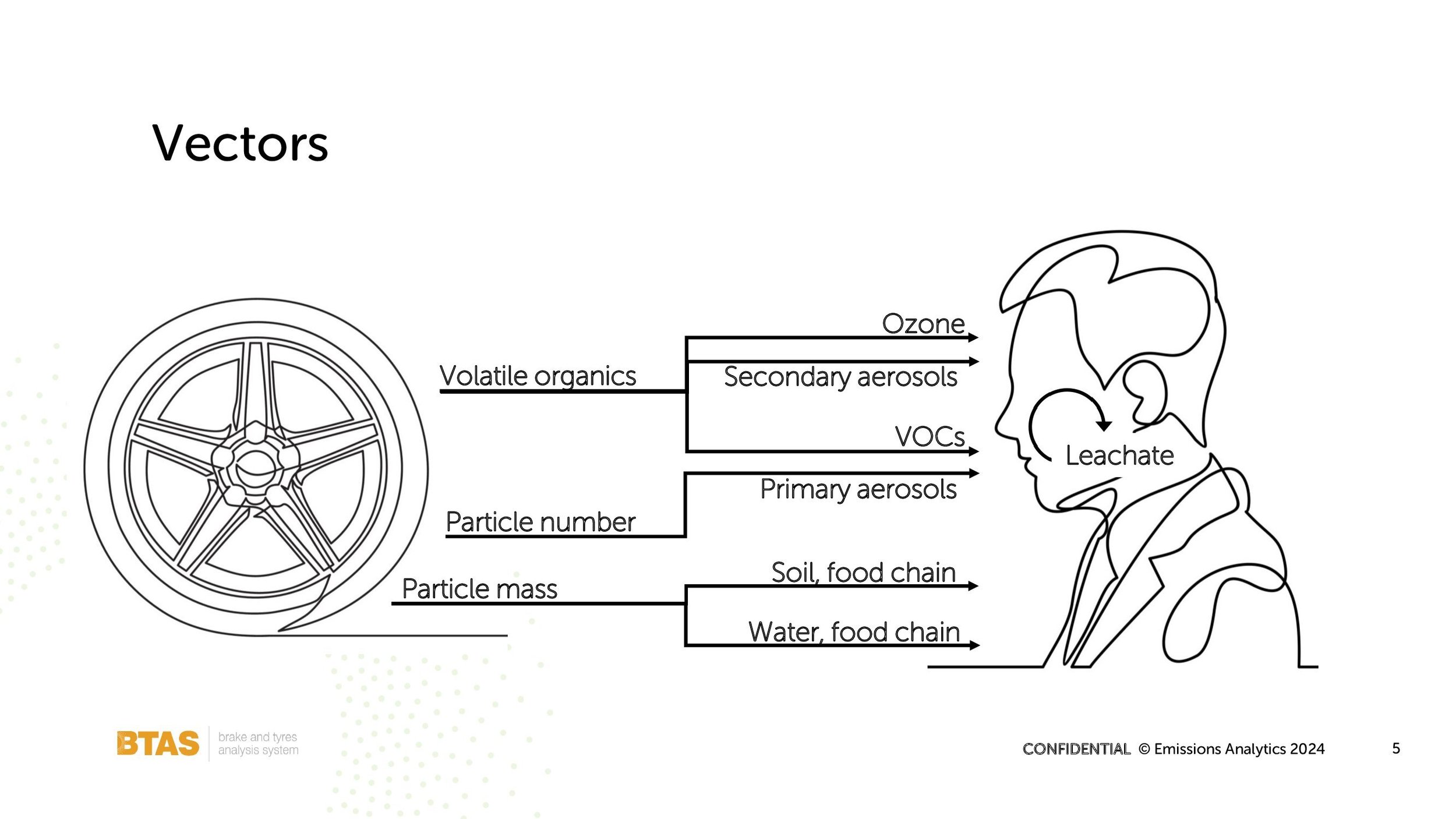
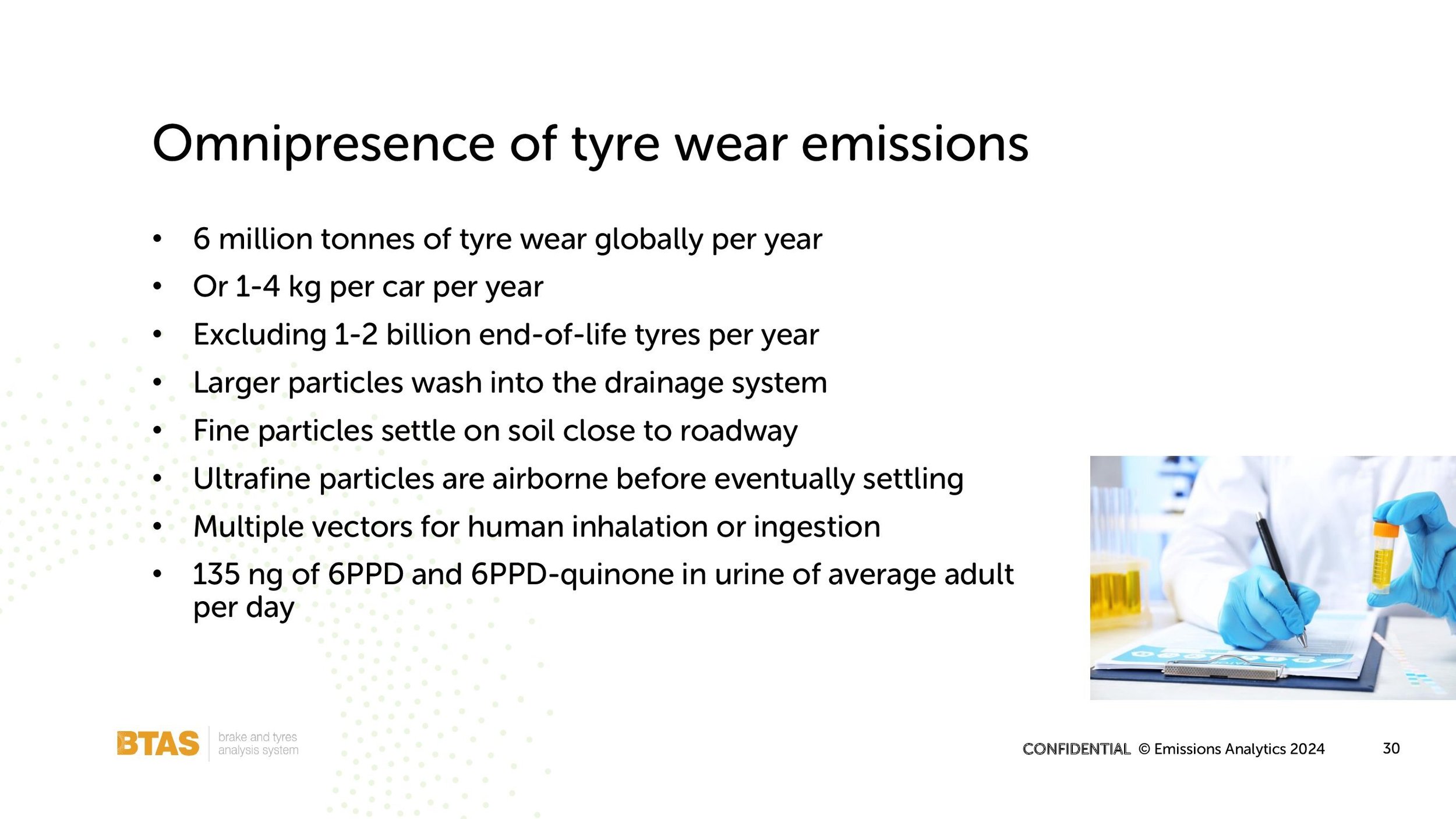
Regulating mass, and thereby larger particles, is important particularly for marine pollution, as the over 50% reduction in the population of coho salmon on the west coast of North America shows. This die-off has been conclusively linked by academics to a preservative compound found primarily in tyres. By this very fact, it can be seen that it is not only the particles themselves that is causing the issue, but the chemicals leaching out as those particles settle in the environment. Furthermore, these same tyre chemicals are being seen on a widespread basis in human foodstuffs and excreta.
These chemicals are typically volatile organic compounds. Within this broad collection there is group of aromatic compounds, many of which are carcinogenic, such as polycyclic aromatic hydrocarbons (PAHs). To some extent these are regulated at the tailpipe currently through the total hydrocarbons limit value, although this could also be made more stringent and targeted to the most potentially toxic individual compounds. Eight compounds are also restricted under the REACH chemical regulation, but the coverage is too narrow and the limits too accommodating. Emissions Analytics presented on this topic at the fifth session of the UNECE Task Force on Tyre Abrasion on 30 September 2022¹. There is regulatory precedent from Switzerland, where the 2014 particle number standard (SN 277206:2014) included a secondary emissions test for certain target chemicals—including PAHs and nitro-aromatics—based on the US Clean Air Act section 202².
Nanoparticles are already regulated at the tailpipe since Euro 5. This intervention has been highly successful in reducing in-use emissions by particle filters in most vehicles, and measurement of these ultrafine particles is being expanded into the periodic technical inspection regimes in a number of European countries, which in all likely will deliver further significant reductions in real-world particle emissions. As the evidence for the negative health outcomes from chronic and acute exposure to nanoparticles becomes ever clearer, the value of this regulation grows. Yet, there are no current plans to regulate the same particles from tyres, despite tyres being made of the same underlying fossil materials as liquid fuels. Multiple academic studies have shown that tyres release large numbers of these particles in real-world use. Particle number measurement from tyres has been included for many years in the investigations of the Joint Research Centre of the European Community and the Particle Measurement Programme³, and such efforts should be accelerated to address this growing environmental issue.
In summary, we call on European regulators to apply the same approach they have applied to the tailpipe to the growing issue of tyre emissions. Particle mass, particle number and volatile organic compounds released from tyres must all come within a successful Euro 7 regulation at the earliest opportunity.
Signatories:
Nick Molden, Chief Executive Officer, Emissions Analytics
Dr Andreas Mayer, Chairman of the Scientific Committee, VERT Association
Footnotes:
Source: Nick Molden | Dr Andreas Mayer
Posted 27 June 2023 on Dieselnet

Don't try this at home!
Increasingly simplistic calls to #Stopburningstuff and #Stickyourselftothings have recently been accompanied by another call: that anyone who challenges the virtues of battery electric vehicles (BEVs) should shut themselves in their garage alongside their idling internal combustion engine (ICE) vehicle for an hour, to see whether they emerge to tell the tale.
An emissions thought experiment
Increasingly simplistic calls to #Stopburningstuff and #Stickyourselftothings have recently been accompanied by another call: that anyone who challenges the virtues of battery electric vehicles (BEVs) should shut themselves in their garage alongside their idling internal combustion engine (ICE) vehicle for an hour, to see whether they emerge to tell the tale. This is a rather unethical, and arguably shocking, call that can only cheapen the decarbonisation debate. It is one thing coming from fringe on-line influencers, but quite another when it comes from well-known, vocal academics.
The tastelessness of the proposal aside, as Emissions Analytics is committed to using independent testing to understand real-world emissions questions, we have taken the challenge in the form of a thought experiment. The conclusions from previous newsletters are that modern ICE vehicles are extremely clean relative to older ones, while BEVs have low but non-zero pollutant and carbon dioxide emissions, leaving the optimal policy more finely balanced than typically thought. Contradicting this, does the challenge, while flippant, hold an essential truth?

Traditional thinking is that toxic fumes would quickly overwhelm you, while a BEV would sit there passively emitting nothing. Such an experiment tests in microcosm the effects of vehicles on the wider environment. To see what the likely effects would be, we can forecast pollutant concentrations in our test laboratory using Emissions Analytics’ real-world test data from tailpipes and non-exhaust sources, together with the latest academic research.
Without wanting to spoil the result, as with so much in the decarbonisation debate, the answer is nuanced and highly sensitive to the selection of the vehicles. So, it should be emphasised in the strongest possible terms: don’t actually try this at home!
A typical single European garage is about three metres wide, six metres long, and three metres high – so, about 54 m3 in volume, which is similar to one of our laboratories. Let’s assume a constant ambient temperature of around 20 degrees Celsius, which is in line with the temperature used for a vehicle certification test. Vehicle emissions should be estimated from cold start, with the engine having been soaked at the same temperature overnight. For the thought experiment, it is assumed that no pollutants escape the laboratory, although some gas egress would be necessary to avoid gradual pressurisation of the space. To avoid accusations of sophistry, we will assume that the ICE vehicle does not have stop/start or other cut-out system engaged, so it is idling throughout.
The laboratory is assumed to contain air with standard background gas and particle concentrations, as shown in the table below. Also indicated in the table are guides as to when concentrations of each pollutant start having negative human health or cognitive effects (the ‘threshold of harm’), and the immediate danger levels. These danger levels have been compiled from multiple sources, many from the world of occupational safety. For some, there are some wide variations in views, but we have tried to pick a fair midpoint for the purposes of illustration. The references are listed at the end of the newsletter.

First, let’s first take the controversial one: a diesel. Diesel is a fuel that burns around a quarter more efficiently than gasoline and was for a generation pushed as a route to decarbonisation, only then to be undermined by excessive real-world NOx emissions. Many air quality problems we suffer today arise from these excesses. In this case, we have taken a 2021 Volkswagen Passat 2.0 litre 148 bhp front-wheel drive automatic vehicle certified to the latest, strict Euro 6d-ISC-FCM emissions standard. The results are modelled by using the second-by-second data from an actual real-world test by Emissions Analytics on its EQUA test route, using a Portable Emissions Measurement System (PEMS) augmented by sampling of VOCs onto thermal desorption tubes for later GCxGC-TOF-MS analysis.

During this hypothetical experiment, the vehicle would suck in and then emit about 30 m3 of gas – mainly nitrogen – which is equivalent to about 55% of the total laboratory air volume. The colour coding indicates whether the concentration after one hour is below the no-harm level (green), or between the no-harm and immediate danger level (amber). We have also considered whether the process of combustion would use sufficient oxygen from the air to create an asphyxiation risk. Clear to see is that there is no red, which would indicate immediate danger.
The most dangerous pollutant, therefore, is nitrogen dioxide, but the forecast levels are still half of the recommended immediate danger levels, despite the amount of air in the laboratory being relatively small. Even with this worst-case pollutant, if the volume of the laboratory were just 1,438 m3 (about 27 single garages, or the interior volume of an Airbus A380 aircraft), the amount of air would be sufficient to dilute the NO2 to the point of no harm. Put this car in the open air, and you can see why this powertrain is no longer a problem from an urban air quality point of view.
The experiment was then extended to a modern gasoline vehicle: a Renault Clio 1.0 litre 88 bhp front-wheel drive manual vehicle certified to the Euro 6d-TEMP-EVAP emissions standard. The main difference in the outcome is for NO2, which is now at a negligible level, and CO, which is about double the diesel vehicle. Carbon monoxide is rightly feared as highly poisonous gas to humans, and even modern gasoline vehicles emit a significant amount when the engine is cold, but after about two minutes the catalytic converter brings it down to low levels, even in dynamic driving. As this engine is smaller than the diesel one, the total amount of gas ingested and then exhaled in one hour is only around 12 m3, or 22% of the total volume of the laboratory.

So, for both ICE vehicles, idling in a single garage for an hour, is likely to be negative for your comfort, health and enjoyment, but not fatal. But are we covering everything? If we sit alongside a BEV, are there any effects at all?
As we showed in a previous newsletter, VOCs don’t just come out of the tailpipe, but also ‘off-gas’, or evaporate, from the surface of car tyres, as they are substantially made from components of crude oil. For the Tesla Model Y tested, we found that total VOCs from the tyres was 0.26 grams over one hour. If these tyres were the only source of VOCs, they would lead to 1.2 ppm in the laboratory at 20 degrees Celsius. The distinctive smell experienced when entering a tyre warehouse is caused by these VOCs.
There are two further non-exhaust sources of VOCs. First, fuel evaporates from the fuel tank of an ICE vehicle, even though most gasoline vehicles have ‘canister’ systems to capture as much as possible. The US Environmental Protection Agency Tier 2 regulations limited these emissions to 0.05 g/mile (0.03 g/km), and they have been tightened significantly since. If 60 km were travelled in one hour, this would mean evaporative emissions of 1.8 grams.
Second, a recent academic paper on unreported VOC emissions from road transport highlighted the issue of VOCs from the evaporation (not usage) of screenwash, which contain a mix of mainly alcohols, and which the authors termed “non-fuel, non-exhaust” emissions. The paper proposes a distance-specific emissions factor of 58 mg/km. To convert this to grams per second for the purposes of our experiment, we assume the same average speed of 60 km/hour as above for the test cycle the emissions factor was derived for. That implies total emissions over one hour of 3.5 grams.

In total, these non-exhaust VOCs add up to between 3.8 and 5.6 grams over the hour. The lower end of the range is for the BEV, as there would be no fuel evaporative emissions, although this may be offset by larger tyres, which is a trend with battery vehicles due to their weight. The totals for the exhaust alkanes and aromatics were 0.07 grams for the diesel and 0.11 grams for the gasoline. Therefore, the non-exhaust sources are around 50 times higher than the exhaust VOCs. In summary, it is best to not to dwell in a small, sealed space, whether it contains an idling ICE vehicle or a BEV that is switched off.
To this approach there is one important caveat. Change the car to an older one, and the outcome may not be as favourable. Older gasoline vehicles can have much higher CO emissions, a gas that can have rapid and terminal effects, while older diesel vehicles are famous for their elevated NOx emissions. The Volkswagen Passat examined here had NOx emissions of 19 mg/km when tested on Emissions Analytics’ combined EQUA route. This is 76% below the regulatory limit, which is typical of the current generation of diesels. Wind back only five years, and the emissions would have been more like 400 mg/km. Being locked in the garage with that car would lead to a poor health outcome. This is why, fundamentally, the Ultra Low Emission Zone in London, and similar schemes in other countries, are beneficial to air quality, as it is the older vehicles that are a disproportionate source of pollution.
The conclusion from this analysis, apart from avoiding academics with unethical experiments, is that how we think about vehicle emissions is ripe for a complete overhaul. Most of the impacts come from the tailpipe of older vehicles, and from non-exhaust sources on new vehicles. Any properly functioning modern vehicle, operating in the open air, will contribute a negligible amount to air quality problems from the tailpipe. The carbon dioxide problem remains, however, which is the subject of extensive discussion elsewhere.
It remains true that ICE vehicles produce a range of potentially highly toxic compounds from combustion, but at current concentrations when rapidly diluted in the open air, they cease to be a major problem. But this insight points to the next major are of concern: inside the vehicle cabin. Pollutants from older vehicles enter through the ventilation system, and VOCs evaporate from the interior materials, to which the driver and passengers are exposed over extended periods within a sealed cabin. Without the benefits of dilution and filtration in a poor ventilation system, the health exposures can be significant. We will look at this in our next newsletter…
References
Carbon dioxide (CO2): https://www.fsis.usda.gov/sites/default/files/media_file/2020-08/Carbon-Dioxide.pdf
Carbon monoxide (CO): https://www.epa.gov/indoor-air-quality-iaq/carbon-monoxides-impact-indoor-air-quality
Nitrogen oxides (NO2): https://nj.gov/health/eoh/rtkweb/documents/fs/1376.pdf
Nitrous oxide (N2O) http://www.ilo.org/dyn/icsc/showcard.display?p_card_id=0067&p_version=2&p_lang=en
Particle number (PN): Emissions Analytics' testing
Formaldehyde (CH2O): https://www.osha.gov/sites/default/files/publications/formaldehyde-factsheet.pdf
VOCs: https://getuhoo.com/blog/home/understanding-vocs-and-its-effects-on-health

What matters is not the promise of electric vehicles but the actuality
Friday 18 September 2015 saw Dieselgate break. This was the culmination of a growing dissonance between real-world nitrogen oxide (NOx) emissions and official values for cars and vans. The rupture was created by governments picking a technology, for the purposes of decarbonisation, where too much was taken on trust within a fragile governance system.
Friday 18 September 2015 saw Dieselgate break. This was the culmination of a growing dissonance between real-world nitrogen oxide (NOx) emissions and official values for cars and vans. The rupture was created by governments picking a technology, for the purposes of decarbonisation, where too much was taken on trust within a fragile governance system. The industry said, rightly, that technology existed to solve the NOx emissions. The sad reality was that this technology wasn’t deployed in a way that actually reduced NOx enough in practice, and Europe has been dealing with the air quality consequences ever since.
Equivalent failures must not happen as we try new routes to decarbonisation, especially as a generation has been lost with the diesel experiment. Many air quality problems have been solved even with internal combustion engine technology, with the simpler challenge remaining of updating the car parc. But decarbonisation is harder, and that is why the promise of battery electric vehicles (BEVs) – the leading contender in light-duty vehicle CO2 reduction – is rightly being scrutinised in exhaustive detail.

Mr Bean actor and car collector Rowan Atkinson’s recent intervention, saying he felt “duped” by the green claims of BEVs, caused a stir, not least because the article appeared in The Guardian, a well-regarded, environmentally conscious UK newspaper. Much electronic ink has been spilt since, including a subsequent ‘fact check’ by Simon Evans, a climate journalist, in the same publication. In the spirit of open enquiry and technology neutrality, and given the importance of the topic, we decided to perform a ‘fact fact check.’ In doing this, Emissions Analytics’ only motive is to get as close to the truth as possible, and to acknowledge where we have uncertainties.
In headline, most of what Simon Evans wrote is true, including:
BEVs won’t solve all the problems associated with car use. Our comment: very true, and may in some specific cases make them worse.
BEVs reduce greenhouse gas emissions by two-thirds on a lifecycle basis relative to combustion engine cars in the UK, and the benefits are growing. Our comment: performing accurate lifecycle analysis is exceedingly hard, and the answer is sensitive to your choice of model and input assumptions. The two-thirds claim is in the range of plausible estimates, even though Emissions Analytics’ work put the estimate closer to half currently. Nevertheless, the point stands.
Emissions from producing batteries are significant, but are quickly outweighed by the in-use emissions from gasoline and diesel cars. Our comment: how quickly depends on the true lifecycle emissions of the battery, vehicle and fuel, but it is most likely to be in the two to seven year range in the UK (with a wider range across Europe). Given that a car typically lasts about 13 years, anywhere in this range could be deemed quick.
Hydrogen is not a mainstream and proven technology in the same was as BEVs are currently, although it may improve too. Our comment: we agree – it is predicted to improve, and may emerge as the preferred solution for freight transport where the size of the battery is problematic.
Battery electric technology is the most energy efficient of the alternatives. Our comment: true, noting that efficiency is an important but not the only consideration.
Batteries may well outlast the rest of the vehicle. Our comment: data on battery longevity is encouraging on the whole.
Lithium-ion batteries do not contain rare earth elements. Our comment: batteries often contain scarce materials, and rare earths are used in electric motors.
However, there is one sentence in the article that we should focus on in particular. Not that it is incorrect, but that it is true in a dangerous way:
“Indeed, without a widespread shift to EVs, there is no plausible route to meeting the UK’s legally binding target of net zero greenhouse gas emissions by 2050…” [To clarify, in context “EVs” meant BEVs, excluding hybrids.] This sentence is important because it is a fact, but it is a fact by definition. In other words, legislation defines BEVs as zero emissions. Bingo! But are they actually zero emissions? No, as Simon Evans correctly points out. The manufacturing and electricity-generation emissions are defined out of the equation. The manufacturing emissions are mostly parked offshore; in practice most of them occur in China, where battery materials and processed before they can be utilised.
So, we have a rapidly looming echo of Dieselgate. You cannot define your way to decarbonisation. Repeating the assertion that BEVs are zero emission doesn’t make it any more true. BEVs in the UK are lower carbon than any current alternative – that is true. But they come at a cost and with consequences – economically, geopolitically, environmentally, ethically – that make them no more than a highly promising and valid alternative alongside many others.
Let’s not wake up on Tuesday 18 September 2035 to find that we have applied gargantuan resources, failed to reduce CO2 enough, and created new unpleasant side-effects.
So, Rowan Atkinson may be right for the wrong reasons, and others wrong for the right reasons. The truth is that Europe, and the world, perhaps cannot afford another Dieselgate.
AIR welcomes the publication of a standardised method to collect vehicle interior air quality data
The AIR Alliance (Allow Independent Road-testing), the independent alliance set up to improve air quality by promoting independent, on-road vehicle emissions testing, welcomes the publication of the CEN workshop agreement CWA 17934, the real drive test method for collecting vehicle interior air quality data.
Emissions Analytics was pleased to support the AIR Alliance with testing to validate this new standardised method for measuring vehicle interior air quality, so it can help reduce the exposures to pollution for drivers and passengers.
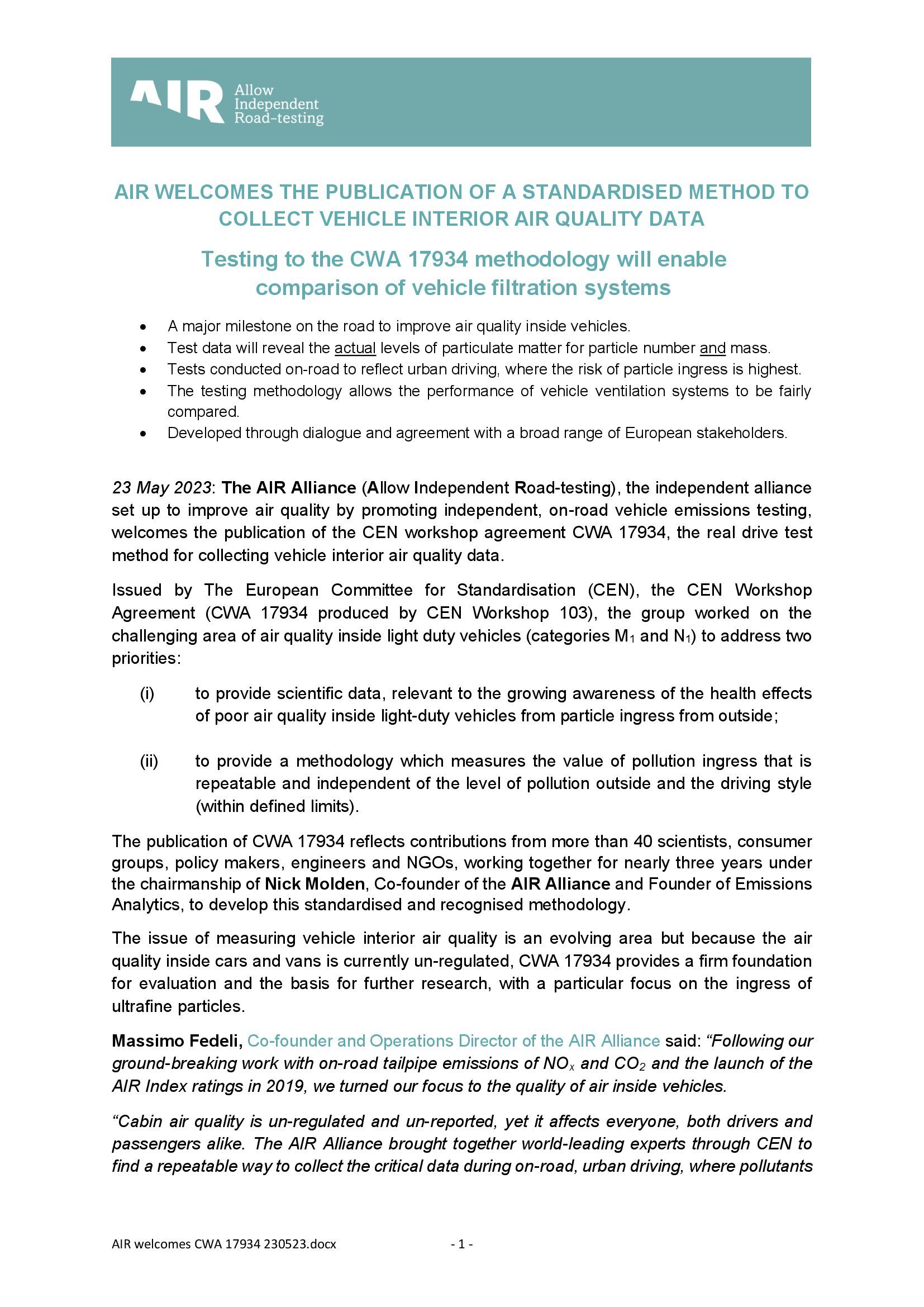
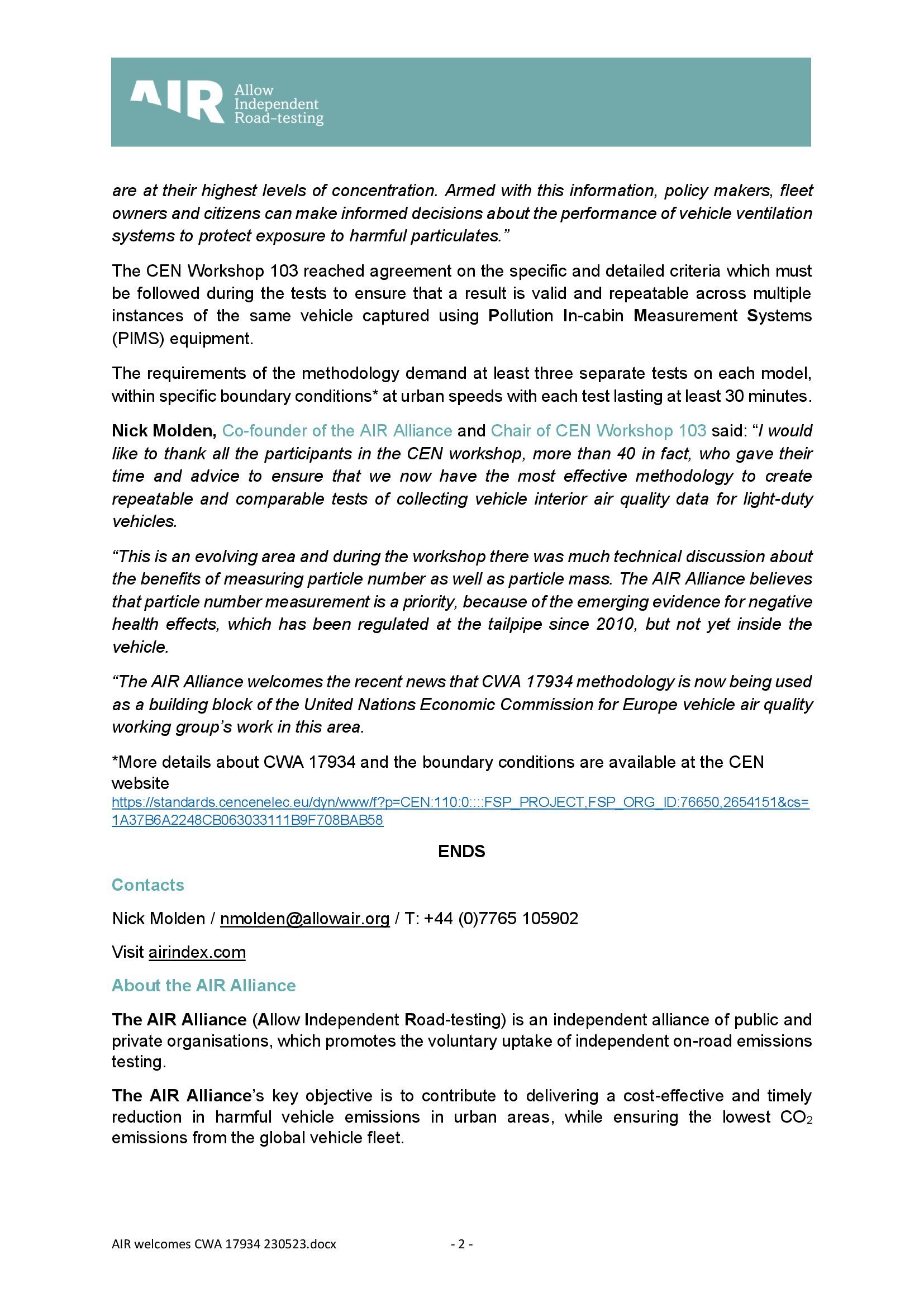
Environmental justice
The term ‘environmental justice’ can often be used in a mushy, socialistic sense, but behind it is a deadly serious concept. Put broadly, it means that all parts of society should be treated equally under environmental law, or that everyone has the right to the same protection from pollution and other harm from emissions.
Why distributional efficiency matters
The term ‘environmental justice’ can often be used in a mushy, socialistic sense, but behind it is a deadly serious concept. Put broadly, it means that all parts of society should be treated equally under environmental law, or that everyone has the right to the same protection from pollution and other harm from emissions. More strictly, it can be seen as a form of allocative efficiency. In other words, environmental interventions should be directed where they create the most benefit, up to the point that the marginal benefit equals the marginal cost of delivery. Protection from emissions shouldn’t be the preserve of the rich or powerful, but should be judged beneficial for anyone to whom it can deliver a net improvement in the quality of life. Applying this concept is important in any free society where people are not all living in the same circumstances, with the same preferences and behaviours.
Through this lens, we can develop an additional perspective on the current debate around the decarbonisation of transport. In doing so, we can see that a multitude of solutions is the optimal approach not just because of constraints on resources, the actions of hostile states, and the state of our electricity grids, but also because people are diverse, and society’s interests are best served by giving each person the most suitable mode of transport.

Switching from an internal combustion engine (ICE) vehicle to a battery electric vehicle (BEV) is an investment. As well as the obvious financial investment on the part of the buyer, it is an environmental investment in the sense that higher carbon dioxide (CO2) emissions are generated during manufacture which are then offset during the usage of the vehicle. As a good guide, the CO2 footprint of BEVs is greater than that of ICE vehicles because of the emissions from making the battery, as the elimination of the engine and other components is roughly offset by the electric motors. Further, electricity generation according to the average mix in Europe or the US creates about as much CO2 as the oil extraction, refining and distribution. Therefore, switching to a BEV initially makes CO2 worse, until a ‘break-even’ point is reached after a period. It should be well noted that these averages are offered as a rule-of-thumb in order to simplify a complex picture and reveal the break-even concept, not to downplay the actual variability and spread in manufacturing emissions, grid mix and so on in specific places.
Estimates of how long into the life of a vehicle the break-even point is reached vary widely, as the result is sensitive to the interaction of the following main factors:
Carbon intensity of the electricity grid
Embedded carbon in battery manufacture
In-use vehicle emissions rates
Distance driven per year.
Electricity grids vary from near-zero CO2 in France to largely coal in Poland – in the latter scenario most BEVs never pay back the manufacturing CO2. Embedded carbon in battery manufacturing typically varies between 2.5 and 16 tonnes, which is driven by a combination of mining, refining and transporting the wide range of rocks and minerals required. In-use emissions from modern gasoline engines average around 184 g/km according to Emissions Analytics’ real-world EQUA testing on European vehicles, but most fall in the range from 107 g/km for the best fully hybridised engines to 248 g/km for non-hybridised sports utility vehicles. As a result, even assuming average driving distances per year, you can get almost any answer for the CO2 break-even date, depending on your location and the type of the comparator vehicles. As a guide, most commonly cited break-even points fall between two and eight years.
This analysis, however, neglects the vital element of the distance driven per year, which is often – as above – assumed away as some representative average. According to Field Dynamics, in 2019 – pre-Covid – the average UK car was driven 7,124 miles (11,470 km). The UK is around the average of European countries in this respect. The distribution of annual miles across all cars subjected to periodic technical inspection (PTI) saw the majority of cars with less than 5,000 miles per year (8,050 km) and just 0.5% above 30,000 miles (48,300 km). This matters because the fewer miles driven, the longer it takes to reach the break-even CO2 point. The table below compares trading in your old ICE vehicle for a typical BEV, rather than changing to a typical full hybrid electric vehicle (FHEV) emitting 120 g/km.

* Proportion split pro rata from original report.
On the other factors above, typical average values have been taken: average grid carbon intensity for Europe and seven tonnes of embedded carbon in the battery. Calculations here take the mid-point of the distance ranges, and the top group is assumed to have an annual mileage of 35,000. The CO2 and break-even calculations assume driving behaviour is the same between the different vehicles. It is further assumed that vehicles have a twelve-year useful lifespan on average; while many last longer than this, the number of miles driven falls rapidly as they enter a twilight life of reduced use. We should note that there is a potential bias in these numbers as vehicles are not subject to the PTI test in the UK until three years old.
These results prove that the more intensively a BEV is used, the quicker it will pay back the CO2 investment. For the heaviest users, that payback will be within one year, and deliver about ten times the overall CO2 savings than in the original battery manufacture. At the same time, the lightest users never practically pay back that investment if they switch to a BEV, only offsetting half of the battery emissions. Therefore, those light users are much better switching to the FHEV. Most crucial is the proportion of cars that fall into this category: about one third. If these people take the FHEV option rather than switching to the BEV, the overall reduction in CO2 across the fleet would be 17% greater, and the reduction in the need for scarce battery materials would be around 32%.
This proportion will of course be lower in countries with cleaner grids, where the batteries have been manufactured using cleaner energy and the in-use emissions of the ICE vehicles are higher. Equally, the proportion will be higher in the opposite circumstances.
Applying a similar calculus to the US, we see that it is generally a much more suitable region for vehicle electrification. While it shares a similar pattern of grid electricity to Europe – majority based on fossil fuels, with big variations between regions – other factors work to its advantage. First, US car owners travel around 13,500 miles (21,600 km) per year on average, almost double the European average of about 7,000 miles (11,200 km). Therefore, a US driver pays back the CO2 invested in a BEV's manufacturer in half the time. Second, US wholesale energy costs around one quarter of Europe’s, so it can more credibly and competitively build the necessary extraction and processing supply chain, rather than just the final battery assembly part. Third, North America is the global region with the highest degree of urbanisation, and BEVs offer the biggest efficiency gains in urban driving, due to powertrain efficiency at slow speeds and regenerative braking.

In summary, this analysis can be put as: why are we forcing light car users to spend more money on vehicles that actually pollute the planet more? While Zero Emission Vehicle (ZEV) mandates may be direction-finders and worthy aspirations, it is also very important we make sure that those who do convert to BEVs are the right people, from an allocative efficiency point of view. ICE bans are even more problematic than ZEV mandates because ‘success’ would be wilfully suboptimal A better approach would be to drop the bans and be highly selective with mandates, and rely more on the CO2 targets and/or carbon pricing to set the direction and then let the industry and consumers rearrange their supply and demand accordingly to deliver the best environment outcome in the most efficient, speedy and equitable way. In this way, lightly used cars would not be swapped for BEVs, saving money and CO2. That would be true environmental justice.

Champagne Supernova?
When an exploding star led to the observation of supernova SN 2003fg in 2003, it was nicknamed the ‘Champagne Supernova’ due to its unusual brightness, and its inexplicably great mass. Many supernovae eventually succumb to their own weight, leaving behind a black hole. Are we at this stage with battery electric vehicles (BEVs)?
A bright light, with a heavy weight
When an exploding star led to the observation of supernova SN 2003fg in 2003, it was nicknamed the ‘Champagne Supernova’ due to its unusual brightness, and its inexplicably great mass. Many supernovae eventually succumb to their own weight, leaving behind a black hole. Are we at this stage with battery electric vehicles (BEVs)? Their prospects are currently shining brightly despite their literal weight as well as their likely wider toll on the environment, from watercourses to the seabed, due to their production. Hybrids, by contrast, tread relatively lightly on the planet, yet give off a more muted glow of past glory – perhaps more like a red dwarf. In this newsletter we want to consider a further way in which vehicle size and weight matter, and why the BEV industry must address this rapidly if it is successfully to deliver pollution reduction.

Astronomical parallels aside, we can simply say that BEVs are too big and heavy right now. Yes, there are heavy internal combustion engine (ICE) vehicles, but on average BEVs are around 40% heavier and 40% bigger like-for-like, as set out in a previous newsletter. This trend may well continue, and the weight premium increase, as BEVs come increasingly equipped with lithium ion phosphate (LFP) batteries as they are cheaper and require fewer scarce materials. It may even be the case that this weight leads to structural risks for transportation infrastructure, such as roads and car parks, although this has yet to be proven.
While this is all true, it is easy to get stuck in a pattern of ‘trading averages.’ As Senecal et al meticulously pointed out, you can only assess the decarbonisation potential of BEVs in the US by looking at local-scale grid electricity, and marginal rather than average carbon intensities. Similarly, with vehicle selection, you can only judge the benefit by understanding the marginal changes. If someone replaces a frugal gasoline car with a larger BEV, that is likely to be worse for the environment in the round. Equally, switching from a large gasoline V8 to a small city BEV is very likely to be better. It is easy to make simplistic ‘stop burning stuff’ slogans stick when you conjure up the image of a pre-particle-filter diesel being replaced by a gleaming Tesla. However, for the same investment, you are likely to get more pollutant and carbon dioxide (CO2) emissions reduction from trading those old diesels up for the latest full hybrid electric vehicles (FHEVs). So, what we mean by an ICE vehicle, and the variation in performance within that group, matter. Put another way, it is not the optimal approach to dispense with all ICE technology just because many are high-emitting, just like it would be wrong to reject all BEVs just because many are currently very heavy.
Our previous newsletter suggested that tailpipe emissions from FHEVs had reached a ‘do no harm’ status, by showing levels more than 90% below a range of air pollution legal limits. What this did not show was whether those apparently low levels were in fact sufficiently de minimis to be of little concern, or whether we were still burning stuff in a detrimental way for air quality. An immediate caveat to make is that there is a relevant difference between this European test and apparently similar US vehicles. In Europe, unlike the US, a large and increasing proportion of gasoline ICE vehicles are equipped with particle filters, which significantly reduce the particle mass and number emissions from the tailpipe. Therefore, US particle emissions remain concerning and, as a result, there is greater benefit in switching to BEVs in that market, in the absence of widespread adoption of these filters.
That said, we can look more closely at the volatile organic compound (VOC) emissions from the same test to put the results in context. We showed that there were 4.38 mg of tailpipe emissions over our EQUA test, or 0.03 mg/km. This compares to the most relevant official limit of 100 mg/km for total hydrocarbons, which puts the car more than 99% below the limit. These low emissions were compared to the 330 mg emitted from the tyres on the same test. But, still, how bad is 0.03 mg/km? A recent paper, from March 2022, in Environmental Science & Technology by Wang et al, measured the VOC emissions from four humans seated in a controlled climatic chamber, using proton transfer reaction time-of-flight mass spectrometry and gas chromatography. Without the presence of ozone, the emissions averaged 2.2 mg per human per hour, rising to 4.6 mg in the presence of ozone. Averaging these, and applying the result to the length of the EQUA test, it would imply that a human driver would emit 12 mg of VOCs in total. Therefore, during the EQUA test the driver may have emitted three times more pollution from his body than came out of the tailpipe of the car being driven. Stop metabolising stuff!

So, we can see that the levels of regulated exhaust pollutant emissions from the FHEV are now trivially low. Of those not regulated, the sub-23 nanometre, ultrafine particles are probably the greatest omission, which is being addressed by regulators soon, as set out below. What is left is a more serious concern about VOC emissions, especially from tyres. There are three main reasons we should be concerned about such emissions. First, VOCs can have a direct health effect through inhalation or contact with the skin – many are harmless, but the worst organic compounds can be carcinogenic. Second, VOCs can react in the air to create ‘secondary organic aerosols’ (SOA), i.e. new particles, for which the health and environmental effects are well described elsewhere. Third, these organic compounds have an ‘ozone formation potential’ (OFP), ground-level ozone being one of the main constituents of the smog hanging over city skylines.
From the testing on the Tesla and Kia described above, we see tyre VOC emissions of 2.2 mg/km from the Kia and 6.1 mg/km, from the larger-wheeled Tesla. Taking the ‘secondary organic aerosol formation potential’ (SOAFP) for five target compounds and the average value for the remainder from Wang et al (2017), this implies a maximum possible particle formation of between 0.03 mg/km and 0.1 mg/km. The latter is shown in the table below, which is from the Hankook tyre on the Tesla. This may sound low, but tailpipe particle emissions are now as low as 0.02 mg/km, so the tyre VOC emissions could more than five times the tailpipe mass emissions.

Using a similar approach for ozone formation, the test could have yielded up to 13.2 mg/km. There are no direct regulatory benchmarks to compare this to, however.
This shows not only that tyre size matters, but that chemical composition does as well. From over three hundred tyres tested by Emissions Analytics, the surface area of light duty vehicle tyres – from which the VOCs evaporate – can vary by around 100%, depending on whether you have a 155/60 R15 skinny summer tyre, or a 235/65 R17 specialist SUV tyre, for example. Across 73 tyre manufacturers tested, the proportion of aromatics – some of the more potentially toxic compounds, and highlighted compounds in the table above – vary in concentration from 78 to 582 micrograms per milligram of sample. In other words, the concentration of certain chemicals, and the surface area from which they can evaporate, varies significantly between tyres. As a consequence, vehicle size and weight, with the tyres that accompany that, evidently affect emissions in use, in addition to the materials required for their construction.
This shows not only that tyre size matters, but that chemical composition does as well. From over three hundred tyres tested by Emissions Analytics, the surface area of light duty vehicle tyres – from which the VOCs evaporate – can vary by around 100%, depending on whether you have a 155/60 R15 skinny summer tyre, or a 235/65 R17 specialist SUV tyre, for example. Across 73 tyre manufacturers tested, the proportion of aromatics – some of the more potentially toxic compounds, and highlighted compounds in the table above – vary in concentration from 78 to 582 micrograms per milligram of sample. In other words, the concentration of certain chemicals, and the surface area from which they can evaporate, varies significantly between tyres. As a consequence, vehicle size and weight, with the tyres that accompany that, evidently affect emissions in use, in addition to the materials required for their construction.
What does this mean for regulation? The current Euro 7 proposals are generally a sensible step, as set out in a previous newsletter, not least to make the regulations more technology neutral and tighten ultrafine emissions limits. A less prominent part of the proposal is to tighten the ‘evaporative emissions’ test. This is designed to limit the VOCs off-gassed during refuelling and the use of vehicles, for example vapour escaping from the fuel tank. The test is conducted in a controlled chamber and the escaping VOCs collected over a one-hour period when the vehicle is hot followed by 48 hours when it is cool, all with the ambient temperature varying across a ‘normal’ range. Currently, the total emissions must be less than 2 grams, although this may be significantly reduced with Euro 7. This is relevant because the test, although not specifically designed to do so, will pick up off-gassing from the vehicle’s tyres. However, this is one respect in which Euro 7 is not technology neutral: the evaporative test only applies to gasoline vehicles. So, BEVs with large tyres have no limits applied.

In conclusion, we have shown the risks of myopically looking at tailpipe emissions, and the dangers of asserting the environmental impact of vehicles simply from the type of powertrain. In short, environmental logic points towards a mixed car parc made up mainly of smaller BEVs to cover town driving and larger FHEVs for more general purposes, brought about as quickly as possible in order to get the black hole of older, dirty cars off the road as soon as possible. Vehicle weight, and hence emissions, should be minimised to allow the smallest tyres that are safe and effective. This is a lower risk approach, and from an economic point of view a ‘lower regret’ option as we would not be gambling resources of potentially up to $1 trillion globally, according to some reports, on a maxi-BEV technology that may not deliver its promises. If we pivot to this lighter approach, in ten years’ time, as with 1990s Britpop Oasis’ champagne supernova, you might not have to wipe that tear away now from your eye.

Emissions Analytics wins Tire Technology Environmental Achievement of the Year
Last night (March 21, 2023), Emissions Analytics were announced as the winners of Tire Technology International Award for Innovation and Excellence.
“We appreciate the award from Tire Technology International as a reflection of the team’s dedicated work on a topic that was previously of marginal policy interest, but which is now thrust into the limelight by the ever-growing weight of SUVs and battery-electric vehicles.” - Nick Molden Emissions Analytics founder and CEO

Last night (March 21, 2023), Emissions Analytics were announced as the winners of Tire Technology International Award for Environmental Achievement of the Year.
The awards were coordinated by Tire Technology International magazine and were officiated by a panel of international journalists and industry experts. The awards featured an array of categories to recognise the different innovation and achievements over the last 12 months.
Archive
- AIR Alliance 3
- Air Quality 38
- Audio 3
- Climate Change 14
- EQUA Index 21
- Electrified Vehicles 28
- Euro 7 3
- Fuel Consumption/Economy 20
- Fuels 4
- Infographic 18
- Media 4
- NRMM/Off-road 3
- Newsletter 103
- Podcast 7
- Presentation/Webinar 18
- Press Release 19
- Regulation 16
- Reports 4
- Tailpipe Emissions 49
- Tyre Consortium 2
- Tyre Emissions 26
- Vehicle Interior 6